

























































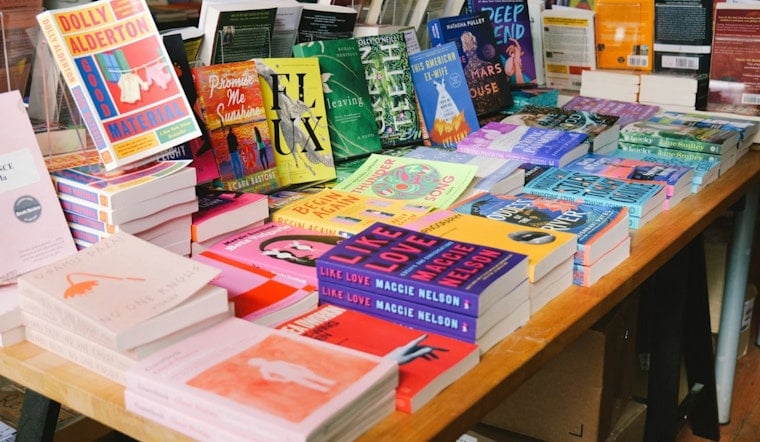
A stretch of East 33rd Street in Baltimore is now home to what its organizers call the nation's largest free bookstore for low-income families, stocked with more than 60,000 free diverse books and open to any family who walks through the door. Our Kids Read celebrated the grand opening of its expanded Baltimore Literacy Hub at 418 E. 33rd Street, where children attending the event each received up to 10 free books, and the first 75 families in line walked away with backpacks filled with school supplies.
The nonprofit, whose founding traces back to a $50,000 bequest that executive director Jahmal Lake received from his late mother, Dr. Obiagele Lake, used that gift to build out what has become a national literacy operation. According to the PR Newswire announcement of the opening, the Baltimore Literacy Hub is designed as a community literacy “3rd space” — offering free books, literacy support, and a reading lounge at no cost to visiting families. Lake retired from an 18-year federal IT career at the U.S. Treasury Department to lead the organization full time, a shift he made after his mother, a lifelong educator, urged him to take on the youth literacy gap before she passed away, according to Princeton Alumni Weekly.
Grammy-winning recording artist and film star Chris “Ludacris” Bridges, who has partnered with Our Kids Read to promote literacy, welcomed guests to the new hub in a video shown at the event, per the PR Newswire release. Families who attended were invited to tour the new space, meet community partners, and learn about the organization's programs while celebrating the hub's impact on the neighborhood.
From a Mall Storefront to a Standalone Hub
The 33rd Street facility is not Our Kids Read's first foray into Baltimore. The organization opened its first Baltimore Literacy Hub in February 2025 inside Dundalk's Eastpoint Mall, where it distributed more than 15,000 free books during that initial run, according to WMAR-TV. That pilot location was made possible by commercial real estate firm MCB Real Estate, which donated retail storefront space at the mall, allowing the nonprofit to convert vacant square footage into a community reading hub, the organization says on its website.
The inventory behind both locations traces back largely to a single corporate partner. Our Kids Read received a $3 million in-kind donation of more than 300,000 books from Scholastic, a gift the nonprofit says supplies its free bookstore hubs and school distribution festivals across multiple states. The organization expects to ship over 100,000 additional books to children and communities nationwide, and says it has already shipped close to 200,000 free books to kids across the country this year. It also recently launched a campaign to give away more than 2,000 copies of the book “Daddy and Me and the Rhyme to Be” to families nationwide, and it counts the Travis Manion Foundation among its program partners.
Baltimore's Literacy Gap and a National Book Shortage
The Baltimore hub's opening lands against a backdrop of stubborn, if slowly improving, local reading outcomes. Assessment results released by the Maryland State Department of Education for the 2025–26 school year show Baltimore City Public Schools reached a 32.9% English Language Arts proficiency rate, marking a decade of consecutive gains and a 1.7 percentage point increase year-over-year, per Baltimore City Public Schools' own release of the data.
Researchers have documented a broader national pattern that helps explain why free bookstores like this one matter: high-poverty urban neighborhoods average just one age-appropriate book for every 300 children, compared with 13 books per child in middle-income areas, according to research published in PNAS. Literacy advocates have also cited data indicating that roughly 80% of fourth-grade students in underserved U.S. communities read below grade level, a statistic that has shaped Our Kids Read's focus on children ages 6 to 12, per Princeton Alumni Weekly's reporting.
A Growing National Footprint
As of August 2026, Our Kids Read operates literacy programs across 14 states and Washington, D.C., distributing books through free festivals, hospital initiatives, and mentorship programs, according to the organization. Beyond book giveaways, the nonprofit runs an online “Reading Buddies” program for K-5 students that pairs them with mentors, a model Fox45 Baltimore has reported is meant to improve students' attitudes toward reading, not just their access to books.
The 33rd Street hub also joins an existing landscape of grassroots book distribution in Baltimore, including the long-running Book Thing in Abell and mobile efforts like the Black Star Line Literacy Bus, both part of a local tradition of free book sharing that Hoodline previously highlighted. Whether Our Kids Read can sustain its 33rd Street footprint over the long term, and how closely it will coordinate with Baltimore City Public Schools to move the needle on reading proficiency, remain open questions as the hub settles into its new home.





