

























































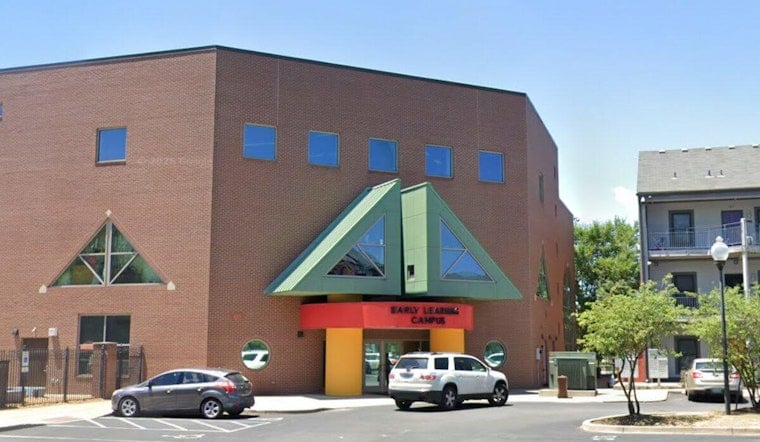
Baptist Health cut the ribbon Tuesday on a major expansion of its Child Development Center in St. Matthews, adding five new classrooms, an expanded kitchen and new outdoor playgrounds to a facility that has cared for the children of hospital employees since 1982. The upgrade allows the center to serve more than 250 families of Baptist Health employees, up from a facility that had been stretched thin by demand for years.
The $5 million project, funded through the Baptist Health Foundation, added more than 7,200 square feet to the existing daycare on the hospital's campus at 4000 Kresge Way, according to Baptist Health. Before ground broke on the project in April 2025, the center was already caring for more than 100 children from 84 employee families while carrying a waitlist of over 150 kids, the health system says. The Child Development Center first opened in 1982 and had not been expanded since 1990, as reported by WHAS11.
Justin Leighty said the expansion has become an integral part of the hospital's recruitment strategy, according to the station's report. “People want to work at Baptist Health because their children are well taken care of on site,” Leighty said. The center serves the children of doctors, nurses and other hospital staff, offering extended hours that match the hospital's round-the-clock shifts and giving frontline workers a place to leave their kids just steps from the units where they work, per the same account.
A Statewide Childcare Squeeze Behind the Ribbon-Cutting
The expansion lands amid a childcare shortage that has reshaped Kentucky's working families for years. A statewide survey by the Kentucky Center for Economic Policy found that 62% of responding parents had been placed on a childcare waitlist, with 12% waiting more than a year and another 14% waiting between seven and 12 months for an open slot. The same organization has reported that the number of active childcare providers across Kentucky dropped by 46.3% over a 10-year period, leaving roughly half the state's residents living in designated childcare deserts.
Those numbers help explain why hospital systems are increasingly treating on-site daycare as workforce infrastructure rather than a perk. Only about one-third of U.S. hospitals offer any form of childcare benefit to staff, and only a small fraction operate on-site centers steps from clinical units, according to the Children's Hospital Association. Industry data reported by Advisory Board indicates that losing a single bedside nurse costs a hospital roughly $46,000 in turnover expenses, adding up to multi-million-dollar annual costs for average health systems.
Retention Pressure Adds Urgency
The stakes are especially high in Kentucky, where acute care and specialty hospitals reported 2,821 registered nurse vacancies and an overall statewide RN vacancy rate of 11.5% in 2024, per the Kentucky Hospital Association. A study published in the Journal of Healthcare Management found that 49% of surveyed healthcare workers said emergency childcare disruptions had negatively affected their work attendance over the preceding year, underscoring how a single canceled babysitter can ripple into a missed shift on a hospital floor.
Baptist Health's campus in St. Matthews has been part of the East End's medical landscape since it opened in 1975 as Baptist Hospital East, later rebranding as Baptist Health Louisville in 2013. The hospital's fundraising auxiliary, established in 1958 at the former Kentucky Baptist Hospital, has contributed multiple $1 million pledges toward capital projects over the years, including support for the Child Development Center expansion.
The daycare upgrade also includes improved security measures alongside the added classroom space and playgrounds. It follows a string of capital investments across the Baptist Health system, including a recent NICU expansion at the same Louisville campus and a $10.3 million emergency department expansion at Baptist Health Floyd in New Albany. Whether the roughly 80 additional daycare spots will be enough to absorb ongoing employee demand remains an open question, as does how regional health systems will sustain childcare infrastructure once federal post-pandemic subsidies expire statewide.





