

























































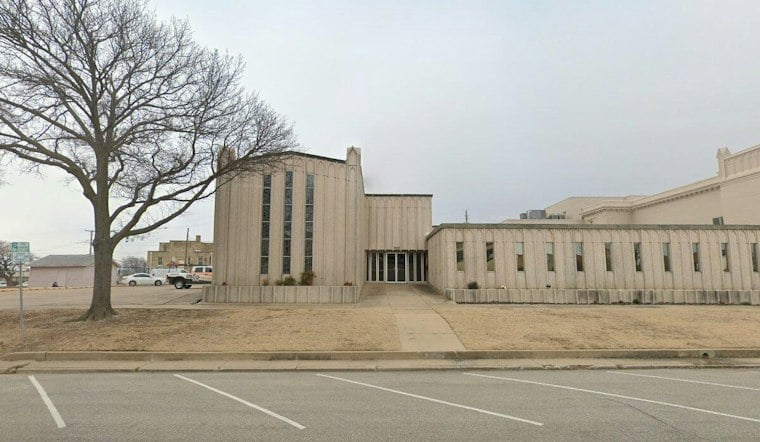
A restored historic church in Bartlesville is being reimagined as the engine room for a new indie film pipeline, one that its backers say could reshape how Oklahoma makes movies. Polaris Films and Buffalo Roam Studios are partnering to build what they call a repeatable independent film production ecosystem based in the city, with projects budgeted between $2 million and $4 million apiece and a first shoot targeted for the first half of 2027.
The plan, as reported by The Journal Record, centers on turning out mid-budget independent films on a consistent schedule rather than chasing one-off productions. Polaris co-founder Kristofer McNeeley, who has produced 71 films, is steering the effort to push Oklahoma's film industry toward that mid-budget indie tier, according to the outlet's reporting.
Two Scripts Already in Development
The partnership already has two films on its development slate. “Blackbird,” written by J.T. Mollner, follows a mother and daughter on a road trip that confronts end-of-life decisions and questions of personal autonomy, per the same account. “Shimmer,” adapted from a stage production, follows boys in a 1971 youth detention center whose only means of escape is a supernatural process known as “the Shimmer.”
A third production slot is being held open on purpose. Filmmakers are searching specifically for a story that originated in Oklahoma, the report notes, and Polaris co-founder Mark Harris said he and his wife had co-written a film that could also be in contention for that spot.
AI Tool Aims to Streamline, Not Replace, Filmmaking
Buffalo Roam is building its production plans around ArcLights, a proprietary AI tool the studio developed to streamline filmmaking processes. The Journal Record's reporting describes ArcLights as distinct from generative AI, and Harris said the production tools are meant to free up more time for actors and human collaboration rather than substitute for it.
Buffalo Roam CEO Jeff Smith said the Bartlesville studio's focus is on industry reliability. The goal, per Smith's comments to the outlet, is to build a repeatable process that can carry a project all the way through production. The studio itself operates out of a restored historic church-turned-studio in Bartlesville that also houses production offices and, notably, is available to rent as a wedding venue.
A Narrow Window, Backers Say
McNeeley has framed the moment as urgent, saying Oklahoma has only a two- to three-year window of opportunity to develop its film industry and must seize it. Polaris co-founder Marc Benjamin struck a similarly optimistic note, saying Oklahoma has a bright future as an important place for filmmakers. The partnership is also looking beyond state lines for financing, seeking to attract outside capital from places such as Hollywood, and plans to present its production model at the Black Wall Street Nation Film Summit at Oklahoma State University-Tulsa, where a session dedicated to ArcLights is planned.
Growth and Recent Pullback in Oklahoma's Film Sector
The Bartlesville push arrives against a backdrop of both momentum and strain in Oklahoma's film industry. The state's sector has seen long-term growth and hosted blockbuster productions such as 2023's “Killers of the Flower Moon,” according to The Journal Record. But according to Cherokee Phoenix, film-related employment in the state rose from 4,510 jobs in 2020 to 6,757 in 2021 before sliding to 3,621 by 2024, while expenditures dropped from $187 million in 2021 to just $46.2 million in 2024, a 75.3% decrease.
Even so, the number of film-related businesses in Oklahoma has grown by roughly 46% since 2019, the Cherokee Phoenix reports. State incentives remain part of the draw: Oklahoma's Filmed in Oklahoma Act offers a post-production rebate starting at 20% and rising to 30% depending on factors like location and workforce use, capped at $30 million annually and authorized through 2031. Since 2021, that program has generated more than $531 million in direct economic impact, per the state figures cited by the outlet.
Local and tribal incentives add further layers of support. The Cherokee Nation offers its own post-production rebate of up to 30% on qualified expenses, which can be stacked with the state program, while Tulsa runs a local incentive offering up to $75,000 per project based on in-city spending and hiring. For Polaris and Buffalo Roam, that incentive landscape forms the financial backdrop against which they're betting a restored Bartlesville church can anchor Oklahoma's next chapter in independent filmmaking.


