

























































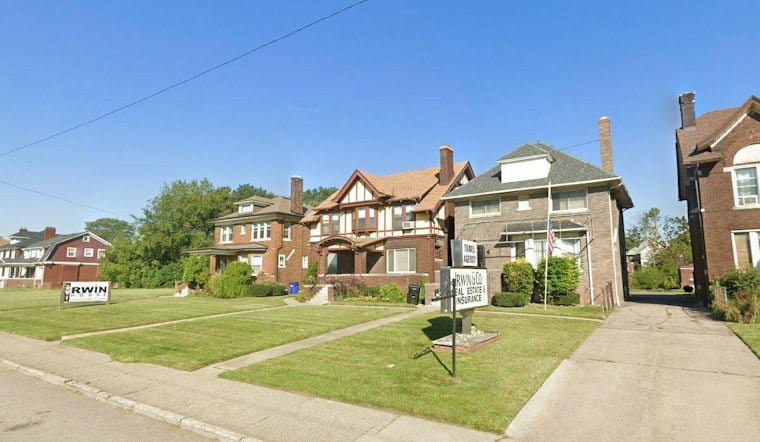
Michigan gubernatorial candidate Jocelyn Benson says she supports bringing back tax incentives for films shot in the state, a position she outlined during a panel discussion at Detroit's Irwin House Gallery tied to an event involving Grammy-nominated Detroit rapper Big Sean. Benson, the Democratic candidate running to replace term-limited Gov. Gretchen Whitmer, said investments in film production could help make Michigan the creative capital of the nation and address the state's broader economic health.
The panel centered on Michigan's tourism economy, and Big Sean took part alongside Benson, according to MLive. Benson said she met Big Sean earlier in 2026, and per attendees, the rapper wanted to connect her with artists and business leaders working to expand Detroit and Michigan as a tourist destination. Benson said Big Sean's team presented a vision for building infrastructure in Detroit and beyond to produce films and music, something the rapper described as potentially life-changing.
A Credit With a Complicated History
Michigan first implemented a film tax credit in 2008, a program that offered rebates of up to 42 percent of filmmakers' in-state production costs before lawmakers ended it in 2015, arguing it did not generate enough economic benefit for the state, according to Bridge Michigan. The program helped attract major productions including the Transformers franchise and Batman v. Superman: Dawn of Justice. Supporters of ending the incentives said they failed to create a sustainable film industry and did not provide Michiganders a return on investment, while opponents argued the program simply needed more time to work.
Michigan lawmakers have introduced bills in recent years aimed at reviving the program, and the state House Committee on Government Operations has been a common landing spot for the proposals. A 2023 proposal would have created a transferable tax credit for Michigan-based multimedia projects — films, television productions, commercials, corporate media and music videos — with minimum spending thresholds of $50,000 for shorter projects and $300,000 for feature-length productions, the same report notes. Advocates have pointed out that a single film production involves about 60 local vendors on average, framing the incentive as a boost for local businesses as well as the industry itself.
Why the Credit Structure Has Shifted
Recent proposals have moved away from grants or rebates toward a transferable tax credit model, meaning no money would be paid directly out of the state's general fund, according to the IATSE Local 26 campaign tracking the issue. Under that framework, a base credit starting at 25 percent would apply to in-state spending, with structures tied to Michigan-based hiring and branding. Michigan is among the states competing for productions in a crowded field — at least 35 states offered film production tax incentives as of 2022, per Bridge Michigan.
Benson said she wants to bring film tax credits back to Michigan in a thoughtful and strategic way, without disclosing cost or funding details for any specific proposal. Megan Maczko of the Michigan Film Industry Association has said that the newest proposed legislation was redesigned to better support Michigan workers and businesses, a framing that echoes the direction Benson described at the Detroit panel.
A Broader Arts and Tourism Pitch
Benson also pitched a state department dedicated to arts, culture, tourism and sports, saying she would create it by executive order within her first month in office if elected. She spoke about increasing funding for art education and financial literacy, and said she would advocate for apprenticeships that give people paid opportunities to work in the arts. Benson also pitched an outward-facing marketing campaign focused on the arts, telling the panel that arts are the way out of societal divisiveness.
Other panelists pressed the case for state support. Letty Azar, vice president of community and government affairs at Penske Corporation and the Detroit Grand Prix, said Michigan is at a tipping point and argued there is currently no support for events or tourism. Shawn Wilson, president and CEO of the Boys & Girls Clubs of Greater Detroit, said Detroit is not short on talent or enthusiasm. Amber M. Lewis, a Detroit influencer who leads the Detroit Influences the World campaign in partnership with Visit Detroit, also took part, and a representative from the Detroit Institute of Arts requested state support for a revamped parking project.
The Race for Governor
Benson is competing against Republican U.S. Rep. John James in Michigan's general election on November 3, 2026. James has proposed phasing out Michigan's income tax with a cut starting on his first day in office, pledged to cut spending on what he calls special pork projects in the state budget, and proposed improving energy affordability by increasing competition. Benson, for her part, has pitched an affordability agenda covering housing, healthcare and energy costs and has spoken about streamlining government operations to achieve cost savings — policy ground that will likely keep shaping the race as the film tax credit debate plays out alongside it.





