

























































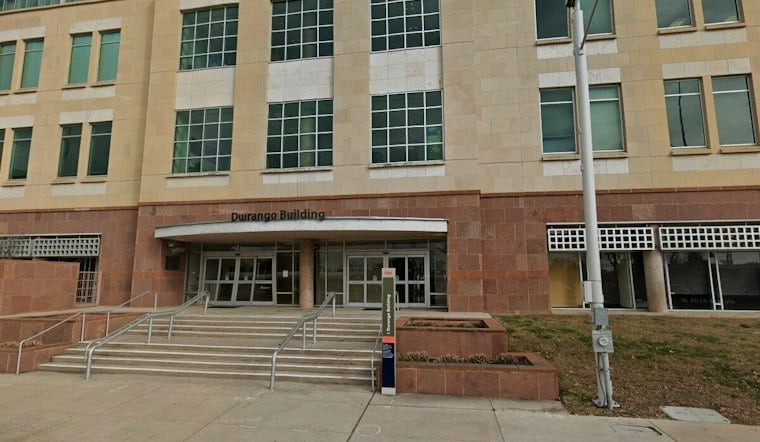
A betting-style advertisement for Underdog has turned up on one of San Antonio's sidewalk kiosks near UTSA's downtown campus, and city officials say it doesn't break any rules — even though the same contract bars traditional gambling ads outright. The ad's appearance is exposing a gap between old-school betting restrictions and a fast-growing industry that regulators haven't fully figured out how to categorize.
How the Ad Slipped Through the Rules
According to MySA, San Antonio's kiosk contract bars traditional gambling advertisements from the roughly two dozen touchscreen displays scattered around the city, but prediction-market advertising like Underdog's appears to be permitted under the contract's specific gambling-and-betting language. Underdog allows users to wager money on several sporting-event outcomes, yet a city spokesperson told the outlet that prediction-market platforms are currently legal in Texas as long as they comply with federal law and regulations. The city's Communications and Engagement Department is responsible for vetting kiosk ads, checking each one for Texas-law legality and contract compliance, the same spokesperson said. That same official noted that commercial ads running on the kiosks do not constitute a city endorsement of any company, individual, product or service.
The kiosks themselves aren't new. San Antonio entered into the deal with the kiosk network in 2017, and the screens began appearing at busy intersections around 2018, according to the report. The system, operated by Ike Smart City kiosks out of Columbus, Ohio, was originally meant to help visitors find local attractions or restaurants. Per the outlet's reporting, the deal costs the city nothing, since ad revenue covers installation and operating costs. The broader city-network contract bars ads for alcohol, tobacco, adult content, political or religious material, tattoo parlors and pawn shops — but prediction markets weren't clearly on that list when the rules were written.
Counselors and Council Members Raise Alarms
Jennifer See, who has nearly 15 years of addiction-counseling experience, called the prediction-market industry predatory in comments to the outlet, warning that gambling ads can bombard people with messages and that young men are especially susceptible to habit-forming prediction-market betting. She added that gambling addicts can act within minutes of seeing ads pop up on their handheld devices, a risk that's amplified when the same messaging follows them onto a public sidewalk kiosk. A resident quoted in the report said the gambling ads are misleading and intrusive.
San Antonio District 1 Councilwoman Sukh Kaur said prediction-market betting was far less prevalent back in 2017 when the kiosk contract was signed, and she's willing to consider the issue at a public safety committee meeting. District 5 Councilwoman Terri Castillo, who is separately working to ban slot machines at card houses and gas stations across San Antonio, said gambling has already caused financial harm to her constituents. Castillo's office had not responded to the outlet by publication time.
A Legal Gray Zone Playing Out Nationally
The confusion in San Antonio mirrors a fight playing out across the country. Prediction markets are licensed by the federal Commodity Futures Trading Commission rather than regulated under state gambling laws, according to KXAN, which reported that platforms have offered contracts on the University of Texas versus UTSA football game, including bets on the winner, the margin, total points and overtime. KXAN also described the industry as having rapidly grown into a de facto replacement for sports gambling for many Texans.
The core dispute is bigger than any one kiosk. The Supreme Court gave states the ability to regulate sports betting back in 2018, but prediction markets have muddied that authority by operating under federal commodities rules instead. The New York Times framed the stakes plainly in a recent podcast episode, noting that the fundamental question at the heart of ongoing lawsuits is whether what's happening on a prediction market constitutes gambling subject to state regulation, or whether it should be handled by the federal government instead. The same report noted that betting on the biggest prediction market hit roughly $38 billion the previous month, and had already climbed to $42 billion in September.
Consumer Risks and a National Ad Blitz
Prediction markets describe themselves as financial exchanges where users trade against each other rather than betting against a house, the Times reported, and the platforms let people wager on outcomes ranging from football games to the weather in New York City. But Benzinga reported that for people with problem-gambling issues, prediction markets and sports-betting apps carry equally risky exposure, citing a University of Washington researcher who said smartphones have stripped away the barriers that once slowed down compulsive gambling.
The industry's marketing muscle has grown alongside it. Front Office Sports reported that Polymarket launched an ad campaign featuring LeBron James, Derek Jeter, Eli Manning and other athletes and celebrities, while Jake Paul's Betr released an Entourage-themed commercial starring Jeremy Piven and Adrian Grenier, and Novig ran an ad featuring equity partner Sydney Sweeney. Meanwhile, regulatory pushback has already reached the courts elsewhere: CT Insider reported that Connecticut's Department of Consumer Protection issued cease-and-desist orders to nine prediction-market companies, prompting Underdog Predict to sue state officials over the crackdown.


