

























































A 46-year-old Beverly Hills man has been sentenced to two years in federal prison for orchestrating a multi-million-dollar pandemic relief fraud scheme that funneled taxpayer money into a four-bedroom home. Jabari Long was ordered to pay $2,187,500 in restitution after prosecutors said he invented a construction company workforce that barely existed.
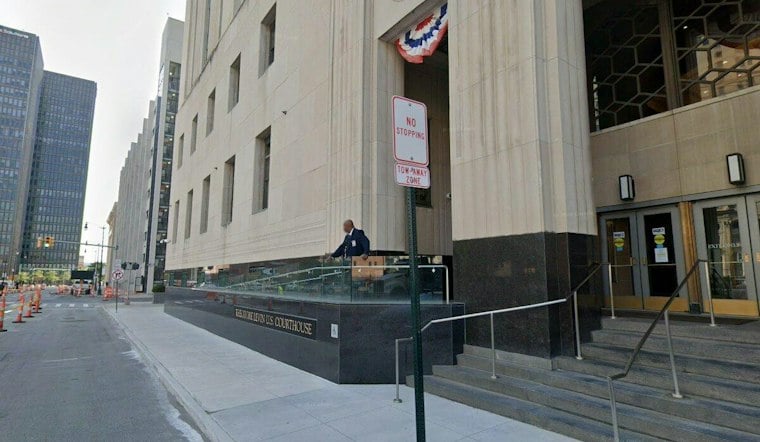
Long pleaded guilty on January 20, 2026, before U.S. District Judge Brandy McMillion in Detroit to one count of wire fraud affecting a financial institution, according to the U.S. Attorney's Office for the Eastern District of Michigan. As first reported by Deadline Detroit, Long used his company, Priceless Preservations Construction, to obtain a fraudulent Paycheck Protection Program loan of $2,187,000 and a fraudulent Economic Injury Disaster Loan of $150,000.
To secure the loans, Long claimed the company had 50 employees and an average monthly payroll of $875,000, per the same outlet's reporting. In reality, prosecutors say, the construction firm had few, if any, employees and little to no payroll expenses. Long admitted he submitted false tax documentation to obtain the loan funding.
A Home Bought With Borrowed Trust
Prosecutors say Long used some of the pandemic assistance funds to buy a four-bedroom home in Beverly Hills, part of Oakland County. The U.S. Attorney's Office reported that Priceless Preservations Construction had few, if any, employees and little to no payroll expenses when Long applied for the funds, undercutting the payroll figures he submitted.
“Long falsely claimed to employ dozens through his so-called company Priceless Preservations, but only preserved his greed through the fraud,” said Jerome F. Gorgon Jr., in a statement carried by the U.S. Attorney's Office. The single count of wire fraud affecting a financial institution carried a statutory maximum of up to 30 years in federal prison and a $1 million fine — far above the 24-month term Judge McMillion ultimately imposed.
Defense attorney Steven Fishman told C & G Newspapers after the guilty plea that Long was a “good person who unfortunately made a bad decision” and was working to repay what he owed ahead of sentencing. The case was investigated jointly by Homeland Security Investigations' Detroit Division and the Internal Revenue Service - Criminal Investigation Detroit Field Office, with Assistant U.S. Attorney Sara D. Woodward leading the prosecution, according to the U.S. Attorney's Office.
Why Pandemic-Era Cases Are Still Landing in Court
Congress created the Paycheck Protection Program in March 2020 under the CARES Act to help businesses survive pandemic disruptions, requiring applicants to submit payroll records to qualify for SBA-backed loans, as FOX 2 Detroit explained. Businesses could have their loans forgiven only if the money went toward legitimate payroll and operating costs — a condition Long's construction company appears not to have met.
Federal prosecutors are still charging and sentencing 2020 and 2021 loan fraud cases in 2026 because the PPP and Bank Fraud Enforcement Harmonization Act of 2022 extended the statute of limitations for pandemic loan fraud from five to ten years, Hoodline previously reported. That gives investigators until at least 2030 to bring new charges tied to the emergency relief era. A June 2023 report by the U.S. Small Business Administration Office of Inspector General estimated that more than $200 billion — roughly 17 percent of all disbursed COVID-19 emergency relief funds — went to potentially fraudulent applicants nationwide.
The scale of that estimate has translated into sustained federal enforcement. Between June 12 and September 1, 2026, the Department of Justice's National Fraud Enforcement Division ran Operation No Doze, a coordinated national sweep that charged more than 160 defendants representing roughly $245 million in intended taxpayer losses from SBA relief programs.
A Familiar Pattern in Oakland County
Long's case fits a wider pattern of pandemic relief fraud surfacing in Oakland County's affluent suburbs. In April 2026, West Bloomfield resident Randon “Romero” Williams faced federal charges in a criminal complaint for allegedly seeking over $5 million in PPP loans using fake payroll figures, in a case Hoodline covered under the headline Feds Say Man Tried Swiping $5M.
In March 2026, federal prosecutors also charged a West Bloomfield couple with wire fraud conspiracy for allegedly skimming $2.6 million in COVID-19 relief funds and laundering the money into luxury real estate — a case that, like Long's, involved emergency funds redirected into high-end housing. The cases involve alleged inflated payroll in Williams's case and alleged transfers of relief funds into real estate in the couple's case; Long's case involved a home purchase.





