

























































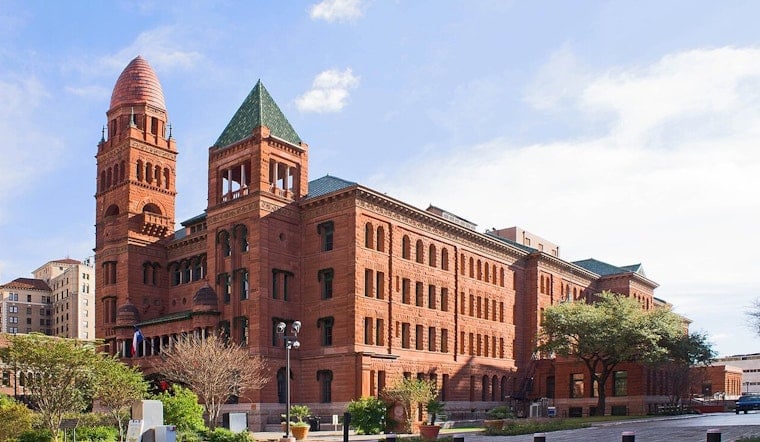
Bexar County's proposed budget for the next fiscal year would strip the incoming district attorney of significant civil legal authority, shifting 26 attorneys, paralegals and staff into a new office that reports directly to commissioners court instead of the county's chief prosecutor. The $3.28 million plan lands just months before voters pick a successor to two-term District Attorney Joe Gonzales, who is retiring at the end of 2026, meaning Bexar County will have a new district attorney on January 1 who may inherit a smaller office than the one Gonzales built.
The proposal, first detailed by San Antonio Report, would carve the Office of Civil Legal Affairs out of the district attorney's Civil Division, which is currently overseen by Larry Roberson. The new office would report to Bexar County Commissioners Court rather than to whoever wins the November election, and it would likely absorb between eight and 10 positions to start, though county budget documents describe a transfer of fewer than 26 positions overall — one division chief, 13 attorneys, nine paralegals and three administrative staff, according to Bexar County's own proposed budget presentation.
A Legal Fight Over Who Controls the Office
Commissioner Justin Rodriguez, who represents Precinct 2, has framed the change as an efficiency measure, saying the proposal would streamline legal work by having lawyers report directly to commissioners court. He has also said the entire civil section of the district attorney's office would not move to the new office, and county officials describe the broader effort as part of an attempt to modernize county government while speeding up the contracting process. County leaders argue the restructuring could save money by reducing the need to hire outside counsel.
But Republican district attorney candidate Ashley Foster has pushed back hard, saying the commissioners court lacks legal authority to strip power from another elected office. Democratic nominee Luz Elena Chapa has raised similar objections, saying the proposal does not provide checks and balances and opposing what she describes as unchecked power for the county judge and commissioners court to write and award contracts. Both candidates for the office — along with independent candidate Jason Wolff, who is also on the November 3 ballot — have condemned the proposed transfer of civil legal affairs authority.
Grant Moody, identified in reporting as having reviewed the proposal on behalf of DA candidates, said his attorneys believed the move would require the district attorney's approval, a claim that cuts to the heart of the legal dispute. Roberson has taken the opposite position, saying commissioners court does not need permission for the proposed change and asserting that Gonzales fully supports it.
A Reversal From the Civil Chief's Own 2023 Warning
Roberson's current stance marks a notable shift from his own prior legal advice. During a September 11, 2023 Bexar County Commissioners Court budget work session, Roberson argued against placing civil attorneys outside the district attorney's office, citing Texas Government Code § 44.115 and stating that no entity has the authority to take that duty from the district attorney, according to county records. Roberson, who was first hired by former District Attorney Susan Reed and later returned to serve under Gonzales, is now the apparent candidate to oversee the new office himself if commissioners approve it — with a division chief potentially employed by commissioners court instead of whoever becomes the next elected district attorney.
The legal question of whether commissioners can make this move without the incoming DA's blessing traces back to a 1993 Texas Supreme Court ruling in Guynes v. Galveston County, which held that commissioners courts may employ in-house civil legal counsel as long as they do not usurp another elected official's statutory duties. Notably, the court in that case pointed to the fact that the sitting district attorney had explicitly consented to the arrangement — a detail at the center of the open legal question in Bexar County today, since no consent has been confirmed from the DA-elect who will take office in January.
County officials have also leaned on a more recent opinion. Texas Attorney General Opinion KP-0492, issued in June 2025, affirmed that commissioners courts may create civil legal positions and reallocate funding away from a prosecutor's office as long as the transferred duties are not core statutory functions of the elected prosecutor. Under Texas Government Code § 44.115, the Bexar County Criminal District Attorney holds exclusive statutory authority over criminal matters in county courts, while civil legal representation is governed by separate, more flexible statutes — the distinction county officials are relying on to argue the shift is legally sound.
What the District Attorney Would Keep
Regardless of how the new office is structured, the elected district attorney will retain all statutorily assigned responsibilities, including asset forfeitures, protective orders, and civil matters tied directly to criminal cases and core DA functions. County officials say the new district attorney will still retain a functioning civil office even after the transfer, and the new Office of Civil Legal Affairs may ultimately be named a general counsel office rather than something with civil legal affairs in its title.
The restructuring would put Bexar County closer to the model used in Harris County, Texas's largest county, which maintains a dual structure with an elected district attorney handling criminal prosecutions and a separately elected county attorney handling civil litigation and advisory work. The Texas Attorney General has said some civil matters can be legally handled by a county attorney rather than a district attorney, a distinction that has fueled debate over whether Bexar County's move mirrors that dual-office model or simply hands civil authority to an appointee answerable to commissioners rather than voters.
A Records Fight Adds to the Tension
The dispute has already spilled into a public records fight. On August 21, Bexar County requested a ruling from the Texas Attorney General to withhold public records regarding the origin and internal legal communications behind the proposed civil office, invoking attorney-client privilege. That request has drawn scrutiny amid an already tense campaign season, following a heated March confrontation between Gonzales and Chapa at a political forum after she criticized his office's operations, and Chapa's narrow 934-vote primary runoff win over career prosecutor Jane Davis in May.
Commissioners are expected to vote on a candidate to oversee the new office as part of the broader budget process, meaning the structure of Bexar County's civil legal authority could be settled before the winner of the November 3 election — Chapa, Foster or Wolff — is even sworn in. For now, the office at the center of the fight includes roughly two dozen positions currently working inside the district attorney's office, and whether their new boss answers to the county's next top prosecutor or to five commissioners remains the unresolved question driving the campaign's final stretch.





