

























































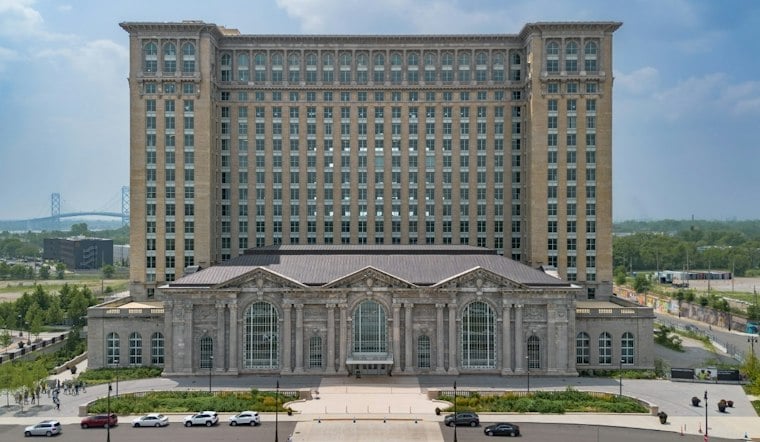
Michigan Central Station hosted a TIME100 Talks panel on Tuesday, September 29, 2026, featuring Ford Motor Company executive chairman Bill Ford, Alphabet and Google President Ruth Porat, and United Airlines CEO Scott Kirby. TIME CEO Jessica Sibley introduced and interviewed the participants at the Corktown campus.
The Detroit News covered the event; Sibley spoke with Ford individually during parts of the program, and Porat and Kirby also participated. Ford, a colleague of Ford Motor Company CEO Jim Farley, has long championed Michigan Central as a symbol of Detroit's reinvention, and the choice of venue was no accident. The station has increasingly become the backdrop for exactly this kind of cross-industry dialogue, following the property's headline-grabbing return to public life.
A Station Built for Corporate Convenings
Michigan Central's path to hosting a TIME100 Talks panel traces back to a $950 million, six-year renovation that Ford Motor Company completed before reopening the 1913 Beaux-Arts landmark in June 2024, a project detailed by Fast Company that followed Ford's 2018 acquisition of the then-abandoned depot for $90 million. The station had sat empty for 36 years after its train depot closed in 1988, and its transformation into a mobility and tech hub has made it a magnet for high-profile events, including Ford-brand gatherings.
The 30-acre innovation district surrounding the station also includes Newlab Detroit, a 270,000-square-foot mobility tech incubator that opened in a renovated former book depository in April 2023, according to DBusiness. Resident startups there have raised more than $500 million in capital, giving the campus a critical mass of technology companies that makes it a natural stage for panels mixing automotive, aviation and tech leadership.
Google's Deep Roots at Michigan Central
Porat's presence on the panel reflects more than a guest appearance. Google became a founding member of Michigan Central back in February 2022 alongside Ford Motor Company, the State of Michigan, and the City of Detroit, a partnership announced by the State of Michigan that was aimed at fostering mobility innovation, talent retention, and digital skills training and was backed by $126 million in aligned state resources.
That commitment has only deepened since. Google opened its first Midwest Code Next computer science lab inside Michigan Central Station in July 2024, offering free coding education to local high school students from underrepresented backgrounds, per Michigan Central. Google.org followed that up in September 2025 with a $2 million grant to expand STEM education for Metro Detroit youth, supporting programming that has reached nearly 2,000 young participants since June 2024, according to the same source. The tech giant's Michigan investment predates even that partnership, having expanded its office footprint near Little Caesars Arena and in Ann Arbor by 90,000 square feet back in 2019, when it employed more than 600 workers statewide, Fox Business reported at the time.
What Michigan Central reports about its campus
Michigan Central’s inaugural economic impact report, prepared by BJH Advisors, says the campus’s ongoing operations supported approximately $2.95 billion in statewide economic impact in 2025. The report also counts more than 240 companies across 60-plus industries in the Michigan Central ecosystem, according to Michigan Central. For Google’s Code Next program, Michigan Central reported in July 2024 that the Detroit lab had enrolled approximately 100 students across two cohorts (Michigan Central).
Kirby Brings Aviation's Biggest Storyline
In August, Kirby predicted that American will eventually abandon its hub at Chicago O'Hare Airport, a move he suggested would position United for expanded Midwest routes, per a report from Live and Let's Fly.
TIME's Expanding Live Events Strategy
The Michigan Central panel also fits into a broader strategy at TIME under Sibley, pairing live events with specialized TIME100 list franchises. The company just this month announced its inaugural TIME100 Art list, expanding a suite of vertical rankings that already includes TIME100 AI, TIME100 Climate, and TIME100 Creators, TIME announced. Convening executive dialogues like the one at Michigan Central has become a hallmark of that expansion, giving the magazine's brand a recurring presence in regional innovation hubs well beyond its usual New York orbit.





