

























































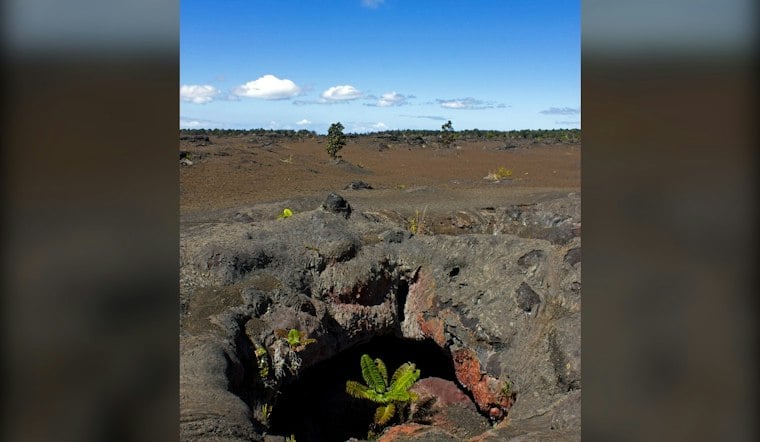
Deep inside Hawaiʻi Island's lava tubes live creatures found nowhere else on Earth — spiders and wax-spinning planthoppers that have adapted to a lightless world beneath the volcanic rock. Now visitors to Honolulu's Bishop Museum can get a glimpse of that hidden ecosystem without ever putting on a headlamp, thanks to a newly renovated exhibit built from years of University of Hawaiʻi Mānoa fieldwork.
The exhibit, ʻAʻaʻā o Hawaiʻi: Cave Bugs of Hawaiʻi, features a simulated lava tube caving experience alongside displays of the island's cave-dwelling arthropods and an explanation of how scientists discover and name new species, according to University of Hawaiʻi System News. It was renovated by Rebecca Chong, an associate professor in UH Mānoa's School of Life Sciences, and Megan Porter, a professor and associate director of research in the same department, the university reports. The permanent installation sits inside the museum's Richard T. Mamiya Science Adventure Center, giving visitors a chance to explore ecosystems beneath Hawaiʻi Island's surface that researchers describe as incredibly understudied.
Years of Fieldwork Becomes a Public Experience
Chong and Porter have spent years exploring lava tubes and documenting cave-adapted arthropods, work that has helped identify species new to science and expanded understanding of how native ʻōhiʻa forests support life underground, per the same university account. “It’s exciting to see years of research transformed into something that people can experience for themselves,” Chong said, according to the university's report. Porter added that the exhibit represents another important step in the research process, saying she wants to document organisms, understand their ecosystems, and preserve that knowledge for future scientists.
The lava tubes at the center of that research include sites in southern Hawaiʻi Island, according to Cave Conservancy of Hawaiʻi. A 2018 survey summary reports 74 troglobionts documented in Hawaiʻi, including 44 on Hawaiʻi Island, according to Hawaiʻi Biodiversity.
A Food Web Built on Hanging Roots
At the base of these ecosystems are the exposed roots of native ʻōhiʻa trees, which push down through cracks in the lava ceiling to supply moisture and organic carbon to the cave's insects. An eyeless, pigmentless planthopper feeds directly on that sap and secretes wax from its rear end to build protective cocoons, transferring nutrients from surface trees into the subterranean food web, per Hawaii Public Radio. Sitting atop that food chain is the cave wolf spider, which can grow up to three inches in length, the station notes.
That reliance on ʻōhiʻa roots also exposes the caves to a serious threat from above ground. Rapid ʻŌhiʻa Death, a fungal disease, has killed more than one million ʻōhiʻa trees on Hawaiʻi Island, and its spread threatens to deprive root-feeding cave insects of their primary energy source, the same station reports. Surface forests and cave ecosystems on the island are connected.
From a 1970s Discovery to a Modern Research Grant
A 1973 paper by Howarth documented Hawaiian lava-tube fauna, according to research posted on ResearchGate. That legacy continues in the ongoing UH Mānoa project, which began in 2022 after the National Science Foundation awarded a four-year, $1.29 million grant to Chong, Porter, and collaborator Annette Engel of the University of Tennessee-Knoxville, with the project set to conclude in 2027, per the university's account. The NSF-funded work, done in partnership with the Nature Conservancy, traces how subterranean biodiversity scales across lava flows of different geological ages, according to Big Island Video News.
Ongoing surveys tied to the project have already turned up species new to science, including a predatory thread-legged bug and a newly described dark-zone cave beetle named Paratachys aaa, per University of Hawaiʻi System News. Information about many Hawaiian subterranean species remains sparse, and researchers continue to find new species.
Naming Species in ʻŌlelo Hawaiʻi
The exhibit highlights Hawaiian names for cave-dwelling species, with the Papahānaumokuākea Native Hawaiian Cultural Working Group's Nomenclature Hui collaborating on names for the species featured in the display, according to Ka Wai Ola. That work reflects a broader effort in Hawaiian science to keep indigenous language moving alongside modern taxonomic discovery.
The exhibit itself is designed to connect scientific discovery, museum collections, cultural knowledge, and community outreach in one space, according to the university's report. It's housed inside the Bishop Museum's Richard T. Mamiya Science Adventure Center, per Bishop Museum. Chong and Porter’s work is housed within UH Mānoa's College of Natural Sciences. Porter says she hopes sharing their discoveries will inspire curiosity and support the next generation of scientists.




