

























































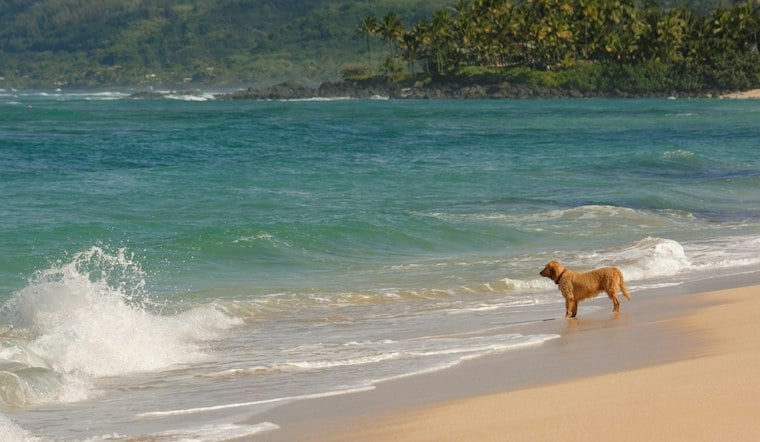
Moka, a 3-year-old dog from Maui, was given less than six months to live last May after veterinarians diagnosed him with a congenital heart condition that was causing seizures. Today, he is running on the beach and playing with other dogs, thanks to a pacemaker and a cascade of community help that spanned two islands and the mainland.
Moka's owner, Geoff Wood, said his dog's condition had advanced to the point that he could die at any time, according to Hawaii News Now. Geoff and his wife, Carla Wood, found Moka as a puppy near the Hana Highway. Carla, who trains therapy dogs, told the station that Moka's agility and obedience made him better suited to skills courses than therapy work.
A Diagnosis That Took a Dangerous Turn
Veterinarians initially believed Moka had become ill after swimming in a river, the station reports. But advanced imaging told a far more serious story: Moka had atrial myopathy with persistent atrial standstill, a condition in which the heart's upper chambers stop functioning properly. Carla said Moka's heart was not pumping as it should, and that a pacemaker was his only chance at survival.
The diagnosis matches a rare but documented condition. The Merck Veterinary Manual notes that persistent atrial standstill has been reported in dogs and involves destruction of the atrial heart muscle, which can also affect the ventricles. The same reference states that pacemaker implantation may improve a dog's heart rate and cardiac output, though it does not speak to any individual case.
A Network of Strangers Mobilizes
With time running short, a family friend contacted the president of the Hawaiian Veterinary Medical Association, who took on the search for a specialist capable of treating Moka. A Washington State University veterinary program answered the call, and the Woods landed an appointment within two weeks of reaching out, per the station's report.
Getting Moka off the islands required more than a plane ticket. A state agriculture official helped grant the family a medical travel exemption to take him to the mainland, while Maui Direct Release handled the travel paperwork, the station notes. Moka ultimately received his pacemaker in Washington state.
Back on the Beach
Carla said Moka acted ready to leave the clinic almost immediately after the procedure, and that he came home an even better dog than before. He's now back to running on the beach and playing with other dogs, maintaining a stable heart rate on a low-sodium diet, the outlet reports.
To keep tabs on that recovery, the Woods fly Moka on Mokulele Airlines at lower altitudes for checkups in Kona every six months. According to Mokulele Airlines, Moka now sees veterinary cardiologist Dr. Deborah Fine in Kona for ongoing pacemaker monitoring. The airline's account also states that the first quotes for Moka's procedure on Oahu ran around $20,000, while Washington State University was able to perform it for less than a third of that price, with pet insurance covering most of the remaining cost and friends, family and the Woods splitting what was left.
Pacemaker cases like Moka's aren't unheard of in veterinary medicine. Washington State University separately reported implanting a pacemaker in Umber, an 11-year-old Czech shepherd diagnosed with a third-degree atrioventricular block; veterinarian Anna Golden said afterward that Umber stopped collapsing and regained her energy. A 2023 retrospective study published in PLOS One examined 66 dogs that underwent pacemaker implantation at the University of Tennessee between 2012 and 2022, recording nine deaths tied to major complications, or 13.6% of the study sample.
For Geoff Wood, the outcome has become a testament to the people who rallied around his family. He said the community's efforts exemplified the aloha spirit, and Carla said everyone involved treated the Woods like their own.



