

























































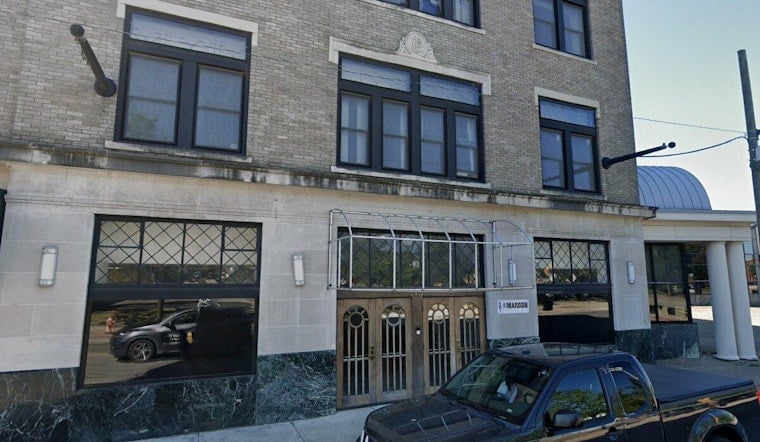
A brand-new literary festival is settling into a historic Black cultural landmark this month, pairing a two-day celebration of poetry with a building that has hosted performers since the Jazz Age. The Black Poets Fest runs Saturday, September 19, and Sunday, September 20, 2026, bringing poets, writers, creatives, curators, vendors, and community members from across the Midwest together in the city's Near East Side and South Side neighborhoods.
The main fest experience takes place at Maroon Culture Lab, located at 867 Mt. Vernon Ave., according to Columbus Underground. That address isn't just a venue on a flyer — it's the Pythian Temple, a structure built in 1925 that stands as the only known Columbus building designed by African-American architect Samuel Plato, per Wikipedia. The 2026 festival also lines up with the 100th anniversary of the temple's 1926 opening, when it operated as a Black fraternal order lodge and theater that once hosted Duke Ellington, Count Basie, and Cab Calloway, according to Maroon Arts Group.
A Century-Old Stage Finds New Purpose
The building didn't always have a clear future. Local nonprofit Maroon Arts Group finalized its purchase of the Pythian Temple in 2023 to transform it into the Maroon Culture Lab, after the King Arts Complex vacated the space in 2019, per the same Wikipedia entry documenting the property's history. That renovation effort now underpins the main day of programming, which the fest's registration site describes as including a black-owned vendor marketplace, a panel discussion on curating community, a writing workshop, and an evening theater experience with poetry performances.
Organizers behind the event have also moved to protect its name at a national level. Columbus-based Black Poets Fest LLC officially registered “Black Poets Fest” as a federal trademark with the U.S. Patent and Trademark Office on July 21, 2026, following an initial filing in February 2026, according to Trademarkia. Organizers have positioned the September gathering as the first nationally recognized festival to carry the Black Poets Fest name, per Experience Columbus.
Youth Programming Moves to the South Side
Day two of the festival, called Young Black Voices, is built specifically for teens ages 13 to 17 and takes place Sunday, September 20. The festival's registration materials describe Young Black Voices as the event's youth program.
The youth day is offered as free programming and includes a guest speaker, a performance teaching lab, a writing workshop, a youth entrepreneur marketplace, and lunch, per the festival's registration materials. Organizers describe it as giving young poets a structured opportunity to share their voices, rounding out a schedule that spans a workshop, panel, vendor marketplace, and poetry performances across the full weekend.
Rooted in a Historic Black Arts District
The festival's Near East Side anchor sits within King-Lincoln Bronzeville, a neighborhood with a history of African American business, cultural, and artistic activity, according to Matter News. Placing a new literary festival inside a restored century-old theater in that same district ties the event directly to that longer history of Black performance and ownership in the neighborhood.
The festival also arrives amid a broader wave of Columbus projects using poetry to preserve neighborhood memory. Hoodline previously reported on a free OSU concert where Columbus poet Scott Woods used spoken word and music to document vanished South Side businesses, part of the same month that saw Woods perform his heritage project “Southern Oracles.” Columbus supports a deep poetry ecosystem through long-running series like the Poetry Forum and Writer's Block, according to Experience Columbus, giving the new festival an established local audience to draw from.
Institutional Backing and Literary Neighbors
Columbus's literary landscape includes Thurber House at 77 Jefferson Ave., a nonprofit literary arts center established in 1984 inside the 1873 home where humorist James Thurber lived while attending Ohio State University, per the Thurber House.
Festival organizers describe the full event as a two-day literary experience centering Black voices and strengthening community through poetry. Information about registration and scheduling for both the main fest experience and Young Black Voices appears in event listings for the festival.





