

























































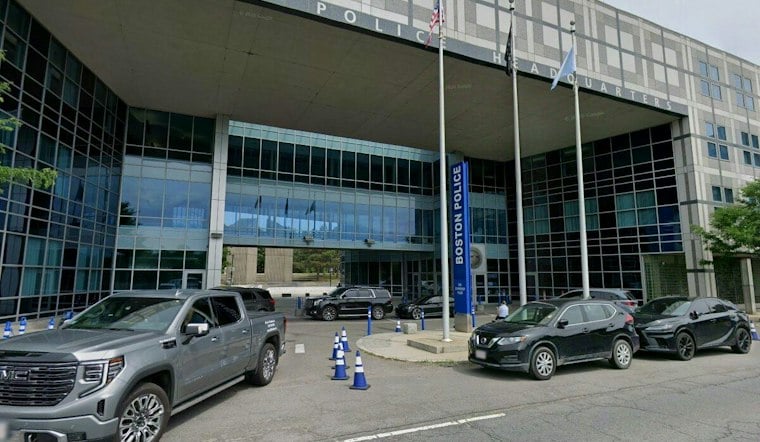
Boston police began using LifeRaft, an AI-powered social-media monitoring platform, during the summer, but the public record cited here does not establish whether the department notified the City Council, obtained approval, or filed a required report for the deployment. The Boston Globe reported that use is limited to a small group in the department’s Bureau of Intelligence and Analysis and that police say the tool has produced information useful to investigations.
The unresolved question is procedural
The city’s ordinance materials define exigent circumstances around an emergency posing a reasonable risk of death, serious injury, or property damage. The ACLU of Massachusetts’ summary of the law discusses Boston’s Surveillance Oversight and Information Sharing Ordinance. The city’s ordinance materials define that exception around an emergency posing a reasonable risk of death, serious injury, or property damage.
Those rules create several distinct questions about LifeRaft: whether it was treated as new surveillance technology, whether police relied on the exigent-circumstances exception, and whether any subsequent report was filed. The materials available here answer none of them. The absence of a record in the supplied materials is not proof that BPD failed to comply.
Earlier disclosures do not resolve the LifeRaft issue
BPD’s 2024 annual surveillance report included a section on automated-license-plate-recognition technology. That city report predates the reported LifeRaft rollout and addresses license-plate-reader technology, not social-media monitoring. It therefore cannot establish whether LifeRaft was disclosed, approved, or reported.
The unresolved status also matters because BPD has faced a recent dispute over other surveillance tools. The Globe reported that the department adopted SITE Intelligence Group and Chorus Intelligence under claimed exigent circumstances tied to threats around the 2024 elections, and that the City Council voted in August 2025 against approving their continued use even as BPD continued using them. That history is a precedent for examining the approval process, not evidence that LifeRaft was acquired or operated under the same justification.
Information-sharing is part of the oversight question
BPD’s official rules describe the Boston Regional Intelligence Center as responsible for coordinating a regional intelligence capability in Boston and the surrounding metropolitan area. That institutional role provides context for questions about how information generated by a social-media monitoring tool might circulate, although it does not show that LifeRaft data was shared with any particular agency.
The Globe reported that LifeRaft does not provide covert access to private accounts, private messages, devices, or location data, and that BPD says trained personnel use it several times a week. Those stated limits distinguish the platform from some forms of device or location surveillance, but they do not by themselves answer questions about retention, dissemination, auditing, error rates, or the treatment of constitutionally protected speech.
Why safeguards matter
The Organisation for Economic Co-operation and Development classifies law-enforcement agencies using AI as high-risk end users because of the technology’s potential effect on rights and public trust, and says safeguards are needed. The OECD’s guidance is not a finding about BPD or LifeRaft; it helps identify the kinds of governance questions that remain material even when a system is limited to public online material.
A policy from Santa Monica offers one comparison, not evidence of Boston’s practices. The policy provides a point of comparison for examining Boston’s records, but the materials here do not show whether BPD has equivalent requirements. Santa Monica’s policy illustrates concrete controls that could be examined in Boston’s records, but the materials here do not show whether BPD has equivalent requirements.
For now, the central public-records issue is narrower than whether AI can assist police investigations: Boston residents do not have a documented answer here about which approval, exception, reporting, and information-sharing rules governed LifeRaft’s arrival. Resolving that question would clarify what oversight occurred before the department put the tool into use.



