

























































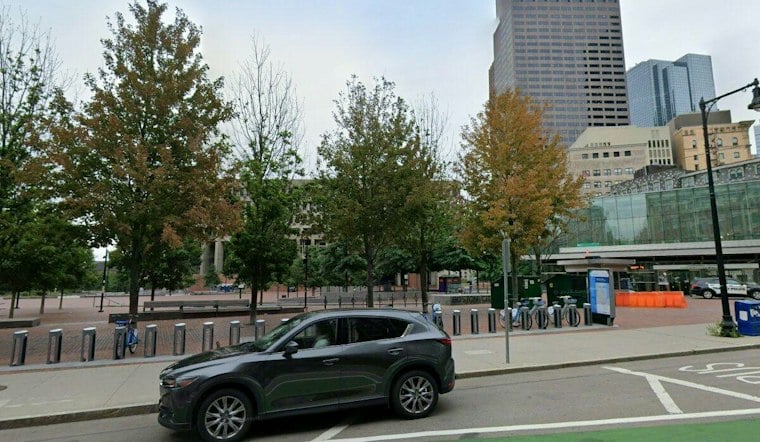
Condo owners at Harbor Towers on Boston's downtown waterfront just finished paying for their own flood protection, and it wasn't cheap. The $20 million system of permanent and deployable barriers is designed to shield the twin 40-story towers for the next 50 years, and every dollar of it came out of residents' pockets.
Mayor Michelle Wu joined Harbor Towers residents for a ribbon-cutting at the property on October 7, according to the Chelsea Record. The outlet reports that the $20 million for the project came entirely from the condo owners, with no public subsidy involved, and that the finished system combines permanent and deployable protections built to guard the towers for the next 50 years.
The urgency traces back to 2018, when floodwaters came within inches of the property, the Chelsea Record reports. Harbor Towers residents received a wake-up call from two one-in-a-hundred-year storms that year, and the building experienced flooding and severe-storm damage that pushed trustees to act.
Engineering a 50-Year Barrier
Harbor Towers trustees concluded that perimeter protection was the most feasible flood solution for the property, then hired Weston & Sampson as architect and engineer and Building Enclosure Science as project manager, according to the Chelsea Record. Per Banker & Tradesman, Weston & Sampson and Building Enclosure Science served as consultants while Commodore Builders handled construction.
The finished system layers several defenses together. Property managers will install temporary barriers that fit between the porticos on the ground floor of the 40-story buildings whenever a storm approaches, the same outlet reports. Crews also added 16-foot-tall glass inserts on the waterfront sides of Harbor Towers One, and the project required excavation of a 6-foot trench to waterproof basement walls along with work on 25 openings where utilities enter the buildings.
Accounts of the project's timeline differ. Banker & Tradesman describes an 18-month project that began in 2024, while High-Profile reports a seven-year process that included one year of disruptive construction activity. Whichever timeline applies, the Chelsea Record notes the project was completed on time and within budget.
A Low-Lying Stretch of the Waterfront
Harbor Towers sits on what's likely the second-lowest-elevation property on Boston's waterfront, with Long Wharf holding the lowest spot, according to seed reporting tied to the project. That geography helps explain why the towers, home to approximately 1,200 residents according to High-Profile, faced such an exposed position when the 2018 storms hit.
City officials frame the Harbor Towers project as one piece of a much larger push. Boston has approximately 40 coastal resiliency projects planned or under way, Banker & Tradesman reports, and another 11 private property owners are now pursuing similar flood-defense projects of their own. The Boston Children's Museum began a $15 million flood-protection project in August, and the New England Aquarium is spending $8 million on floodproofing and building-system updates at its Central Wharf property, per the same outlet.
Bigger Public Plans Still Years Away
A 2023 study recommended an $877 million flood barrier to protect downtown Boston's central waterfront, with roughly $250 million in projects recommended by 2030 at Long Wharf, Central Wharf and Harbor Towers, according to Banker & Tradesman. Separately, a $10 billion flood-defense project coordinated with the U.S. Army Corps of Engineers is not expected to begin until the next decade, the same outlet reports.
The stakes behind that timeline are steep. The Boston Globe reports that officials estimate a 100-year flood in coming decades could inundate 2,100 buildings and cause roughly $2.3 billion in damages, as the city prepares for sea levels to rise by more than four feet by the end of the century. Banker & Tradesman separately reports that Boston Harbor water levels are projected to rise 40 inches by 2070.
Until the bigger public defenses materialize, removable flood barriers are treated as a short-term response while the city adapts its infrastructure to stronger and more frequent climate threats, according to NBC Boston. The Chelsea Record reports that Boston plans to continue its efforts to address rising sea levels and climate-change threats citywide.
Property owners pursuing deployable barriers also answer to city rules. Boston requires that any active floodproofing measure, including deployable barriers, come with an emergency response plan spelling out how and by whom it will be deployed, and the barriers must be registered with the city's Office of Emergency Management, according to the City of Boston. A separate city posting notes that the Office of Emergency Management notifies registered barrier owners of forecasted flood conditions but does not provide specific deployment guidance for privately owned barriers because of liability concerns.
A public notice also identifies application 2024-007, filed by Weston & Sampson on behalf of the Harbor Towers Condominium for proposed permanent and deployable dry-floodproofing systems at 65 and 85 East India Row, according to the city's public notice records. For the 1,200 residents who call Harbor Towers home, the ribbon-cutting marks the end of a costly, owner-funded effort to keep the waterfront from reaching their lobby doors again.



