

























































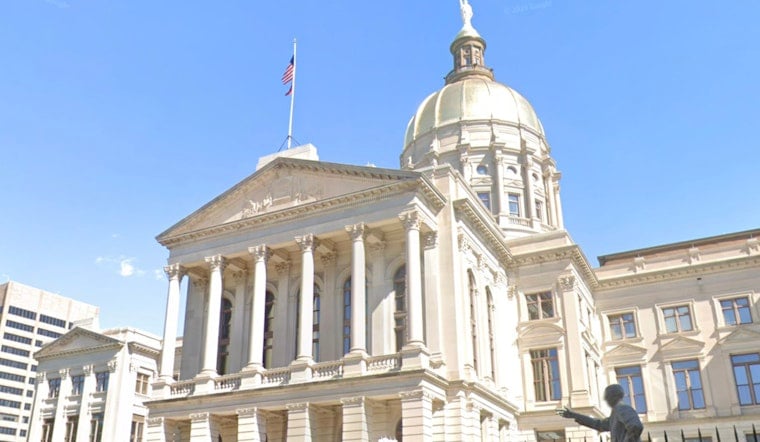
Georgia's two major-party candidates for governor spent Wednesday laying out sharply different visions for what voters should worry about most. Keisha Lance Bottoms stood inside a Gwinnett County grocery store to announce a plan aimed at shrinking the tax bite on food and family essentials, while Rick Jackson stood alongside the state's top law enforcement official in Atlanta to push new protections for children online.
Bottoms formally launched her “Local Grocery and Family Essentials Tax Relief Plan” on Wednesday at Al Huda Grocery in Lawrenceville, according to Capitol Beat. The proposal would let Georgia cities and counties permanently eliminate or temporarily suspend local sales taxes on groceries, diapers, baby formula, and prepared family meals — an option currently unavailable under state law, per the same outlet's reporting. As Atlanta News First reported, the two candidates took markedly different paths on the campaign trail Wednesday.
To keep the change from blowing holes in municipal budgets, Bottoms' plan includes a one-year, $250 million state transition fund that would reimburse cities and counties whose local sales tax revenue drops more than 5% compared to the prior fiscal year, Capitol Beat reports. That safety valve matters because local option sales taxes are a key funding stream for Georgia cities and counties, according to the same outlet's coverage.
Why Georgia Groceries Still Get Taxed
Georgia already exempts staple food items from the state's 4% sales tax under O.C.G.A. § 48-8-3(57), but local option sales taxes ranging from 2% to 5% still apply at checkout depending on the jurisdiction, per Commenda. Those local add-ons can push combined retail tax rates as high as 9% in some parts of the state, the same source notes. Bottoms' campaign points to Georgia State University Fiscal Research Center data showing the average Georgia household spends $8,960 a year on groceries — the 11th highest amount in the nation — with households earning under $15,000 spending roughly 41% of their income on food, compared with about 2% for households earning over $200,000, according to the Bottoms campaign's policy plan.
Jackson Ties Social Media Rules to Meta Settlement
Across town, Jackson held a news conference at Liberty Plaza with Georgia Attorney General Chris Carr, pledging to codify the child safety requirements from Meta's $17.1 billion multi-state settlement into state law for all major social media platforms, according to the Washington Examiner. The settlement guidelines call for age-appropriate content filtering and enhanced parental oversight tools, the outlet reports. Jackson said he would direct Georgia's expected share of the settlement — estimated at up to $135 million — toward human trafficking enforcement, locating missing children, and support services for survivors, the Washington Examiner reported, noting that Carr recently finalized the state's participation in the multi-state lawsuit.
Jackson has spoken about growing up in Midtown Atlanta's foster care system, moving through five foster homes and 13 schools before eventually becoming CEO of Jackson Healthcare, according to The Atlanta Journal-Constitution. That background helps explain his focus on youth protection issues; the paper notes he has previously advocated before the state legislature for child welfare reform.
A Foster Care System Already Under Strain
Jackson's child safety push comes as the Georgia Department of Human Services reported an $85.7 million budget shortfall in July for the state's foster care system, which serves nearly 11,000 children, per the AJC's reporting. Officials cited inflation and reduced federal support following a federal government shutdown, and the shortfall has already led to cuts in foster youth graduation programs and assistance for medically fragile children, the paper reported. It remains an open question how any of Jackson's proposed tax cuts would interact with that existing budget gap.
According to the Georgia Division of Family and Children Services FY 2026 document, Georgia was scheduled to report data on monthly caseworker visits with children in foster care by December 15, 2025. According to the Georgia Division of Family and Children Services' 2025-2029 plan, the 2024 AFCARS report showed that the number of children in foster care had decreased for the fourth consecutive year.
Before turning to child safety, Jackson had outlined a broader affordability plan that includes eliminating state sales taxes on residential electricity and natural gas, ending state income taxes on tips, freezing home property tax assessments, and cutting the state income tax in half over four years, according to the AJC's earlier reporting. His platform also calls for automatically suspending the state gas tax during sharp price spikes, the paper noted.
Two Nominees, Two Very Different Roads to November
Jackson secured the Republican nomination in a June 16 primary runoff against Trump-endorsed Lt. Gov. Burt Jones after putting more than $100 million of his own wealth into the race, while Bottoms won the Democratic primary on May 19 with over 56% of the vote, Hoodline previously reported from their Athens matchup. Bottoms served as mayor of Atlanta from 2018 through 2021, while Jackson built his fortune running a healthcare staffing firm before entering politics.
Wednesday's dueling rollouts underscore how differently the two candidates are approaching a race increasingly centered on the cost of living and family security. Bottoms is betting that targeted relief on grocery and household essentials will resonate with budget-strapped families, while Jackson is pairing sweeping tax cuts with a child protection message rooted in his own upbringing. How local governments respond to the potential erosion of their grocery tax base, and how Jackson's tax-cutting agenda would coexist with strained state agencies like the foster care system, remain unresolved questions as the general election campaign continues.





