

























































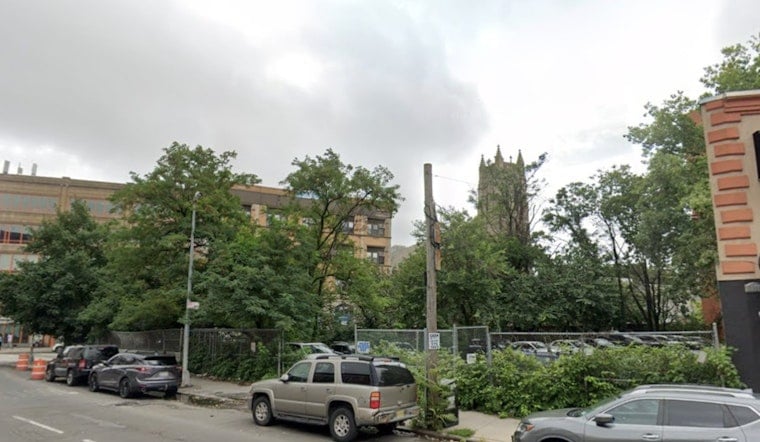
A vacant, city-owned lot at 3116–3124 Third Avenue in the Melrose section of the Bronx is the target of plans for a 20-story apartment building with 215 units, a project that would require New York City to tear down a height restriction that has governed the neighborhood for more than three decades. The New York City Department of Housing Preservation and Development has filed plans for the tower and selected Procida Cos. and Nos Quedamos to develop it.
The building would total 176,000 square feet, according to plans reported by Connect CRE, which cited filings first covered by the New York Business Journal. Amenities would include a roof terrace, a second-floor terrace, a community room, and 7,000 square feet of commercial space. The project is designed to advance the Melrose Commons Urban Renewal Plan, which proposes new affordable housing across a 33-block area of the South Bronx.
To make the tower possible, HPD has requested removal of the 85-foot height limit that has applied to new multifamily development in the vicinity since the urban renewal plan was approved by the city in 1994. That original height cap was part of a broader framework, expiring in 2034, designed to redevelop a 30-block area with housing, commercial, and park goals, according to BrooklynWorks. Early community planners had favored the moderate height limits specifically to preserve neighborhood scale and light, per the Planners Network.
A Grassroots Nonprofit Born From Resistance to City Plans
Nos Quedamos, whose name translates to “We Stay,” is described in the filings as a community development nonprofit. The organization was founded on June 9, 1993, by local activist Yolanda García specifically to resist top-down municipal urban renewal plans that threatened to displace Melrose residents and business owners, according to the Bronx Times. García led the group until her death in 2005 at age 53 and was later honored with the dedication of Yolanda García Park in Melrose.
Prior to this project, the nonprofit had already developed more than 150 buildings in Melrose, including 122 townhouses with 373 rental units and 13 apartment buildings totaling 1,139 residences, the outlet's reporting shows. The group has also built 12 community gardens across 33 blocks in the neighborhood, per the same account.
Procida Cos., described in the filings as a Bronx-based developer, has its own long history working alongside Nos Quedamos in Melrose. The pair jointly completed the 107-unit La Terraza affordable housing complex and the 60-unit Orion condominium building on Third Avenue, according to Affordable Housing Finance, with La Terraza having required brownfield environmental remediation and ten separate funding streams to complete.
Tax Breaks and Zoning Relief Both on the Table
HPD has asked the Planning Commission to create an Urban Development Action Area Program designation within the neighborhood. The designation would set forth guidelines for developing income-restricted and affordable housing on the site.
The push for both a tax designation and a height-limit waiver reflects the scale of the regulatory lift facing this project as it moves through the city's land-use review process. The project is planned for a vacant, city-owned parcel in Melrose.
Rents Are Climbing Faster Than Local Incomes
The push to build more units on this remaining lot is part of the project's effort to add housing.
The 215-unit Melrose proposal also arrives amid a broader wave of residential infill across the neighborhood. In March 2026, private permit filings were submitted for an eight-story, 35-unit residential building at 720 Elton Avenue, part of a pattern of developers targeting small-to-midsize vacant lots for multifamily projects across the Bronx. The article also discusses digital infrastructure nearby.
Whether the Melrose tower ultimately clears the Planning Commission and City Council will hinge on how city officials and neighborhood stakeholders weigh the original 1994 vision for low-to-mid-rise scale against the pressure to build more units on one of the few municipal parcels left in the neighborhood. The project's fate now rests with the broader land-use review process still ahead.




