

























































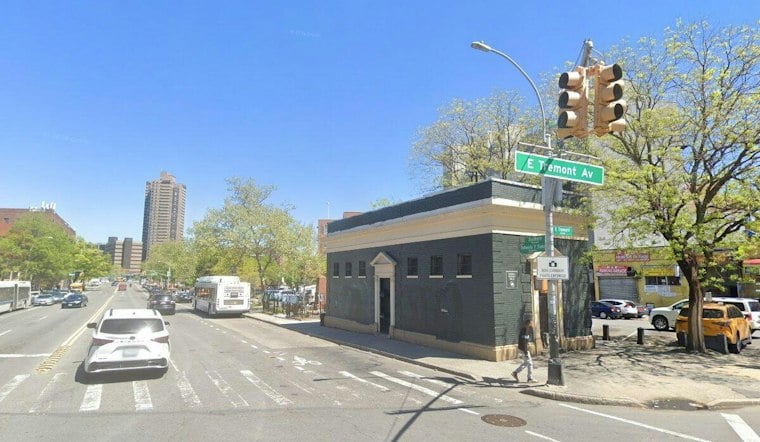
New York City has finished building a dedicated bus lane along Tremont Avenue in the Bronx, a project meant to speed up one of the city's most sluggish bus routes. The busway is officially up and running this week, giving the Bx36 bus a protected lane after years of delays that stretched back to a prior mayoral administration.
The Bx36 typically carries about 39,000 people a day but has crawled along at roughly 5 mph, according to New York Daily News. For a neighborhood where 72% of households don't own a car, that kind of pace isn't just an inconvenience — it's often the only way people get to work, school, or the doctor. The busway runs from 6 a.m. to 8 p.m. seven days a week, with the eastbound lane stretching between Southern Boulevard and Third Avenue and the westbound lane running between Southern Boulevard and Belmont Avenue.
Buses, Access-A-Ride vans, large trucks, and bicycles are permitted to use the new lane, while private cars, taxis, and rideshares are restricted to local travel only and must take the next available right turn when they enter from a side street, the outlet reports. Parking is still allowed along the busway section of Tremont Avenue.
A Long-Delayed Project Finally Moves Forward
The Tremont Avenue busway was first proposed during the Adams administration before being shelved in 2025, per the Daily News. Mayor Mamdani said the city would finally move forward with the Bronx's long-delayed busway, reviving a plan that had stalled for years. Tremont Avenue/Cross Bronx is one of five initial next-generation rapid-bus corridors under the joint city-state “Next Stop: Fast Buses, Better Service” plan, an $882 million initiative Mayor Zohran Mamdani and Governor Kathy Hochul launched in July 2026 targeting 50 priority corridors across the five boroughs, according to NYC.gov. The city committed $254 million in expense funding and $628 million in capital funding over five years to back the effort.
Tremont Avenue was selected as one of five initial next-generation rapid bus routes under that plan. Not everyone is thrilled with the outer-borough-first approach: as Hoodline previously reported, Manhattan Community Board 6 has demanded rapid transit upgrades for the M15 route, frustrated that Tremont Avenue and Northern Boulevard in Queens got the nod as pilot corridors ahead of high-ridership Manhattan lines.
Safety Upgrades Follow a Deadly Stretch of Road
Beyond speeding up buses, the project included curb extensions and other pedestrian safety measures at eight intersections along the route. NYC DOT has cited the frequency of injuries along Tremont Avenue in labeling it a priority corridor for safety improvements. Crashes there killed four people and injured roughly 630 more between 2020 and 2024, per the Daily News report.
The route the Bx36 now follows isn't new territory for controversy in the Bronx. Hoodline reported in April on a violent assault aboard a Bx36 bus along Tremont Avenue, underscoring that the corridor has drawn scrutiny for more than just its notoriously slow ride.
Enforcement Cameras and Citywide Speed Problems
Drivers who illegally enter, park, or stand in the busway face fines starting at $50 and climbing to $250 for repeat offenders.
The push for enforcement follows years of citywide frustration with bus speeds. A Comptroller finding put New York City bus speeds at an average of 8.17 mph in 2024. That figure had barely budged from 8.22 mph in 2015 despite repeated municipal speed initiatives. MTA operational reporting found that expanding Automated Camera Enforcement across active bus routes cut vehicle collisions by 20%, with more than 1,900 buses across 63 routes outfitted with the cameras.
What Comes Next for Bronx Bus Riders
Other busway projects across the city include corridors like 14th Street in Manhattan and Jay Street in Brooklyn.
Drivers must follow the busway's turn restrictions. Whether the busway's camera enforcement can keep the lane clear without pushing double-parked cars onto residential side streets remains something transit officials will be watching closely in the months ahead.





