

























































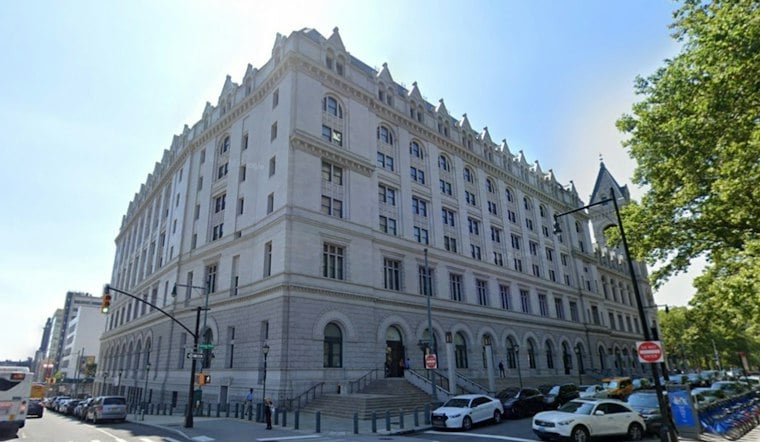
A Brooklyn man has been charged with sex trafficking, interstate prostitution and promotion of prostitution connected to the Penn Track, a stretch of Pennsylvania Avenue in East New York long associated with forced sex work, violence and murder. The charges, announced Friday, add another prosecution tied to the Penn Track.
According to US Attorney EDNY
, the office of the U.S. Attorney for the Eastern District of New York announced the charges against the Brooklyn man for conduct tied to the Penn Track and other locations. A brief description from the
U.S. Department of Justice
indicates the case centers on a sex-trafficking market along the stretch of Pennsylvania Avenue known as the Penn Track, though the full scope of the allegations, the defendant's identity, and case specifics were not detailed in the available material.
What and Where Is the Penn Track
The Penn Track is a stretch of roadway along Pennsylvania Avenue near Wortman and Georgia Avenues in East New York, according to the Brooklyn District Attorney. Other accounts describe it more bluntly: PenLink, a public-safety technology firm that has covered related prosecutions, calls it a known open-air sex market located on Pennsylvania Avenue in East New York.
Reporting from the area paints a grim picture of daily life along the track. The New York Post found that sex workers there have been selling sex for as little as $85 a time, even as the practices exposed in a related prosecution — coercion, violence and ruthless competition — remain part of their lives, per the outlet's account.
A Pattern of Prosecutions Along the Same Corridor
The newly announced charges follow a string of cases centered on the same stretch of road. In December, the Brooklyn District Attorney announced that 26-year-old Sayquan Fleming was indicted on 27 counts, including sex trafficking of a child, sex trafficking by force, second-degree assault, third-degree rape and second-degree promoting prostitution. That office's account of the case says a 15-year-old girl was allegedly forced to solicit patrons from 2 a.m. to 7 a.m. in early November.
Another case tied to the Penn Track resulted in one of the corridor's most severe sentences. Omari “Prince” Scott, known as “Prince,” was sentenced to 50 years on charges of human trafficking and ordering the murder of a rival, the New York Post reported. A jury convicted Scott in June 2025 of that murder-related offense and of trafficking a woman identified as Jane Doe 2, according to the same account.
Violence Woven Into the Trafficking Trade
The Scott case centered on the May 1, 2023, murder of Cleveland Clay, described as a rival trafficker, according to PenLink's account of the prosecution. Evidence presented at trial showed Scott recruited another trafficker, Michael Simmons, to carry out the killing by shooting Clay at close range in a White Castle parking lot near the Penn Track, PenLink reported.
Prosecutors also detailed how Scott allegedly kept women in his control, promising them protection, taking their earnings, making them dependent on him for basic necessities and then turning to violence and threats, per the New York Post's reporting on the trial. Women working for him were also discussed in the outlet's reporting. Before the trial, Scott had already pleaded guilty to promoting prostitution and sex trafficking involving another victim identified as Jane Doe 1, according to PenLink.
Police Describe a Sprawling, Dangerous Track
The scale of the activity along the Penn Track has drawn attention from the NYPD. Officers believe as many as 350 pimps operate along the corridor, jousting for position and employing countless young women, most against their will, according to ABC7 New York. Police have also said that nearly half of the shootings recorded in the track have been linked to the sex trade, per the station's reporting.
That shift in enforcement philosophy has changed how officers approach the women found working the corridor. Cops now view the women as victims of sex traffickers rather than as the primary offenders, ABC7's account states, reflecting a broader law enforcement effort to target the men running the operations instead of the women coerced into them. It remains unclear whether the newly charged Brooklyn man's case is directly connected to the earlier Fleming, Scott or Simmons prosecutions, and the full details of the September charges — including the defendant's identity, any court appearances, and the specific scope of the alleged conduct — have not been made public in the material reviewed for this report.



