

























































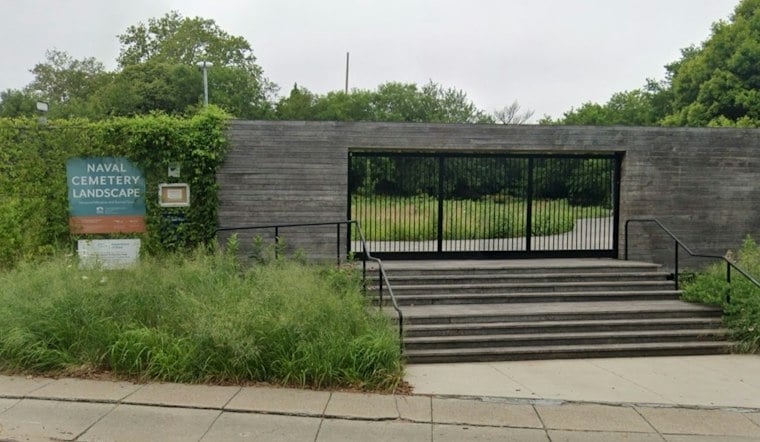
A patch of Williamsburg land with more than 2,000 buried bodies beneath it has just become New York City's first internationally accredited botanic garden. The native plant sanctuary at 63 Williamsburg Street West, part of the Brooklyn Navy Yard, was officially named the Greenway Botanical Garden at the Naval Cemetery in July, earning accreditation from Botanic Gardens Conservation International.
As CBS News New York reporter Hannah Kliger notes in her report from Williamsburg, the plot of land carries a complicated past. That past traces back to 1831, when the site began operating as the Brooklyn Naval Hospital Cemetery. According to the Brooklyn Greenway Initiative, it served as the final burial site for more than 2,000 people between 1831 and 1910, including U.S. Navy officers, Marines, Medal of Honor recipients, and foreign sailors, with an estimated 10 percent believed to be of African descent.
A Burial Ground That Still Holds Its Dead
Congress authorized decommissioning of the cemetery in 1926, and 987 recorded bodies were transferred to Cypress Hills National Cemetery. But 1990s archival and archaeological investigations found 987 recorded relocations, leaving hundreds of burials unaccounted for, per the same Brooklyn Greenway Initiative account. That finding still shapes how the site can be used today.
Under New York State Historic Preservation Office mandates that prohibit soil disturbance deeper than four inches to protect those unrecovered graves, landscape architects built an elevated black locust boardwalk on precast diamond pier foundations, according to the Landezine International Landscape Award. The design means visitors never make physical contact with the ground itself as they walk through the sanctuary.
From Abandoned Parcel to a Decade of Restoration
The transformation didn't happen overnight. The nonprofit Brooklyn Greenway Initiative first developed the site and opened it to the public in spring 2016, and this year's botanic garden designation marks the culmination of a decade-long effort to turn an abandoned military parcel into an urban ecological sanctuary, as detailed by Marvel Architects. The garden also serves as the first major public open-space node along the 26-mile Brooklyn Waterfront Greenway.
The site has also become a place of learning. Through partnerships with The Green School and Brooklyn Community Housing and Supportive Services, the sanctuary has functioned as an outdoor laboratory for students at The Green School, who study hydrology, soil science, and biology, according to Nature Sacred.
Built for Pollinators, Too
Designed as a climate-resilient native meadow, the garden holds an official designation as a Monarch Waystation from Monarch Watch, thanks to dense plantings of milkweed and nectar-rich wildflowers that support declining urban pollinator populations, the Brooklyn Greenway Initiative notes. The borough also has other green-space initiatives, including the Brooklyn Botanic Garden's Greenest Block in Brooklyn contest.
The Greenway Botanical Garden's international recognition marks a milestone for a small-scale, native-meadow project built atop a 19th-century military burial ground.




