

























































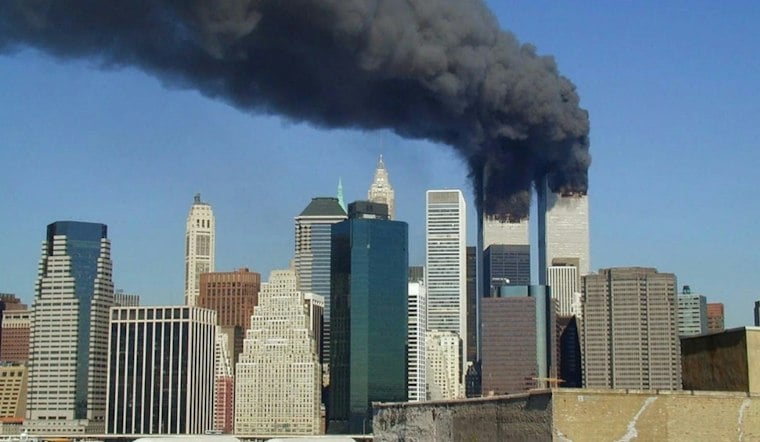
Henryk Siwiak was shot once in the chest on a Bedford-Stuyvesant sidewalk just before midnight on September 11, 2001, and died minutes later without anyone ever coming to his aid. Twenty-five years on, no one has been arrested, no motive has been confirmed, and the 46-year-old Polish immigrant's death remains the only homicide New York City officially recorded that day that wasn't connected to the terror attacks.
Siwiak had emigrated from Kraków, Poland, in October 2000 after losing his job as a railway inspector, according to The Sun. He joined his sister Lucyna in Queens and found work at a construction site in Lower Manhattan, sending roughly half of his $1,000 monthly earnings back home to support his wife, Ewa, their 17-year-old daughter Gabriela's college tuition, and their 10-year-old son, Adam, as reported by WNYC. When the towers fell that morning, his job site shut down, and he went looking for overnight cleaning work instead.
That search for a $10-an-hour shift at a Pathmark supermarket set the fatal chain of events in motion. Siwiak was trying to reach the store at 1520 Albany Avenue in Farragut, Brooklyn, but after reviewing a map with his landlady, he was mistakenly directed toward 1 Albany Avenue in Bedford-Stuyvesant, roughly three to four miles from where he needed to be, per WNYC's reporting. He boarded the wrong train and ended up alone, at night, in an unfamiliar neighborhood on the most chaotic day in the city's modern history.
A Death That Went Unnoticed for Weeks
Investigators believe Siwiak encountered several people near Decatur Street shortly after 11 p.m. A resident at 121 Decatur Street reported hearing men arguing in the street followed by gunshots around 11:40 p.m., while another witness reported seeing three or four men following Siwiak along Albany Avenue shortly before the shooting, according to WNYC. Police believe multiple shots were fired, though Siwiak was struck only once, with the bullet entering his chest and damaging a lung, The Sun reports.
After being shot, Siwiak climbed the stoop of 119 Decatur Street and rang the doorbell, pleading for help. The resident inside, too frightened in the aftermath of that day's attacks to open the door, left him to collapse face-down on the sidewalk, according to Defrosting Cold Cases. Siwiak died at 11:42 p.m., receiving no assistance in his final moments. His sister Lucyna did not learn of his death until 5 a.m. the next morning.
Because news outlets were consumed entirely by coverage of the World Trade Center attacks, the first stories reporting Siwiak's murder didn't run until nearly a month later, in October 2001, per Wikipedia. That delay meant investigators lost weeks of potential public tips at precisely the moment memories were freshest.
An Investigation Crippled From the Start
The case was handicapped from its opening hours. With NYPD homicide detectives and crime scene units almost entirely deployed to Lower Manhattan, Siwiak's crime scene was instead processed by a burglary evidence-collection unit, according to a Substack account by writer Fredrik Lehtoranta. The local precinct was stretched to its limit, The Sun notes.
First-responding officers initially mistook Siwiak for a National Guard member because he was wearing a camouflage surplus Army jacket and matching pants purchased at a local Salvation Army store, WNYC reported. That detail has fueled one of the case's enduring theories: that Siwiak's appearance and foreign accent, combined with his military-style clothing, may have caused someone to mistake him for a threat amid the day's panic, though this remains unproven, per The Sun.
No definitive motive has ever been established. Siwiak still had his wallet and cash on him when he was found, which complicates the leading theory floated by investigators, that of an attempted robbery gone wrong, since robbers typically take a victim's money. Another possibility raised in reporting is that the killing was connected to a gang initiation, per The Sun's reporting. The gun was never implicated in another crime and apparently was never found, according to Unresolved, meaning it has never resurfaced.
A Case NYPD Still Calls Active
Tom Joyce, who oversaw the local precinct in 2001, has discussed the investigation, The Sun reports. The investigation has long lacked witnesses willing to provide meaningful information, and investigators have still not identified the person or people responsible.
A Crime Stoppers tip line is available for information about the case. The Anatomy of Murder podcast has reported that reward at $12,000. Because official city crime statistics exclude the nearly 3,000 people killed in the terror attacks that day, Siwiak's death stands alone as New York City's sole recorded homicide on September 11, 2001, unrelated to the World Trade Center, the Pentagon, or United Flight 93.
His family still awaits answers after a loss that arrived wrapped in a day of national catastrophe. Twenty-five years later, Henryk Siwiak is still remembered by relatives as a Polish immigrant and father of two who came to America for a better life and never made it home.



