

























































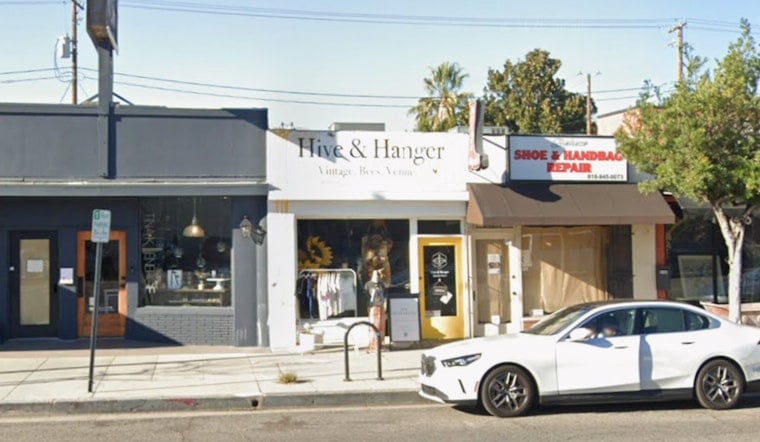
Tucked into Burbank's Magnolia Boulevard, a vintage clothing store called Hive & Hanger is also a working pop-up bee museum, though you will not find a single live bee buzzing around the racks. Owner Carrie Diaz built the museum inside the shop she originally opened in 2020 as an all-vintage store, and it now includes a Bee 101 explainer, a pesticide exhibit, and a list of noteworthy beekeepers for visitors to browse between clothing racks.
Diaz did not set out to reinvent her business. As reported by LAist, she said, “I was not looking to change careers.” Before the bee museum took shape, the Magnolia Boulevard storefront operated as a second-hand women's clothing boutique called Best Friend Central, according to myBurbank. Diaz eventually folded her apicultural education work into the same space, turning it into the hybrid fashion-and-pollinator storefront that exists today.
The shop sits squarely within Magnolia Park, the stretch of Burbank commercial real estate known locally as Retro Row for its concentration of vintage clothing stores, antique shops, and retro boutiques. That reputation, tied to the neighborhood's identity as a magnet for vintage shoppers, makes an odd pairing like a bee museum inside a resale shop feel less like a novelty and more like a natural fit for the corridor.
What's Actually Inside the Bee Museum
The museum has no live hives, but it does have plenty to look at and learn from. Per LAist's reporting, exhibits include a breakdown of the differences between bees and wasps, noting that wasps can sting repeatedly while honeybees die after they sting. The exhibit also includes a pesticide exhibit addressing threats to pollinator health, plus a running list highlighting noteworthy beekeepers.
Diaz herself became an urban apiarist through formal training, pursuing a bee master certification at UC Davis and collaborating with Elina Niño at the university's bee lab, according to LAist's account. The California Master Beekeeper Program that underlies that credential, administered through UC Davis, requires participants to complete tiered coursework, practical field evaluations, and ongoing annual public education hours to stay certified, according to UC Davis. Diaz's path there began small: she took a two-hour beekeeping experience course before going deeper into the craft, per LAist.
From Rooftop Hives to a Honey Sommelier Track
Diaz now maintains her own hives in Burbank and takes care of many more scattered across the San Fernando Valley, according to LAist's reporting. Her reach extends further still, with hives she tends running from San Diego to Bel Air, including a couple with a view of the Hollywood Sign. She also rescues hives across Southern California, the outlet notes. Beyond her personal apiary, Diaz's urban beekeeping services extend into commercial and corporate properties, including rooftop and grounds hives for Warner Bros. Studios Burbank, Apple's Culver City campus, and IKEA Burbank, according to her own professional site, CarrieDiazzz.com.
Diaz has also branched into the sensory side of the honey world. She began studying as a honey sommelier at the American Honey Tasting Society in Connecticut in 2025, per LAist, and held her first informal honey tasting at the bee museum itself. She plans to eventually study and test at the National Register of Experts in Sensory Analysis of Honey in Bologna, Italy. That Bologna-based register underpins the technical sensory-analysis guidelines used in U.S. honey sommelier certification, according to ClassBento, training practitioners to identify honeys by floral origin, aroma, color, and flavor profile.
Small Jars, Bigger Stakes
Inside Hive & Hanger, shoppers can buy small jars of locally sourced honey, including honey harvested from Diaz's own hives. She typically only takes the excess honey her bees produce beyond what they need for themselves, since bees rely on honey as sustenance, LAist reports. That honey starts as nectar and becomes honey once bees dehydrate its moisture and cap it with wax, according to the outlet. Diaz has also pointed out just how much labor goes into a single spoonful: it takes 12 honeybees their entire lives to produce one teaspoon of honey, she told LAist.
The educational push extends well beyond the shop's walls. Diaz hosts school trips for the Boys & Girls Clubs, per LAist, and the pop-up museum and its traveling exhibits have together drawn more than 7,500 in-person visitors and reached over two million people online, according to CarrieDiazzz.com. Locally, she also delivers environmental outreach through partnerships with Burbank Water & Power's Eco-Campus and the Burbank Eco-Council, per her professional site.
Why the Bees Need the Attention
The stakes behind the museum's lighthearted honey tastings and vintage racks are considerably heavier. U.S. beekeepers lost an estimated 55.6% of their managed honeybee colonies between April 2024 and April 2025, the highest annual loss rate recorded since national tracking began in 2010, according to survey findings published by Vegas Bees. Commercial beekeeping operations fared even worse, suffering annual colony losses of roughly 62%, compared with a 51% average loss rate among backyard hobbyist beekeepers over the same period, per the same data.
Urban beekeeping in the region exists within a regulatory framework that only recently opened up. Backyard beekeeping was formally legalized across residential zones in the neighboring City of Los Angeles in October 2015 under Ordinance No. 183920, which mandates annual registration with the Los Angeles County Agricultural Commissioner, according to the City of Los Angeles Department of City Planning. That ordinance ended a century-long municipal ban on urban beekeeping following years of community advocacy. Against that backdrop, a small storefront on Retro Row pairing bee education with racks of vintage clothing looks less like a quirky detour and more like a hands-on response to a crisis playing out in hives across the country.



