

























































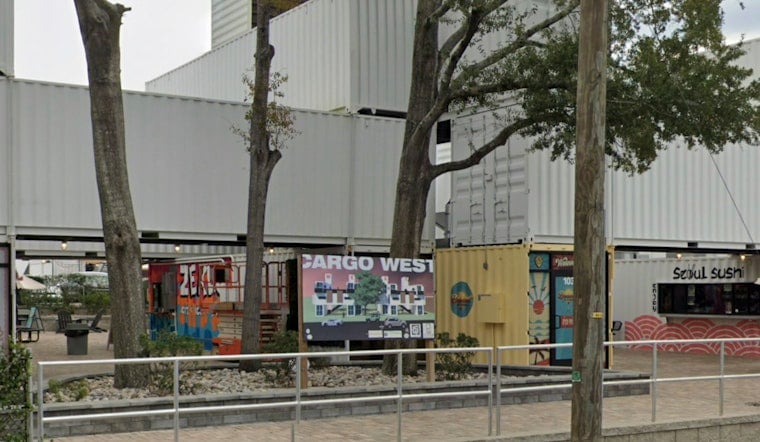
A new smashburger stand is set to open by the end of September inside Wilmington's Cargo West food court, and for the family behind it, the menu is personal. Dustin Smith is opening Burger Street with his mother, Diane, and head chef Tomas Virgil, building the concept as a tribute to his late father, James Smith, whose Patty Wagon food truck helped kick off Wilmington's food truck movement back in 2011.
James Smith died in 2023, and as reported by Port City Daily, Burger Street draws direct inspiration from his original Patty Wagon truck. That truck was more than a neighborhood favorite — after James Smith ran into municipal zoning restrictions, he submitted a draft ordinance that led the Wilmington City Council to adopt the city's first formal food truck rules in 2013, according to WWAY NewsChannel 3's coverage of the commission vote at the time. He later parked the truck for good and opened his first brick-and-mortar spot, Fork 'n' Cork, in downtown Wilmington in May 2014, per WilmingtonBiz's reporting from that period.
A Family Still Building on James Smith's Legacy
The Smith family's efforts to preserve James Smith's culinary footprint have continued well past his death. In January 2025, Dustin Smith and Diane re-acquired full ownership of Smoke on the Water, the Cape Fear riverfront restaurant James Smith had co-founded in 2016, buying out co-founder Allan Middleton. Not every location survived, though — two weeks after James Smith's death, the family closed Fork N Cork's Carolina Beach outpost, citing steep summer parking fees, food inflation, and the town's dramatic seasonal swing from roughly 30,000 summer visitors down to about 6,000 year-round residents.
Fork 'n' Cork's original downtown location, now about 2 miles from downtown Wilmington, remains part of the family's operation and is even lending a hand with Burger Street's development — the restaurant is running specials tied to the new venture's menu research. Dustin Smith has said Burger Street will not share Fork 'n' Cork's menu, according to the same Port City Daily report, though the connection between the two runs deep: Fork 'n' Cork serves half-pound burgers, while Burger Street is deliberately going smaller with smashburgers instead.
Smashburgers, Brats and a Streets-Themed Menu
Burger Street plans a 16-item menu built around eight or so burger and hot dog styles, offering single, double and triple smashburger patties alongside a Chicago dog. Diners can also expect kosher dogs, kielbasa and a Wisconsin brat that's cooked in beer and topped with grilled onions, sauerkraut, cheese curds and mustard on a pretzel bun. Sides will include smothered tots, cheese curds and fried mozzarella, and the team is weighing funnel cakes and a donut burger for the menu as well, with the restaurant also planning to appeal to vegetarians and vegans.
True to its name, Burger Street plans to name menu items after local streets — the Port City Daily report notes a possible Italian-inspired Queen Street Burger among them. Items are expected to run between $11 and $14, with the stand aiming to operate seven days a week from 10 a.m. to 9 p.m., staffed by about two people per shift. Before hiring additional workers, Dustin Smith plans to offer extra shifts to existing Fork 'n' Cork and Smoke on the Water staff, and the business plans to list on third-party delivery apps to make its food available beyond the food court itself.
Why Cargo West, and Who Came Before
Burger Street will occupy a shipping container previously used by three other concepts that didn't last. Shepard's BBQ, run by Brandon and Elizabeth Shepard, operated there for about a year after expanding from Emerald Isle in July 2024 before pivoting to a different concept, Mochi Bear, and eventually closing. Mochi Bear had served boba tea and mochi donuts before it closed ahead of Burger Street's arrival. Birdbox, known for its fried chicken sandwiches, opened in the same food court in September 2025 but closed recently after experiencing a small fire. The Shepard family told Port City Daily that small-owned restaurant margins are extremely tight and that meaningful development takes time — a reflection of the turnover the container space has already seen.
Dustin Smith said the Cargo District location made sense given the nearby offices, neighborhoods, and hospital and medical businesses, with hospital and medical facilities located less than a mile from the site. Cargo West Food Court sits at Queen and 15th streets and currently houses around 10 small independent restaurants, including neighbor Mike's Vegan Grill, under a no-menu-overlap policy meant to keep competing concepts from crowding each other out. The food court broke ground in early 2024 and officially opened in 2025 as a multi-story container hall of micro-kitchens and walk-up windows, according to Feast Wilmington. The food court's third story will house offices, while developer Leslie Smith plans to build a bar on the second story.
A Bigger Container District, With Room to Grow
Cargo West sits inside the broader Cargo District, which Leslie Smith launched in 2017 by repurposing 20-foot shipping containers from local ports. By late 2025, the district had grown to house 85 rented commercial units, 19 restaurants and nine bars across a multi-block footprint, according to WilmingtonBiz. Leslie Smith and managing director Kelly Reynolds have scheduled a Phase II expansion of Cargo West for 2026, with container lease rates across the district ranging from $400 to $15,000 a month depending on footprint — a range wide enough to fit both fledgling startups and larger operators.
Dustin Smith and his partners considered several new restaurant concepts over the past six months before settling on Burger Street, and the container format wasn't their only option under consideration. The team scouted a restaurant space at the new Refuel on River Road, and they're separately weighing a steak and seafood restaurant at 7Bridge, the 37-acre mixed-use development under construction in Riverlights. That project is master-planned for up to 100,000 square feet of retail and 3,300 rental residential units, serving as the primary commercial entrance hub for the 1,400-acre Riverlights community.
Wilmington's broader food truck and container-food landscape has also been shaped by legal fights well beyond city limits. In nearby Carolina Beach, vendors filed a constitutional lawsuit backed by the Institute for Justice, which led the town to repeal in October 2018 an ordinance requiring food truck operators to also own an in-town brick-and-mortar restaurant. For a family whose patriarch once helped write Wilmington's own food truck rules, Burger Street's arrival at Cargo West lands as something of a full-circle moment — one small container at a time.


