

























































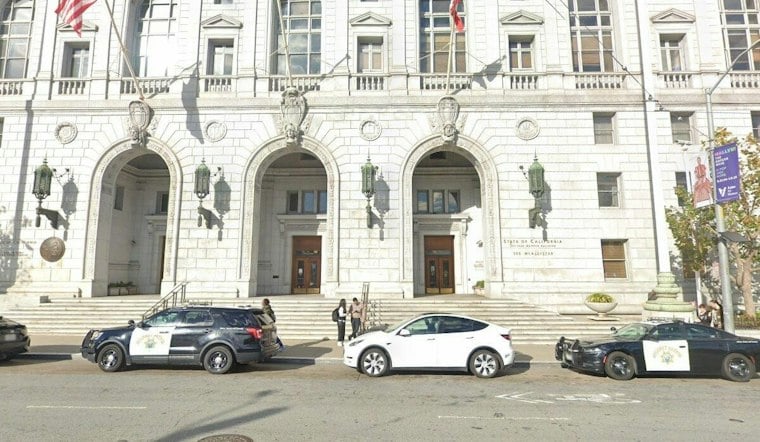
A California appeals court has blocked San Francisco's Empty Homes Tax, ruling Friday that the voter-approved measure conflicts with property owners' rights under state law. The unanimous decision concerns Proposition M, which was intended to encourage vacant units back onto the rental market by taxing apartments left empty for six months or more; possible further review means the litigation is not necessarily over.
The 1st District Court of Appeal affirmed San Francisco Superior Court Judge Charles Haines' October 2024 ruling that Proposition M could not take effect. As reported by the San Francisco Chronicle, Justice Kathleen Banke wrote that the 1985 Ellis Act prevents public entities from compelling owners to rent residential property. Justices Monique Langhorne Wilson and Charles Smiley joined Banke's opinion. Haines ruled for the property owners at trial, according to Hawaii Free Press.
Proposition M asked owners of buildings with three or more units to pay a tax ranging from $2,500 to $20,000 per unit, depending on size and how long a unit sat empty, per the Chronicle's report. San Francisco voters approved the measure with 54.5% support in 2022. The tax specifically exempted single-family homes, duplexes, and government- or non-profit-owned properties, applying only to larger residential buildings, according to SPUR.
Who Fought the Tax, and Why
The lawsuit that ultimately unraveled Proposition M was brought by industry trade groups along with individual property owners, including brothers Eric and Andrew Debbane, who keep units in their five-unit building for personal use rather than renting them out, according to the California Apartment Association. Clifford Fried, who represented the Berkeley Property Owners Association in the case, said California law prevents local municipalities from interfering with landlords who want to exit the rental market, per the Chronicle's reporting. The Berkeley Property Owners Association was also involved in the case, according to the group's account.
Proposition M was originally spearheaded by former District 5 Supervisor Dean Preston and backed by the Democratic Socialists of America, with the goal of targeting an estimated 4,000 vacant apartment units per year, according to the California Globe. The measure was backed by the Democratic Party, tenants' advocates and labor unions, and was meant to fund affordable housing and low-income rent subsidies, the Chronicle reports. Business groups and apartment owners opposed it from the start. The tax targeted a real problem: about 10% of San Francisco's roughly 406,000 rental housing units sat vacant in 2019, per the Chronicle's account.
Millions in Revenue Now Off the Table
The financial stakes were substantial. An August 2022 report from the San Francisco Controller's Office estimated Proposition M would generate $20 million in tax year 2024, $30 million in 2025, and up to $37 million in 2026 if vacancy patterns held steady. The measure was blocked from taking effect. After the initial trial court loss, the Board of Supervisors voted 9-2 in early 2025 to officially suspend collection and administration of the tax while the city pursued its appeal, according to SPOSFI.
City Attorney David Chiu's office had defended Proposition M throughout the litigation. Spokesperson Jen Kwart said the city attorney's office was disappointed by the ruling but respected the court's decision, per the Chronicle. Kwart did not say whether Chiu would seek review from the California Supreme Court.
Ripple Effects Beyond San Francisco
The Ellis Act at the center of the ruling was enacted in response to a California Supreme Court ruling involving Santa Monica, according to LA Metro Home Finder. The law grants property owners the right to enter the rental market, exit it, and remain out of it, and California law more broadly prevents local municipalities from interfering with that choice, the Chronicle notes.
A Separate Canadian Example
According to the City of Vancouver, Vancouver began its Empty Homes Tax in 2017 to address housing affordability and availability. Vancouver's program is a separate Canadian municipal policy, not a California measure tested against the Ellis Act, and the available comparison does not establish how U.S. cities structure exemptions or enforcement for residential vacancy taxes.
San Francisco's trial court defeat has already reshaped debate elsewhere in the state. San Diego voters rejected Measure A in June, a similar proposed tax on non-primary residences left vacant more than 182 days, with opponents pointing directly to San Francisco's court loss, according to OB Rag. Hoodline previously reported that an Oʻahu panel nixed its own vote on an empty-homes tax, citing San Francisco's trial court loss as part of the backdrop for that debate.
Proposition M cannot currently be enforced, but the dispute may continue if the city seeks review from the California Supreme Court. San Francisco's residential vacancy-tax program therefore remains on hold while any next legal steps are considered.



