

























































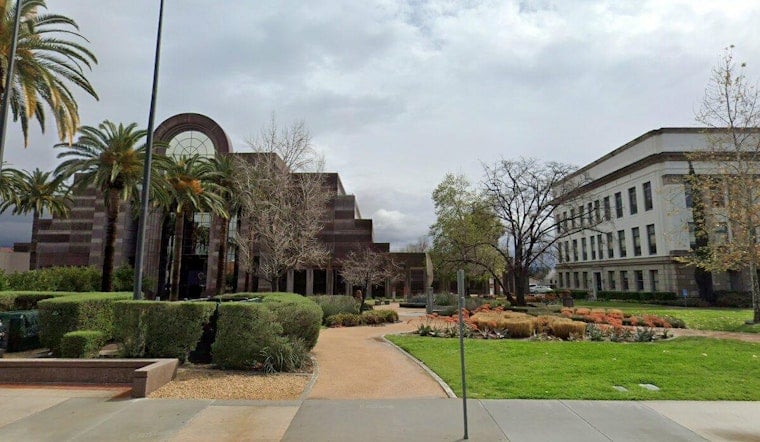
San Bernardino County’s Board of Supervisors currently has the final word on how its own district lines are drawn, but a bill now sitting on Governor Gavin Newsom’s desk could take that power away entirely. Senate Bill 1414 would replace the board’s authority with an independent, 14-member citizens’ panel empowered to draw the county’s supervisorial districts after every future census, starting with the 2030 count.
The bill passed the California State Senate on a final concurrence vote of 30-10 on August 26, clearing its last legislative hurdle before heading to the governor, according to LegiScan. As the San Bernardino Sun reports, the measure would strip the Board of Supervisors of the final authority it currently holds over county map lines and give that power to an independent commission instead.
San Bernardino County already has an advisory redistricting panel, appointed by the board and a judge, that offers input on redrawing supervisorial districts. But under the current process, which county voters approved through a ballot measure, the Board of Supervisors still has the ultimate decision over where district lines fall. SB 1414 would change that dynamic by making a new citizens’ commission’s decisions final rather than advisory.
How the New Panel Would Be Chosen
The selection process for the proposed 14-member commission is designed with multiple layers meant to keep county supervisors from influencing who sits on it. According to the California Assembly Committee on Elections, the county elections office would first narrow the pool of applicants down to 60 qualified residents, after which the county auditor-controller would randomly choose eight commissioners from that pool. Those eight would then appoint six additional members to round out the panel and ensure demographic and geographic balance.
The bill sets specific eligibility rules as well: past candidates for county office, county employees and lobbyists would all be ineligible to serve on the panel, per the seed reporting. The commission would also be required to include at least one member from each of the county’s five supervisorial districts, and its partisan makeup would need to be allocated in proportion to each party’s share of county voters in the last statewide election. With registered Democrats making up 38.6% of the county’s more than 1.23 million registered voters as of June, compared with 30.9% for Republicans and more than 20% with no party preference, that formula would give Democrats a plurality of seats, according to the San Bernardino County Registrar of Voters.
Transparency Rules and the Case for Reform
SB 1414 calls for public hearings and other transparency measures throughout the mapping process. The League of Women Voters of California notes the bill mandates at least 10 public hearings total, including at least seven before preliminary district maps are drawn — with one hearing required in each supervisorial district — and at least three more after draft maps are released. The League backed the bill specifically because of those strict hearing and transparency requirements.
State Senator Eloise Gómez Reyes, who sponsored SB 1414, has argued the county’s existing advisory panel isn’t good enough. She said residents need a meaningful voice in who represents them and in the rules by which they are represented, and per the seed reporting, she has said the current advisory panel is not an independent, citizen-led commission with final map-drawing authority. District redrawing is meant to reflect changes in population and demographics and to help ensure fair representation, a principle at the center of the debate given that Hispanics and Latinos make up approximately 56% of the county’s roughly 2.18 million residents, according to U.S. Census Bureau data.
Local Officials Push Back
Board of Supervisors Chair Dawn Rowe has publicly opposed SB 1414 and formally urged Newsom to veto it. Rowe asked the governor to allow residents to continue determining how county government operates, and she urged him to consider the precedent of overriding local voters’ will. The county’s current advisory process traces back to a charter revision measure that county voters approved in November 2020, which also instituted supervisor term limits and lobbying disclosures, according to California Choices.
The current board districts were approved by the Board of Supervisors in 2021, and Rowe herself won re-election outright in the March 2024 primary for a term running through January 2029, meaning the supervisors fighting this bill will remain in office through the late 2020s regardless of the outcome. San Bernardino County’s governance rules have repeatedly been contested through ballot measures and courtroom battles before, including 2020’s Measure K, which sought to cut supervisor pay and limit terms and triggered legal challenges that eventually led to a compromise charter amendment in 2022.
Newsom’s Mixed Record on Redistricting Bills
The governor’s decision is complicated by his own history with similar legislation. In October 2023, Newsom vetoed Assembly Bill 1248, which would have mandated independent redistricting commissions in all California counties and cities with more than 300,000 residents, citing concerns over state-reimbursable mandate costs, according to Democracy Docket. That veto has created uncertainty over whether he will sign this narrower, county-specific bill or reject it on similar fiscal grounds.
At the same time, Newsom has signed county-specific independent redistricting bills covering Riverside, Orange, Sacramento, Los Angeles, Fresno, Kern and San Luis Obispo counties, along with San Diego County, which also has an independent redistricting panel. The California Legislature passed a bill creating an independent redistricting commission for Riverside County’s supervisorial districts in 2022; that commission would begin drawing districts after 2030, the same timeline proposed for San Bernardino County under SB 1414. Riverside County’s process has faced its own backlash, with critics alleging unfair opportunities for Latino candidates to win supervisor seats, even as Jose Medina, Yxstian Gutierrez and V. Manuel Perez currently form a Latino majority on that county’s five-member Board of Supervisors.
California’s statewide FAIR MAPS Act, signed into law in October 2023, already prohibits local district maps drawn to favor incumbents and requires enhanced public notice and map posting rules, according to California Common Cause. Reform advocates argue that law isn’t enough on its own and that only an independent panel with final authority can fully eliminate the conflict of interest inherent in supervisors drawing their own districts. Whether Newsom agrees will determine how San Bernardino County residents are represented once new district lines are drawn following the 2030 Census.





