

























































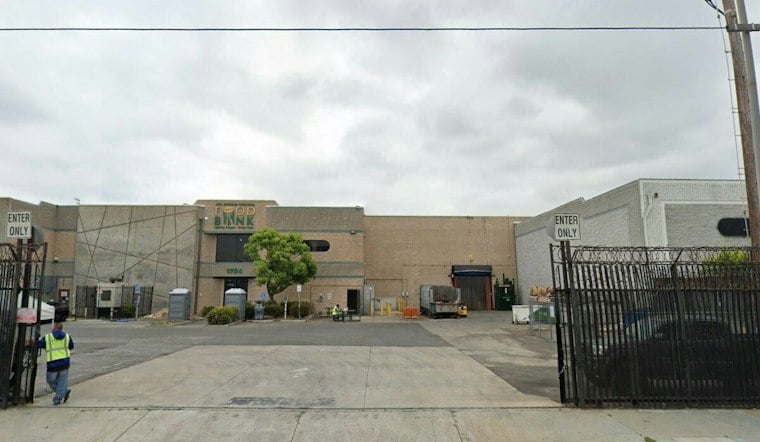
California is putting $15 million of its own money toward a program that helps food banks buy fresh produce straight from local farms, stepping in after the federal government pulled funding that once supported the effort with more than $88 million. The state money is meant to keep food flowing to families across California at a moment when nearly half of residents are struggling to put meals on the table.
According to the Times of San Diego, the Local Food Purchase Assistance program lets food banks throughout California buy fresh, locally grown food from regional farmers and producers. The federal government terminated an agreement with California that would have funded the program in March 2025, according to the same report, forcing the state to find its own way to keep the pipeline open. California food banks include 43 individual food banks statewide, per the report, and state dollars are described as helping feed the 1.1 million people who rely on the Los Angeles Regional Food Bank alone.
The cut wasn't unique to California. Nationally, the Agriculture Department halted more than $1 billion in federal spending for programs that helped schools and food banks buy from local farms and ranchers, according to Politico. The outlet reported that USDA did not plan to carry out a second round of funding for fiscal year 2025 under the Local Food Purchase Assistance Cooperative Agreement Program, and that the agency notified states the previously announced funding was no longer available, with affected agreements terminated following 60-day notice. Existing agreements with substantial remaining financial resources were set to continue through the rest of their performance period, per Politico, and more than 40 states had signed agreements to participate in the program in previous years.
Advocates Say the Money Fills a Real Need
State Assemblymember Rhodesia Ransom advocated for funds to help California's hungry families, according to the Times of San Diego, and said the $15 million expenditure was part of a larger push to use state dollars to meet the needs of hungry families. “I am proud of the substantial investments I've helped secure this term,” Ransom said, per the report.
David May said locally grown food funds give food banks another tool to maintain a diverse and nutritious food supply, according to the same report. The Times of San Diego noted that locally grown food purchases support families, seniors and individuals facing hunger while creating reliable markets for California farmers and producers and keeping food dollars within California communities. The report also noted that California's agricultural and logistics economy supports the state's status as the fourth-largest economy in the world.
Food Insecurity Numbers Paint a Grim Picture
The scale of need behind the funding fight is stark. California had 47.2% of residents experiencing food insecurity in 2024, according to data cited by the Times of San Diego and attributed to the UCLA Center for Health Policy Research. Adults ages 25 to 39 had the highest food-insecurity percentage among age groups surveyed by UCLA that year, with those earning below 200% of the federal poverty level experiencing food insecurity at a rate of 55%. Among single adults with children, roughly 57% reported incomes below that same poverty threshold and said they could not afford enough food, per the report. Los Angeles County has one in four people experiencing food insecurity, the report noted. The Times of San Diego reported that the governor's office and several lawmakers had not responded by publication time.
Elsewhere, the fallout from the federal cuts has already hit food banks hard. The Food Bank of Contra Costa and Solano reported 11 canceled shipments of food through TEFAP, according to The Reporter, representing more than 250,000 meals that would have gone to roughly 65,000 households the food bank serves monthly. The outlet reported that USDA terminated $1 billion that schools and food banks used to buy from nearby farmers and canceled $500 million in fiscal-year 2025 TEFAP deliveries, while also canceling $5 million in grant opportunities supporting farm-to-school programs. Food bank leaders told the outlet that food prices were 20% higher in 2025 than in 2020, even as a network of 49 California food banks serving 58 counties saw more than 300 food loads paused or canceled.
Other States Felt the Same Squeeze
Pennsylvania's experience mirrors California's. The Greater Pittsburgh Community Food Bank said the LFPA funding cut would cost it $1.6 million annually and roughly 2.9 million pounds of food from Pennsylvania farms and manufacturers, according to the Herald-Standard. Gov. Josh Shapiro said the commonwealth's LFPA program had supported 189 Pennsylvania farms and 14 food banks, per the outlet, which also noted that the cuts came as food banks nationwide were already seeing a surge in demand.
South Carolina growers lost an estimated $15.2 million when USDA revoked 2025 funding for the Local Food for Schools and Local Food Purchase Assistance programs, according to the Post and Courier. Since 2023, South Carolina's LFPA program had shipped $6.1 million in fresh food from about 100 farms to distributors statewide, the newspaper reported, while its Local Food for Schools program had shipped $2.6 million worth of fresh food from 23 farms to more than 213,000 school children. Nationwide, the newspaper reported, the cuts were expected to remove $660 million worth of fresh, locally grown food from schools and $421.5 million from food banks.
Why California's Farms Together Program Matters
California's version of the program, known as Farms Together, connects food banks with local farms, including small and socially disadvantaged producers. The partnership includes 43 food hubs and local aggregators and 34 food banks, feeding millions of Californians, according to the California Alliance with Family Farmers, or CAFF. Roughly 70% of the farms participating are small, mid-scale or socially disadvantaged operations, per CAFF, and the program allows food banks to purchase local produce directly from family farms.
The budget bill signed by Gov. Gavin Newsom included the $15 million to keep the program running for another year, according to Acterra, which described the funding as connecting small, under-resourced farms to food banks in need of fresh produce. Whether that one-year infusion will be enough to offset the loss of federal support remains to be seen, but for now it keeps a program that dozens of California food banks and farms rely on from going dark entirely.


