

























































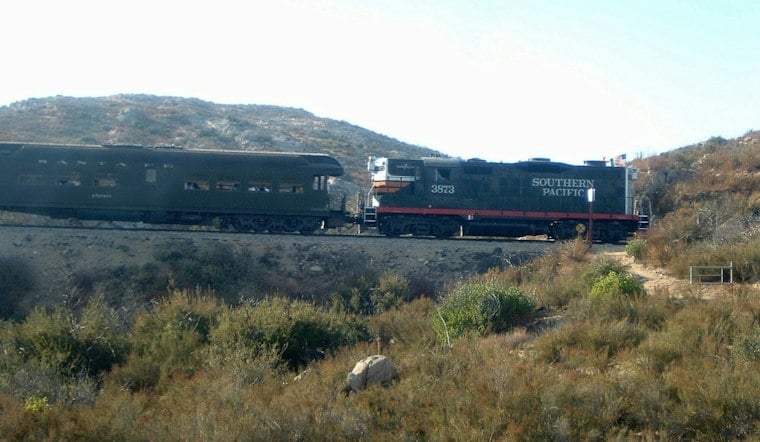
Southern California's only wine train is chugging back to life this fall, departing from the Pacific Southwest Railway Museum in Campo with two runs scheduled for October 4 at noon and 3 p.m. The 90-minute Backcountry Wine Train carries riders through eastern San Diego County's scenic highlands aboard a restored vintage train, pairing a curated six-glass tasting flight with desert views along tracks laid more than a century ago.
According to the New York Post, the tasting flight is selected by a sommelier and features wines from local Southern California wineries and vineyards, served alongside individual charcuterie plates and macaroons from a San Diego bakery. Organizers promise plenty of refreshments along the way, and riders who don't drink can opt for a six-glass tasting flight of handcrafted nonalcoholic beverages instead. All riders must be at least 21 years old.
Three Ticket Tiers, One Presidential Pullman Car
Premium class costs $100 per person and includes access to a restored 1920s train car, per the same account. First class runs $150 per person, offering two-person or four-person tables plus an additional glass of sparkling wine or nonalcoholic cider, with first class guests gaining access to the train's open-air platform and parlor area.
The splurge option is VIP aboard the Robert Peary, priced at $250 per person and requiring guests to book the entire car, which accommodates up to eight friends and includes personalized tableside service by a sommelier. That sommelier is Lisa Redwine, who curated the excursion's tasting flight and who will offer riders a conversation opportunity during the trip, the article notes. Redwine passed the Court of Master Sommeliers Advanced Exam in 2010 as one of only four women in San Diego to earn the title, according to the San Diego Food + Wine Festival, and she now serves as General Manager and Wine Director at Burtech Family Vineyard Winery and judges regional wine competitions; she began teaching in San Diego State University's Business of Wine program in 2006 and taught there for many years until the program recently ended.
A Pullman Car With a Presidential Past
The Robert Peary itself carries its own weight of history. Built in July 1927 by the Pullman Car & Mfg. Corp. as part of Pullman's Explorer series, the 83-foot steel heavyweight car was used by President Franklin D. Roosevelt 34 times between 1934 and 1936, along with Hollywood celebrities and corporate executives, before it was donated to the Pacific Southwest Railway Museum Association in October 1974 for preservation. It's now kept at Campo for private charters and special events, which helps explain the premium attached to the VIP ticket package.
The rails beneath the train have their own storied past. The route was built between 1907 and 1919 by San Diego sugar industrialist John D. Spreckels as part of the San Diego & Arizona Railway, a line engineers nicknamed The Impossible Railroad because of the brutal mountain and desert terrain it had to cross. The 148-mile binational line required 21 tunnels and extensive trestles to give San Diego its direct rail link to the east.
An All-Volunteer Operation in the High Desert
Running the whole operation is the Pacific Southwest Railway Museum Association, formally established in 1961, which operates its Campo facility and 14-mile excursion line entirely with volunteer crews on tracks leased from the San Diego Metropolitan Transit System. Those volunteers support train operations and maintenance-related work while the museum's collection includes more than 120 pieces of historic railroad equipment and artifacts. The museum preserves the history of classic train travel with equipment that includes steam and diesel locomotives, passenger cars, freight cars and cabooses, and it houses over 100 pieces of historic railroad equipment.
Campo Depot sits at an elevation of 2,700 feet in the foothills of eastern San Diego County along State Route 94, roughly 50 miles east of downtown San Diego near the U.S.–Mexico border, according to Good Times Travel. That inland elevation creates a high-desert atmosphere that's a world apart from coastal San Diego's usual scenery, a contrast that sets this ride apart from the valley tasting-room tours more typical of California wine country.
Wine Country Roots Run Deep in San Diego County
The wines poured aboard the train draw on an industry with genuine local roots. San Diego County is home to 172 active and planned wineries growing 43 grape varieties, according to the county's 2026 state-of-the-industry report cited by KPBS. Despite broader national wine market headwinds and rising insurance costs, the county's winery landscape has kept employment stable while expanding.
The region also holds three federal American Viticultural Areas, including the San Pasqual Valley AVA, established in 1981 as one of the oldest designated wine regions in the country, alongside the Ramona Valley AVA and the broader South Coast AVA, per the San Diego Vintners Association. Those AVA designations certify the geographical origin of grapes and help local winemakers build regional brand recognition. San Diego's wine story also extends beyond the AVAs listed above.
Limited Run Before the Museum's Holiday Season
The Backcountry Wine Train marks a limited window on the museum's calendar. Its regular weekend Golden State passenger excursion pauses after September 27, after which the tracks are dedicated to autumn and winter seasonal offerings starting with the wine train on October 4, followed by the Pumpkin Express, Sip & Scare, and the North Pole Limited.
Riders planning ahead should check with the museum about accessibility details for the equipment used on each trip.





