

























































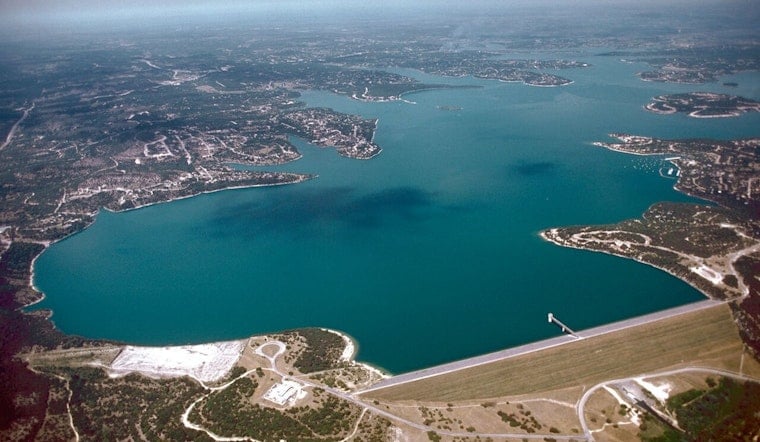
Canyon Lake has quietly become one of the best places in the country to be a homebuyer, ranking No. 7 nationally among the strongest buyer's markets in 2026, with housing supply nearly triple the national average. Homes in the Hill Country community are sitting on the market for a median of 102 days, and some sellers have slashed asking prices by nearly half just to attract offers.
The ranking comes from a MySA analysis of ConsumerAffairs data, which found Canyon Lake's 78133 ZIP code carrying 14.6 months of housing supply compared with a 5.1-month national average. That glut of unsold homes has flipped the usual script: buyers, not sellers, now hold the cards. Canyon Lake homes have sold for an average of just 97% of list price, and only 3.4% of homes sold above asking, according to the report. Some listings have seen price drops of 49.3%.
Texas ZIP Codes Dominate the Buyer's Market List
Canyon Lake wasn't alone on the list. Three Texas ZIP codes ranked among the nation's top 10 buyer's markets, per the same MySA report. Port Aransas came in at No. 2 nationally with 18.3 months of housing supply — the highest inventory level in the entire analysis — while Port Bolivar ranked No. 6 with 15.9 months of supply. Port Bolivar listings saw price cuts averaging 51.9%, and homes there sold for roughly 93% of list price. Port Aransas fared similarly, with 38% price drops and just 1% of homes selling above list price.
Nationwide, by contrast, 23.5% of homes sold above list price, underscoring just how buyer-friendly these Hill Country and coastal Texas markets have become relative to the rest of the country. The broader ConsumerAffairs analysis, which examined 6,291 ZIP codes using Redfin housing data from April through June 2026, found that the South accounted for the vast majority of the nation's weakest seller's markets — 38 of the 50 strongest buyer's markets were located there, and Florida alone accounted for 21 of them.
National Context Shows the Extremes
ConsumerAffairs' broader August 2026 housing report put Canyon Lake's standing into national perspective. Miami's 33130 ZIP code ranked as the single strongest buyer's market in the country, with 15.5 months of supply, while Rochester, New York's 14616 ZIP code sat at the opposite extreme as the nation's strongest seller's market, with 93.9% of homes selling above list price. Canyon Lake's numbers land it firmly in buyer's-market territory, giving house hunters more time to compare properties and negotiate with sellers than most Americans currently have.
A Population Boom Fuels the Inventory Glut
The oversupply driving Canyon Lake's buyer-friendly conditions traces back to explosive growth across Comal County. U.S. Census Bureau data released in March 2026 and reported by Community Impact shows the county's population surged 27.8% between 2020 and 2025, climbing from 163,608 to an estimated 209,166 residents, with domestic migration accounting for the vast majority of that increase. The San Antonio Report previously found Comal County to be the second-fastest-growing county in Texas and third-fastest nationwide among counties with at least 100,000 residents, expanding 29% over five years — a pace that spurred heavy homebuilding across the region.
That building boom has since outpaced demand. Realtor.com market data showed active listings in the 78133 ZIP code reached 1,119 in June 2026, a 69.4% jump over three years, as median sold prices fell 14.5% year-over-year to $292,552. Federal Reserve Economic Data compiled by Trading Economics shows the slowdown has been building for a while: median days on market in Comal County hit a record high of 102 days in February 2026, a stark reversal from the record low of 27 days set back in April 2022.
Statewide Cooling Mirrors the Local Slowdown
Canyon Lake's conditions reflect a broader statewide trend. According to the Texas REALTORS Q1 2026 report, the statewide median home price dipped 0.8% year-over-year to $328,000 — the first Q1 annual decline in more than a decade — while statewide inventory expanded to 5 months and 19 of 26 Texas metro areas saw increases in days on market.
Lake Levels and Waterfront Quirks Shape the Market
Local environmental swings have added another layer to Canyon Lake's real estate story. The reservoir hit a record low of 876.96 feet, or 45.1% full, in May 2025, a drought stretch that had previously forced boat ramp closures and dampened market activity, as Hoodline reported in its earlier drought coverage. Then, in July 2026, historic floods added more than 19 feet of water to the lake in just four days, fully refilling the reservoir and reopening boat ramps, according to a report carried by EINPresswire. That same flooding also triggered a boil-water order for nearby residents, as Hoodline detailed in its coverage of the storm's aftermath.
Buyers eyeing waterfront property face another wrinkle unique to Canyon Lake: because the reservoir is a U.S. Army Corps of Engineers project, the federal government owns the shoreline flowage easement, which prevents roughly 99% of waterfront residential properties from building private docks or other waterfront structures, per HomeQualify.ai. That means home values in the area often hinge on proximity to public or subdivision boat ramps rather than direct dock access.
Investor and vacation-rental activity has also grown alongside the housing supply. An analysis by AirROI covering August 2025 through July 2026 found Canyon Lake had 913 active short-term rental listings generating average annual host revenue of $26,989, with average daily rates around $329 and a 29.4% occupancy rate, as total vacation rental supply grew 9.3% year-over-year.
For now, the numbers add up to a rare moment of leverage for house hunters in a region that has spent years favoring sellers. With Comal County's median household income at $93,744 — 25.7% above the national average — and steady migration continuing along the San Antonio-Austin corridor, the current buyer's advantage may prove temporary even as today's inventory glut gives shoppers room to negotiate.




