

























































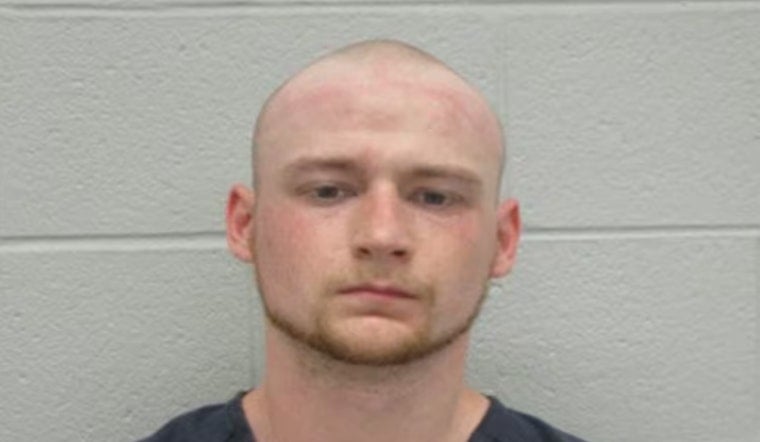
A 28-year-old inmate at Carson City Correctional Facility died yesterday after being found unresponsive in his two-person cell, and Michigan State Police are investigating his death as a suspected homicide. Facility staff attempted life-saving measures before Johnathan Adam Brancheau was pronounced dead, and his 28-year-old cellmate has been identified as a suspect in the case.
According to CBS News, Michigan State Police are leading the investigation into what happened inside the cell at the state-run facility in Montcalm County, roughly 54 miles northeast of Grand Rapids. Brancheau had been placed on the Michigan Sex Offender Registry following a March 2019 conviction in Manistee County's 19th Circuit Court, according to Michigan Sex Offender Registry records, and he had entered Michigan Department of Corrections custody on January 22, 2024.
Carson City Correctional Facility is a state-operated, multi-level prison that opened in 1989 with capacity for up to 2,526 adult male prisoners spread across 15 housing units, ranging from Level I minimum to Level IV close custody, per the State of Michigan. When fully staffed, the facility employs 428 personnel and relies on a mix of double-bunked cells and open-bay housing units to hold its population.
A Facility With a History of Deadly Cell Violence
This is not the first time a cellmate relationship inside Carson City has turned fatal. In April 2021, inmate Duncan Eric Willis II beat 63-year-old cellmate Kenneth Arlell Gibson to death in a dispute over a television set, according to The Daily News. Gibson died three days later from blunt force head trauma, and Willis, who was already serving life plus 202 years, was sentenced in July 2022 to an additional 15 to 30 years for manslaughter after pleading guilty.
The facility has also seen repeated violence directed at staff. On February 28, 2025, an inmate attacked two corrections officers at Carson City, punching one in the face and kicking the other, leaving one officer with facial lacerations, the Michigan Corrections Organization detailed in an April 2025 report. Then on March 5, 2026, an inmate at the facility threatened to kill his cellmate before attacking a responding corrections officer, striking the officer multiple times in the head, an incident that MLive counted among more than a dozen serious security breaches reported across Michigan prisons between March and June of this year.
Union Warnings About Staffing and Segregation Space
The corrections officers' union has repeatedly flagged safety conditions at Carson City specifically. In a January 2026 letter to state corrections leadership, the Michigan Corrections Organization cited a severe assault at the facility in which an officer was attacked by an inmate who remained in Level IV general population carrying a knife, because limited segregation bed space prevented proper isolation. Union officials argued that keeping high-risk inmates on special status in general population units, without the physical controls of segregation, increases danger for both staff and prisoners.
Statewide staffing shortfalls compound the problem, according to union officials who reported an 18.5% officer vacancy rate across Michigan facilities in 2026, translating to an estimated shortage of 1,000 corrections officers system-wide. Union leaders maintain that unfilled monitoring posts leave gaps in supervision that create opportunities for assaults to happen out of sight.
Pending Legislation Aims to Speed Up Death Investigations
Brancheau's death comes less than two weeks after the Michigan House passed a bipartisan legislative package aimed at safety and transparency in state prisons. On August 25, the House voted 102-2 to approve House Bills 5920 and 5921, which would expand the investigative authority of the Legislative Corrections Ombudsman following a string of inmate deaths in state facilities this year. The bills, sponsored by Reps. Jennifer Wortz and Karl Bohnak, would require the Michigan Department of Corrections to give the ombudsman direct access to internal medical, mental health, mortality, and morbidity records without requiring individual release forms, eliminating delays that have hampered past investigations.
The legislation would also mandate monthly and annual public reports on complaints and resolutions, and it would cut the required advance notice for facility inspections from 72 hours down to 48. Under current law, only legislators and inmates can file complaints with the ombudsman, but the bills would expand that right to corrections staff, advocates, and prisoners' family members. The plan is currently pending in the Michigan Senate.
Lawmakers have specifically cited two other 2026 prison deaths during committee testimony for the bills: in May, two female inmates, 28-year-old Khaira Howard and 57-year-old Rebecca Fackler, died within days of each other at the Women's Huron Valley Correctional Facility in Ypsilanti, a sequence that helped propel state legislative hearings on prison safety. Brancheau's death adds another fatality to that timeline as the reform package awaits action in the Senate.



