

























































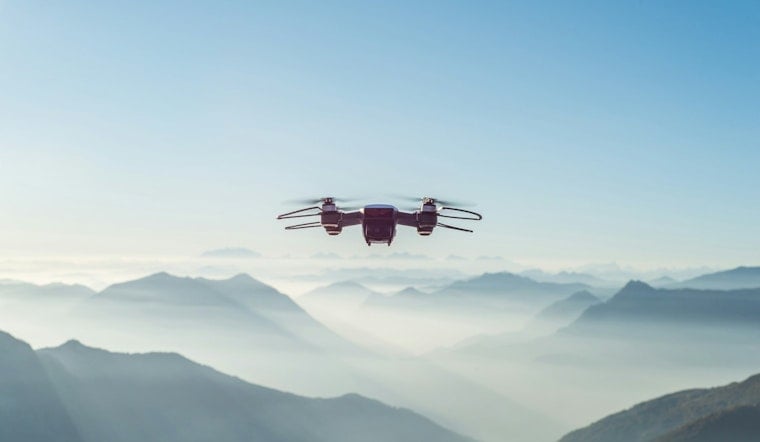
The Catalina Island Conservancy announced new restrictions on August 31, banning drones from operating over 88% of Catalina Island, a sweeping policy shift triggered by a close call between a small plane and an unauthorized drone earlier this year. The Conservancy manages 42,000 acres on the island, and it says the ban is meant to prevent a repeat of the May incident that put a pilot and passengers at risk near the island's only airstrip.
According to KTLA, the Conservancy says a pilot flying a Cessna 182 southwest of Airport in the Sky had to make quick evasive maneuvers on May 19 to avoid a midair collision with a drone. The plane was flying at roughly 3,000 feet at the time. Conservancy rangers who responded tracked the drone descending toward Goat Harbor and believe it may have been launched from a boat offshore, according to the Catalina Island Conservancy.
Carl True, cited in the KTLA report, said a collision with a drone could cause severe damage to an aircraft and put everyone on board at risk. The stakes are especially high at Airport in the Sky, which sits atop a 1,602-foot mountain plateau with steep cliff drop-offs on both ends of its runway. That terrain creates visual altitude illusions along with severe downdrafts and updrafts, according to Boldmethod, making any midair obstacle unusually dangerous for pilots navigating the approach.
A Runway Rebuilt by the Military, Now Facing a New Hazard
The airport's 3,000-foot concrete airstrip isn't just short by commercial standards, it's also relatively young. It was completely rebuilt in 2019 through an Innovative Readiness Training partnership between the Conservancy and the U.S. Department of Defense, an effort that brought nearly 200 Marines and Navy Seabees to the island to replace decaying asphalt, per General Aviation News. The runway was later renamed Ace Clearwater Airfield following a $1.5 million private donation. That kind of investment underscores just how narrow the margin for error is at an airstrip already known for its slope and cliffside approaches, and why Conservancy officials are treating stray drones as a genuine flight-safety threat rather than a mere nuisance.
Under the new policy, the Conservancy will post signs across the island explaining the restrictions, and it is explicitly modeling the ban on National Park Service rules. The National Park Service instituted its own nationwide drone prohibition across national parks back in June 2014 under Policy Memorandum 14-05, citing safety risks to visitors, interference with emergency flights, and wildlife harassment. That federal precedent gives Catalina's land managers a ready-made template, since the Federal Aviation Administration maintains exclusive control over the airspace itself but recognizes that property owners and land trusts can restrict where drones may take off, land, or operate on the ground.
What's Still Allowed, and What Happens to Violators
The Conservancy's policy carves out several exceptions. Drones may still be used for scientific research, habitat monitoring, emergency response, utility work, Conservancy land management operations, and commercial filming under permit. The ban also does not apply to drone operations conducted entirely from, on and over privately owned property within or adjacent to Conservancy boundaries, though anyone wanting to fly within three miles of Airport in the Sky must first check in with airport staff.
Violators face a range of consequences. Depending on the circumstances, the Conservancy says it may issue warnings, revoke a violator's access to Conservancy land, or seek recovery of costs for any damage done to Conservancy resources. More serious cases could be referred to the Federal Aviation Administration, the Los Angeles County Sheriff's Department, or the California Department of Fish and Wildlife. That last referral carries real teeth under state law: using a drone to disturb normal animal behavior counts as illegal wildlife harassment under California Code of Regulations Title 14 Section 251.1 and Fish and Game Code rules, punishable by misdemeanor charges, fines up to $1,000, and up to a year in county jail, according to DroneLaws.us.
Why Wildlife Is Part of the Calculation
The wildlife stakes on Catalina are not abstract. The island is home to the endemic Catalina Island fox, a threatened subspecies that collapsed to roughly 100 individuals in the late 1990s due to canine distemper before recovering through years of intensive land trust management, as detailed by PBS SoCal. It is North America's smallest native canine, and low-flying or crashing drones pose a real disturbance risk to a population that took decades to rebuild.
Southern California has already seen how badly a single drone incident can go for wildlife. In May 2021, an unauthorized drone crashed into nesting grounds at the Bolsa Chica Ecological Reserve in Orange County, causing roughly 3,000 elegant terns to flee and abandon an estimated 1,500 to 2,000 eggs, according to the Los Angeles Times. That case ended in a reward offer and law enforcement involvement, and it stands as the kind of outcome Catalina's land managers say they're trying to avoid.
Enforcement will not be simple. Because the FAA controls the airspace itself while the Conservancy only controls activity on its land, catching violators often depends on spotting a drone at launch or landing rather than mid-flight. That's complicated further by Catalina's coastline, where boaters can legally launch drones from offshore waters outside Conservancy boundaries and then fly them over protected land, which is exactly what rangers suspect happened in the May incident near Goat Harbor.
Catalina draws more than one million visitors a year, most arriving by ferry from Long Beach, San Pedro, Dana Point, and Newport Beach, and its interior wildlands already require Conservancy permits for activities like hiking, biking, and vehicle access. The drone ban adds one more rule to that list for an island where the Conservancy has also drawn scrutiny recently over its handling of a separate ecological issue, a mule deer eradication plan that drew pushback from Los Angeles County officials.




