

























































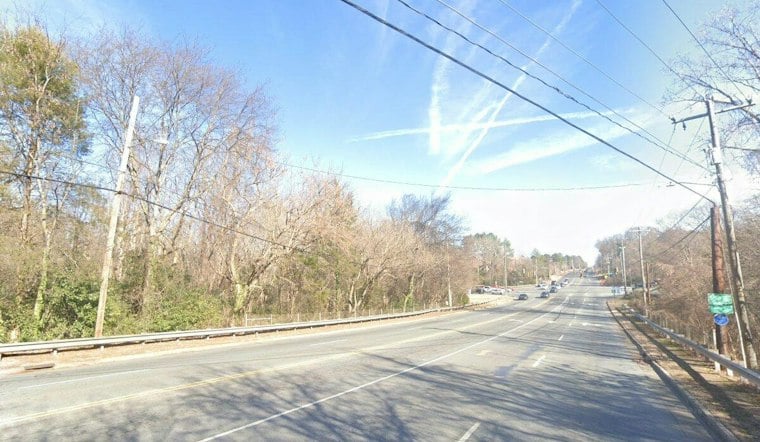
Charlotte City Council members Malcolm Graham and Joi Mayo reversed their votes Monday, pushing the council to a 7-4 decision restoring support for the I-77 South express toll lane project — just months after the same body voted to pull the plug on it. The reversal clears the way for a Charlotte Regional Transportation Planning Organization vote Wednesday, September 23, that could finally settle the fate of an 11-mile toll corridor stretching from Uptown to the South Carolina line.
The council's about-face, reported by WFAE, undoes a May 2026 vote in which council members rejected the project by a 6-5 margin. Graham, who represents District 2, was among those who initially opposed the toll lanes before switching his position this week. The project itself is enormous in scope: North Carolina's Department of Transportation estimates the express lanes will cost between $3.2 billion and $4 billion to build, according to the same WFAE report, running the full 11 miles from I-277 to the state line.
Charlotte's vote matters far beyond city limits. On the CRTPO board, voting power is weighted by population, and Charlotte alone controls 31 of 74 weighted votes — roughly 41 percent, according to Axios Charlotte. Charlotte has the largest share of votes on the board, and CRTPO had followed the city's lead in May by withdrawing support for the project altogether.
A State Budget Ultimatum Changed the Math
The financial pressure driving this reversal traces back to a state budget provision signed in July. The provision gives local governments that voted against NCDOT projects 90 days to reverse course and restore their support; those that continue opposing the project may have to reimburse the state for sunk design costs, per reporting from the same WFAE account.
Those numbers turned out to be steep. NCDOT financial records released in September showed the state had already spent $69,577,547 on I-77 South design work between November 2018 and August 2026, including nearly $28 million paid to engineering firm RS&H and $5 million in legal fees, the report notes. Charlotte alone risked owing more than $30 million of that total.
City Attorney Andrea Leslie-Fite cautioned council members against using the city's transportation sales tax revenue for repayment, saying existing city funds would be a better source, the same account states. The city could also face choices such as raising property taxes or cutting existing projects to cover the debt. A separate legal analysis from the Southern Environmental Law Center countered that sales tax revenue could, in fact, be applied — a dispute the city attorney's warning did not resolve.
Suburbs Split Under the Same Pressure
Charlotte wasn't alone in facing this squeeze. Facing the same potential penalties, Cornelius, Huntersville, and Statesville all voted to restore their support for the toll project, while Matthews and Davidson remained resistant or skeptical, per the WFAE report. Statesville alone faced more than $1 million in potential repayment fees.
That divide was on display Tuesday on WFAE's Charlotte Talks with Mike Collins, which convened Matthews Mayor John Higdon and Davidson Mayor Rusty Knox alongside Charlotte City Council member Malcolm Graham to discuss the project ahead of the CRTPO vote, according to the program described by WFAE. The roundtable brought together leaders from municipalities that landed on opposite sides of the reimbursement standoff.
NCDOT's $300 Million Offer to Affected Neighborhoods
To help win over skeptical urban neighborhoods, NCDOT offered up to $300 million in community investments along the corridor in a drafted memorandum of agreement that city officials considered legally binding. That includes at least $150 million for a concrete cap meant to reconnect divided communities and $20 million for nonprofits to build grocery stores, with proposed locations along West Boulevard and Statesville Avenue, according to WCNC.
Not everyone considers the package sufficient. West Charlotte neighborhood groups, including the McCrorey Heights Neighborhood Association, and environmental advocacy group CleanAIRE NC have opposed the expansion over concerns that construction would increase fine particulate air pollution, raise noise levels, lower property values, and further divide communities, according to The Charlotte Post. Local leaders have also raised concerns about community division and the area's history.
Those concerns have already reached the courts. In March, the Black Political Caucus of Charlotte-Mecklenburg filed a lawsuit in Mecklenburg County Superior Court seeking a temporary restraining order against NCDOT, alleging insufficient community engagement and raising concerns about neighborhood division and noise, according to Blue Ridge Public Radio.
With Charlotte's council now back in favor and its outsized weighted vote in hand, CRTPO's board was scheduled to vote Wednesday, September 23, on whether to restore the project's regional support. Whether that settles the underlying tension between infrastructure funding pressure and neighborhood equity concerns remains an open question for the communities along the corridor.





