

























































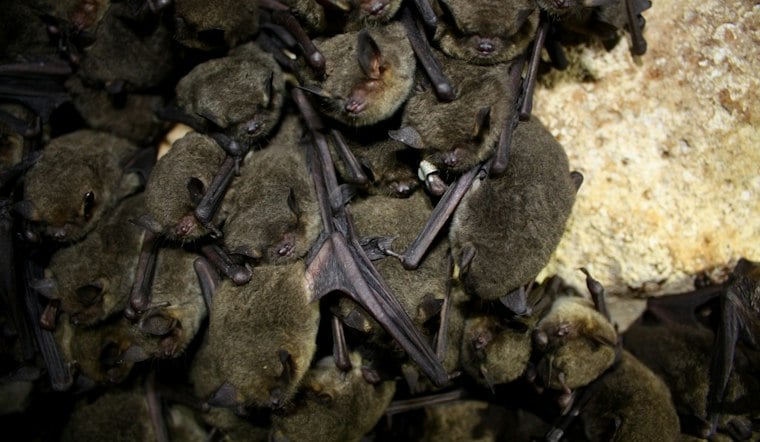
A gray bat turned up in a western North Carolina state park in September, and biologists say it is the first time the endangered species has ever been documented in a state park unit. The discovery came during a routine annual bat survey conducted by North Carolina's State Parks division and the Wildlife Resources Commission, somewhere in the high country of the state's mountains.
According to 828 News Now, the North Carolina Wildlife Resources Commission announced that the bat marks the first time the species has been recorded in a state park in at least 25 years of data collection. As reported by the Transylvania Times, biologists were surprised to catch the bat during the routine September survey, and officials have declined to give a more detailed location for where it was found.
A spokesperson for the Wildlife Resources Commission said the exact site is being kept private specifically to avoid disturbing the bats, per 828 News Now's reporting. Ed Corey, cited in that same report, noted the state park system has more than 25 years of bat data behind it, which is part of why the find is being treated as a milestone rather than a one-off curiosity.
A Species Nearly Erased by Disease
Gray bats have been federally listed as endangered since 1976, according to the U.S. Fish and Wildlife Service. For years, the species was rarely seen in North Carolina at all, and 828 News Now reports that white-nose syndrome, a deadly fungal disease, is considered one of the main reasons gray bats have remained scarce in the state.
Katherine Etchison, cited in 828 News Now's report, explained that white-nose syndrome strikes bats during hibernation, forcing them to wake frequently to groom themselves. That repeated waking burns through winter fat reserves and can leave bats starving before spring ever arrives. The disease reached North Carolina by 2011, according to The News & Observer, and by the time Etchison began her work in 2015, much of the damage to bat populations had already been done. A separate report from Coastal Review notes that white-nose syndrome has only ever been recorded in North Carolina's mountain region.
Why This Bat May Be a Hopeful Sign
Ed Corey, also cited by 828 News Now, said gray bats were not widely observed in the wild across much of North Carolina's mountains for many years. He suggested the species may now be spreading into larger niches and new foraging habitat, possibly because gray bats were less affected by white-nose syndrome than related species. Corey described gray bats as stable across their entire range, a sentiment echoed in the Transylvania Times' account of a Wildlife Resources Commission news release, which said the species' total population finally appears to be stable enough that gray bats may be removed from the endangered species list in the near future.
This mountain discovery follows other recent bat research in the region. The News & Observer reported that researchers caught an Indiana bat in the Nantahala National Forest on June 8, the first time that species had been documented in North Carolina in 11 years. Over the following four days, biologists counted 24 Indiana bats, which the outlet described as the first breeding colony found in more than a decade, including a lactating female that the report called proof the species is reproducing in the state.
Volunteers Fan Out Across the State
Bat monitoring efforts have also extended well beyond the mountains this year. Coastal Review reported that more than 80 volunteers took part in a three-night Bat Blitz inventory at sites spanning Pender, Bladen, Columbus, Cumberland and Robeson counties, part of a broader push to track the state's bat populations. Taken together with the gray bat find, the surveys point to a renewed effort among wildlife officials to document which species are recovering and where, even as white-nose syndrome continues to shape survival odds for bats across western North Carolina.





