

























































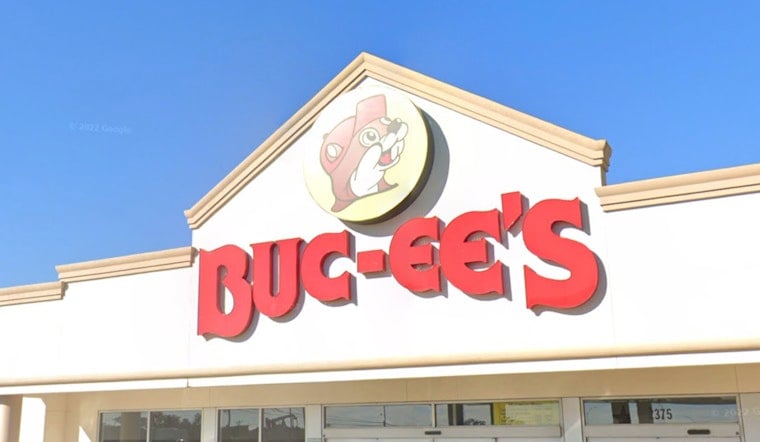
A 74,000-square-foot Buc-ee's travel center proposed for a stretch of Interstate 75 on the north side of the Peace River has Charlotte County residents talking — and not everyone agrees on whether it belongs there. The plan calls for 120 fuel pumps and 740 parking spaces on a site that sits within a FEMA-designated high-risk flood zone, and locals are split between excitement over the Texas-born chain finally coming to Southwest Florida and worry over what that many gas pumps could mean for a river prone to flooding.
According to WINK News, resident David LeBlanc said putting 120 gas pumps next to a flooding river is a terrible idea, warning that the development will flood surrounding areas. Elmer Garza raised his own concerns about traffic and wildlife loss, telling the station that other stretches of Interstate 75 would be more suitable for a project this size. Garza put it simply: everybody's talking about it.
Not everyone shares that skepticism. Cody Buel's family are self-described fans of Buc-ee's, with Buel saying his kids love the chain and that visiting one currently requires at least a three-hour trip. Tim Reese told the outlet he has never actually been to a Buc-ee's but is looking forward to it, a sentiment that captures the mixed reactions rippling through the county as the project awaits final approval.
The Money and the Master Plan Behind It
The travel center isn't a standalone project. Buc-ee's Port Charlotte LLC closed on an $11.5 million purchase of the 38-acre parcel at 25999 Harborview Road on June 25, 2025, according to MySA, marking the chain's first real estate acquisition in the Southwest Florida market along the I-75 corridor. That purchase set the stage for the travel center to serve as the commercial anchor of the West Village district inside the 653-acre Harborview mixed-use development, which Charlotte County Commissioners approved in May 2025, per Punta Gorda Getaway.
The broader Harborview plan envisions nearly 4,000 residential units along with 655,000 square feet of commercial space and office facilities clustered near Exit 170. To square that density with county traffic rules, developers relied on an equivalency matrix in which each fuel pump offsets 20 multi-family residential units — the regulatory maneuver that allowed the 120-pump travel center to move forward without blowing past density caps, the outlet reports.
Roads, Ramps, and Hurricane Evacuation Worries
Infrastructure changes tied to the project include widening Harborview Road to four lanes, building a new roundabout connecting the gas station to Harborview, and modifying Interstate 75 ramps, according to ClickOrlando. Some residents have expressed concern that the added congestion near Exit 170 could complicate hurricane evacuations, a worry that echoes Garza's traffic complaints raised directly with WINK News.
Charlotte County has recorded 11,697 flood insurance claims under the National Flood Insurance Program since 1978, totaling more than $474.7 million in payouts, per data compiled by FludZone. Opponents of the development point to that long history of riverine and surge flooding along the Peace River basin when questioning whether a major fuel facility belongs in a Special Flood Hazard Area.
Wildlife Mitigation and a Pending Legal Fight
Developers have set aside land to preserve gopher tortoise and Florida scrub-jay habitats, WINK News reports. The master Harborview plan specifically designates a 226.55-acre open-space buffer, including 61.21 acres permanently dedicated to protecting those two species native to the region's scrub ecosystems, according to Punta Gorda Getaway's reporting.
Those protections sit inside a wider legal backdrop. Charlotte County's Habitat Conservation Plan, which governs how property owners handle scrub-jay mitigation, became the subject of a 2024 federal lawsuit, Colosi v. Charlotte County, challenging mandatory mitigation fees, according to Natural Resources Associates. The dispute underscores ongoing friction in the county between private development and wildlife preservation mandates that predates the Buc-ee's proposal itself.
Where the Application Stands Now
Despite the land purchase and conceptual approval, the project remains far from a done deal. As of July 2026, Charlotte County Community Development records classified the Buc-ee's application as “Under Review,” and the chain's official future-location schedule has not published a formal opening date, according to Eat Play SWFL. Early media estimates had pointed to a possible 2026 launch, but county records confirm site and stormwater plans remain under administrative evaluation.
Charlotte County Commissioners are set to hold a public hearing on the plans, scheduled for 2 p.m. in the county commission chambers, WINK News reports. The hearing gives residents like LeBlanc, Garza, Reese, and Buel a formal chance to weigh in before commissioners decide whether the travel center advances toward final site plan and permit approval.
How It Fits Buc-ee's Florida Push
The Port Charlotte proposal is one piece of a larger statewide expansion. Buc-ee's currently operates two Florida locations, in St. Augustine and Daytona Beach, both opened in 2021, while four more sites — Port Charlotte, Ocala, Fort Pierce, and Tallahassee — remain in various stages of development as of 2026, according to Roadtrip Beaver. Hoodline previously reported on the Fort Pierce mega stop plan, part of the same push into some of Florida's fastest-growing interstate corridors.
Supporters of the Port Charlotte location have also pointed to job creation and wages as a selling point. Buc-ee's standard 2026 pay structure offers hourly store positions starting between $20 and $25 per hour, along with double-time holiday pay and a 6% 401(k) match, according to the company's own careers listing. Whether that economic pitch outweighs residents' flood and traffic concerns will likely play out at the upcoming commission hearing.




