

























































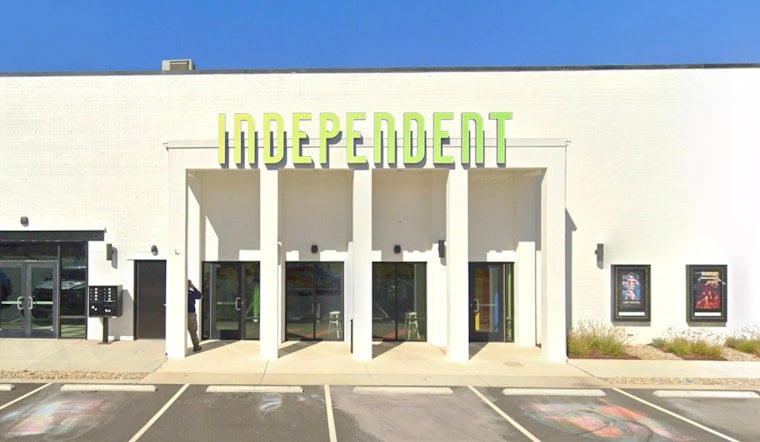
More than 140 films will screen across Charlotte later this month as the Charlotte Film Festival returns for its 18th year, running September 22 through 27 at the Independent Picture House. The lineup leans heavily on short films that organizers say tackle everything from job loss and grief to affordable housing and other social justice issues.
The festival has found a permanent home at the Independent Picture House, located just north of NoDa, after years of operating out of several locations across Charlotte, according to WFAE. Festival organizer Ivana Woodcock said having a consistent venue has helped the festival grow, a shift from the days of bouncing between different theaters and event spaces each year.
A Permanent Stage For Independent Storytelling
The Independent Picture House itself has become central to that stability. The venue provides extra spaces for filmmakers, the station's report notes, giving the festival room to expand its programming well beyond a single screen.
Festival organizer Claire Lechtenberg said the event aims to inspire joy and interest in independent and emerging films and their filmmakers. She added that filmmaking can help artists process difficult experiences, transforming trauma that artists or their loved ones have lived through into something insightful and connecting, per the same account.
Short Films Carry The Weight Of Hard Subjects
This year's slate is mostly short films, and many of them explore heavy terrain. Some address the loss of a job or loved one, while others dig into affordable housing struggles and broader social justice issues, according to the WFAE report. Organizers describe the festival as a place spotlighting stories and perspectives audiences may not encounter in everyday life, aiming to give artists a platform to showcase their craft.
Lechtenberg said she hopes audiences leave with a deeper appreciation for independent filmmaking and the stories being told. That intent has shaped the festival since its founding in 2006, when it was created to give emerging and established independent filmmakers a dedicated regional platform, according to CLTure.
Filling A Void Left By The Manor Theatre
The festival's current home traces back to a cultural gap that opened in May 2020, when the historic 73-year-old Manor Twin Theatre permanently closed during the COVID-19 pandemic, leaving Charlotte without a dedicated art-house movie theater, as reported by WFAE. The nonprofit Charlotte Film Society, which was originally founded in 1982 and now operates both the venue and the festival, responded by opening the Independent Picture House on June 24, 2022, in a converted warehouse at 4237 Raleigh Street in the Trailhead District near NoDa, according to Charlotte On The Cheap.
The venue expanded further in November 2024 through a $795,000 project that added a flexible 145-seat fourth auditorium, bringing total capacity to 336 seats across four screens. That fourth auditorium includes removable front seating and an expanded stage built for live performances, town halls, and film Q&As, a detail that has since made the space useful for hosting festival panels beyond just screenings.
A Landmark Site Moves On, As Indie Film Puts Down Roots
Charlotte's cinema landscape has continued to shift around the festival's new home. In May 2026, the Charlotte City Council unanimously approved redevelopment plans for the former Manor Theatre site, clearing the way for 120 to 130 residential units and 35,000 square feet of retail space, according to OpGov.News. Council members acknowledged the theater's 73-year history even as they moved to address regional housing demand.
The Independent Picture House has meanwhile become a year-round hub for more than just the Charlotte Film Festival. Hoodline previously reported that the venue hosted the fourth annual Charlotte Asian Film Festival, which screened 30 short films alongside community panels on Asian mental health stigma, co-presented with the Carolinas Asian American Chamber of Commerce.
The Bigger Picture For North Carolina Film
The festival's growth also plays out against a broader state film economy that continues to expand. Film and television production in North Carolina generated an estimated $185.5 million in direct in-state spending across 38 productions in 2025, creating more than 7,000 job opportunities, according to the Carolina Journal. That total ranked as the state's fourth-highest year-end figure since 2015.
Much of that activity is tied to the NC Film and Entertainment Grant, which offers a 25% cash rebate on qualifying production expenses and is funded by a recurring annual starting allocation of $31 million per fiscal year, per the North Carolina Film Office. Industry advocates noted in mid-2026 that multi-year grant commitments exceeding $106 million could strain annual disbursement limits without legislative updates, underscoring the funding pressures facing filmmakers even as local festivals like Charlotte's continue to grow.





