

























































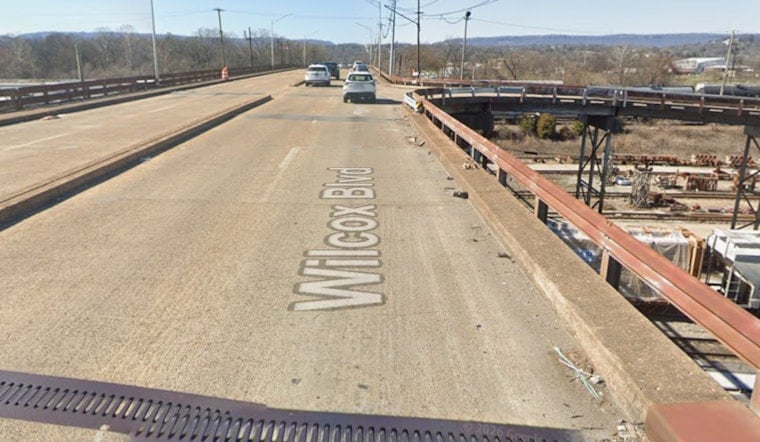
Chattanooga officials gathered Wednesday to formally sign off on a $25 million federal grant that will help fund a full replacement of the aging Wilcox Boulevard Bridge, a 68-year-old span that carries an estimated 18,000 vehicles a day over Norfolk Southern's DeButts Yard. The bridge has been so structurally compromised that heavy vehicles, including Chattanooga Fire Department engines, have been barred from crossing it, forcing emergency crews onto longer detour routes to reach East Chattanooga neighborhoods.
The ceremonial signing, held on September 2, 2026, brought together local, state, federal, and rail officials to finalize the multi-agency funding agreements behind the project, according to U.S. Department of Transportation. The federal government's $25 million share comes from the USDOT's Rebuilding American Infrastructure with Sustainability and Equity, or RAISE, grant program under the Bipartisan Infrastructure Law — a grant that was originally announced for Chattanooga back in August 2022, per the U.S. Department of Transportation. The overall project, however, carries a total estimated cost of $54.5 million.
A Freight Artery With a Long History of Restrictions
The bridge sits directly above DeButts Yard, a Norfolk Southern freight facility that operates 24 hours a day, seven days a week, which has made planning a replacement an unusually complex engineering and logistics challenge. Freight restrictions along the Wilcox Boulevard corridor are not new — commercial trucks were first forced to bypass underlying tunnel infrastructure there back in 2011 due to safety concerns, according to Tennessee Town & City. Once complete, the rebuilt bridge is expected to restore access for freight vehicles, public transit, and emergency services alike, per the same USDOT announcement.
Funding for the $54.5 million project blends local government commitments with state and federal awards, plus a notable $10 million private investment from Norfolk Southern Railway itself — a relatively rare move for a freight railroad to put money directly into a municipal bridge project, according to the Chattanooga Times Free Press. The city has previously detailed how the bridge's severe structural degradation forced the heavy-vehicle restrictions in the first place, cutting off more direct routes for fire crews responding to calls in East Chattanooga, per the City of Chattanooga.
Construction Timeline Pushed to 2027, Detours Planned
Updated timelines released by state transportation officials in September 2026 put the start of physical construction in early 2027, with completion targeted for 2030, the Chattanooga Times Free Press reports. That schedule reflects years of delay as multiple agencies — including TDOT, the city, Hamilton County, and Norfolk Southern — worked through engineering approvals for a project of this scale.
To keep neighborhood traffic moving once work begins, Norfolk Southern is restoring the nearby Wilder Street Bridge to its original capacity so it can absorb detour traffic while the Wilcox Boulevard span is rebuilt. Design plans for the new bridge also call for a multi-use path for pedestrians and bicyclists, directly connecting East Chattanooga and the Avondale community to the Tennessee Riverwalk, according to the city's announcement.
A Familiar Frustration for Hamilton County Commuters
The years-long wait for construction funding echoes a broader pattern of infrastructure delays across Hamilton County. Other critical spans, like Chattanooga's Standifer Gap bridge, remained closed for a decade before repair funds were finally deployed, according to WTVC-TV NewsChannel 9, a history that has left many local commuters skeptical of promised timelines. The open question now for residents is whether the Wilder Street detour plan will hold up over three years of construction without lengthening emergency response times or snarling rail operations at DeButts Yard.
For a corridor that has dealt with freight and access restrictions since 2011, the funding signed Wednesday marks a rare concrete step toward relief — even as the actual rebuild remains more than a year away.





