

























































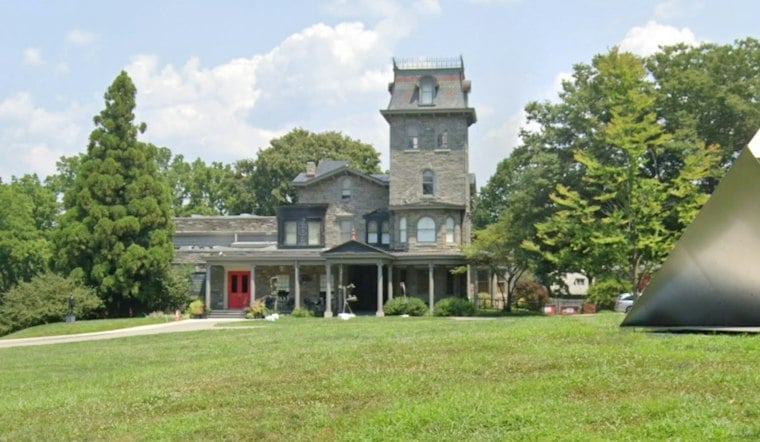
The Woodmere Museum in Chestnut Hill is presenting the first-ever retrospective dedicated to Moe Brooker, honoring a Philadelphia painter whose leap from realist canvases to jazz-infused abstraction reshaped how the city saw itself in color and line. Brooker, who lived from 1940 until his death on Jan. 9, 2022, spent decades teaching and painting in and around Philadelphia before his work reached museums, federal buildings and collections far beyond it.
Tracing a Six-Decade Evolution
Titled Listen With Your Eyes, the show is billed as the inaugural retrospective dedicated to Brooker's work, according to Woodmere Museum. The exhibition follows Brooker's arc from his academic realist paintings of the 1960s through what the museum describes as his incandescent later abstract works, a shift that defined his reputation as, in the words of Temple University's Tyler School of Art and Architecture, an internationally celebrated abstract painter with strong Philadelphia roots. As FOX 29 Philadelphia reports, the museum is celebrating the life and legacy of the artist with the exhibition opening this week.
Beyond paintings, visitors will find a selection of Brooker's wall-mounted and freestanding sculptures alongside weavings, sketchbooks and personal ephemera, the museum notes. That range is meant to show not just what Brooker painted but how he thought, moving between mediums as he worked through ideas over the course of his career.
Jazz, the City and a Grid-Based Style
Brooker's abstract work drew on the structure and tonalities of jazz music as well as the bright lights and graffiti of the Philadelphia cityscape, per the museum's account of his influences. Artsy describes him similarly, noting he was known for abstract art that evoked the rhythmic and improvisational spirit of jazz. At the technical core of that style was the grid, a framework of vertical and horizontal lines that structured his compositions, according to the Pennsylvania Convention Center's public art collection. The same source notes his paintings often divided the picture plane into three fields of space, a modified figure-ground relationship that became a signature of his mature work.
From Tyler Classrooms to a National Stage
Brooker's own education began at Tyler, where he earned a BFA in 1970 and an MFA in 1972 before returning to teach there for a year in 1973, then moving on to faculty posts at the University of Virginia and the University of North Carolina. He later chaired the Foundation program at New York's Parsons School of Design from 1990 to 1994 and taught at Moore College of Art & Design from 1995 to 2012, building a teaching career that ran parallel to his exhibitions. In 2010, Gov. Ed Rendell presented Brooker with the Artist of the Year Award as part of the Governor's Awards for the Arts.
His work has been shown at venues including LaSalle University Art Museum in Philadelphia, the Lauren Rogers Museum of Art in Laurel, Mississippi, and Sande Webster Gallery in Philadelphia, according to the June Kelly Gallery. His pieces are held in the collections of the Studio Museum in Harlem and the Philadelphia Museum of Art, among others, Artsy notes. In 2014 he received a commission to produce 23 stained-glass windows for an elevator tower at the Long Island Railroad building in Wyandanch, New York.
A 30-Foot Legacy in Center City
Brooker's largest public work may be the hardest to miss: a 30-foot painting titled The Fruit of the Spirit, installed at Philadelphia's William J. Green Jr. Federal Building in September 2021 after more than two years of work. The piece was commissioned through the Art in Architecture Program of the U.S. General Services Administration, according to the Association for Public Art, cementing his presence in the city's civic architecture just months before his death.
Programming Built Around the Exhibition
Woodmere is extending the retrospective's themes into its performance calendar. The museum's 2026 fall season of Friday Night Jazz is inspired by Listen With Your Eyes, with each performance title corresponding to a featured Brooker work, the museum says. Woodmere is also planning an event with Wild Indigo Poetry combining Brooker-inspired visual art, poetry writing, music and an open mic, framed as an afternoon celebrating the connections between visual art, poetry and music.
The retrospective is supported by grants from the William Penn Foundation, the William M. King Charitable Foundation and the Edna Wright Andrade Fund of the Philadelphia Foundation, according to Woodmere. For a city that shaped Brooker's eye and now houses both his federal-building mural and this new survey of his career, the exhibition offers a rare full-circle look at an artist who spent a lifetime translating jazz and Philadelphia streets into paint.





