

























































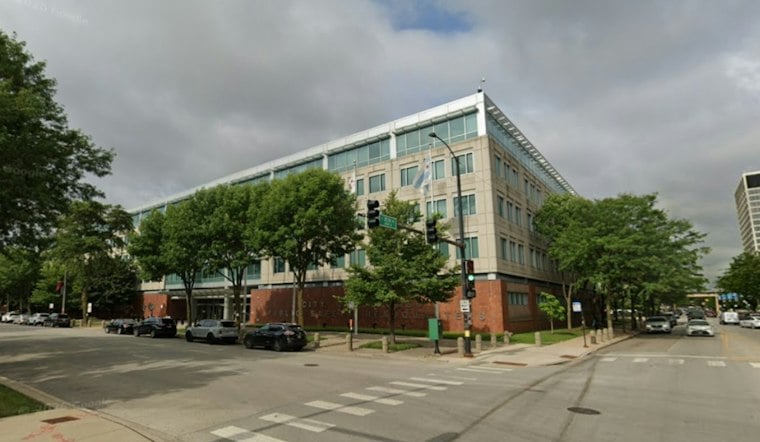
The dispute over public-employee speech
Mike Milstein, a civilian Chicago Police Department employee, is asking a federal court to overturn a 14-day unpaid suspension imposed after he posted political material on Facebook while off duty. His September 14 complaint says the posts addressed a matter of public concern, appeared on a personal account and did not interfere with department operations. The city has not publicly explained its position; a spokesperson told The Independent that Chicago does not comment on pending litigation.
The constitutional analysis is shaped in part by Pickering v. Board of Education, the 1968 Supreme Court decision requiring courts to weigh a public employee’s speech interests against an employer’s need for workplace efficiency and public trust. The case also raises the significance of Hedgepeth v. Britton, in which the Seventh Circuit affirmed in August 2025 that an Illinois public employer may discipline off-duty political social-media speech when it reasonably anticipates workplace or operational disruption. Milstein’s complaint contends that his case is different because he has no police powers or public-safety duties and because the internal investigation found no disruption.
How CPD handled the suspension
CPD’s Bureau of Internal Affairs received an anonymous letter about Milstein’s posts on November 26, 2025, and opened an investigation the following month. The investigators found that Milstein had not sought department guidance before posting. As described in the complaint and reported by The Independent, the investigation found no disruption to a department operation, complaint from a department member, or harm to a department or public interest. Superintendent Larry Snelling ordered the unpaid suspension on January 8.
CPD General Order G09-01-06 governs personnel social-media use and permits administrative discipline when off-duty communications are considered capable of discrediting the department or its mission, according to the Civilian Office of Police Accountability. CPD’s consent-decree-related policy history is addressed in the section below. Snelling has executive authority to impose a short unpaid suspension, while a recommendation for termination goes to the nine-member Chicago Police Board, a distinction described by Hoodline in separate coverage.
What the consent-decree record shows
The CPD Monitoring Team says it assesses the city’s and CPD’s compliance with the federal consent decree every six months and publishes reports detailing those assessments. That oversight provides the broader compliance framework in which disputes over department policies are evaluated, but it does not by itself resolve whether Milstein’s suspension violated the First Amendment. CPD said its revised social-media policy was developed pursuant to paragraph 57 of the consent decree and was submitted to a 15-day public-comment period beginning February 7, 2020. The policy’s consent-decree history is therefore distinct from the question now before the court: whether applying the rule to Milstein’s off-duty political posts was justified by a sufficient threat to department operations or public trust.
The posts and Milstein’s job
The Independent reported that Milstein posted on October 18, 2025, while attending a No Kings rally outside the Colorado State Capitol in Denver. Using his own device and Facebook account, he shared material from the demonstration and included the hashtags #NoKingsDay and #F***Trump. The posts did not identify CPD, Chicago or his position.
Milstein is deputy director of CPD’s Office of Equity and Engagement and heads the Office of Victim Services. According to the complaint as reported by The Independent, he is not a sworn officer, has no arrest authority, weapon or badge number, and performs no operational police function. He does not respond to calls for service or deploy to police operations, and his duties do not involve national politics or the president. He joined CPD in 2020 and established the equity office in 2024.
What the lawsuit seeks
Milstein says the suspension has stopped him from criticizing Trump politically and that he faces a credible threat of further discipline if he resumes. He seeks compensatory damages from the city, back pay for the 14 suspended days, punitive damages from Snelling, legal fees and court costs, and removal of the discipline from his record. The federal case will require the court to decide how CPD’s social-media policy applies to a civilian employee’s off-duty political expression and what evidence is sufficient to show a threat to department operations or public trust.





