

























































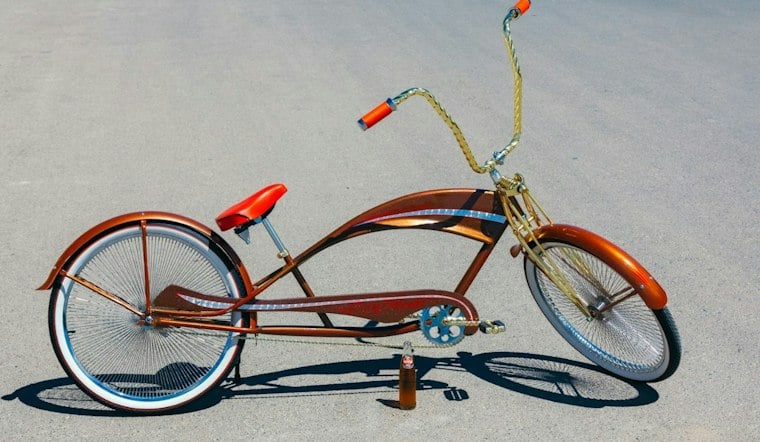
A new exhibition at the Chicano Park Museum and Cultural Center is presenting lowrider bicycles as both art objects and community records, using bikes, posters, artwork and archival photographs to document more than four decades of San Diego-area culture. “Chrome and Candy Dreams: A Rite of Passage” opened Sept. 12 in Barrio Logan, according to Times of San Diego and KPBS.
An exhibition built around preservation
The show places hand-built bicycles within a broader local effort to preserve cultural history through community collections. Its materials include contemporary artwork, photography and records from San Diego-area bike clubs, while participating builders and organizations connect the exhibition to the San Diego-Tijuana region’s living lowrider scene, KPBS reported. The Times of San Diego reported that the exhibition was curated by Norman Paraiso, Juan “Wicho” Flores and Ariana Arroyo, curators at the museum.
That approach is consistent with the museum’s stated role. The Chicano Park Museum and Cultural Center says it has provided educational resources, programming and community care since its inception in 2015. Rather than treating lowrider bicycles only as decorative objects, the exhibition uses them to show how design knowledge, craft and cultural memory can be carried through local communities.
A local archive behind the display
The exhibition also complements an existing record of San Diego lowriding. The University of San Diego’s San Diego Lowrider Archival Project documents lowriding in San Diego and the surrounding borderlands from the 1950s through today. Its holdings include photographs, car-club documents and memorabilia, official records, meeting minutes, dance posters and lowrider art.
That archive helps establish the exhibition’s historical scope without reducing the subject to a single opening or a single generation. The museum show is a contemporary presentation; the university collection provides a longer documentary record against which the bikes, photographs and club materials can be understood.
Why the setting matters
The exhibition is housed at an institution linked to the history of Chicano cultural organizing in Barrio Logan. The California Office of Historic Preservation says Chicano Park was established in 1970 after a community struggle that included a 12-day occupation known as the Park Takeover. The National Park Service describes the park, founded in 1970, as a longstanding place for cultural and political events in San Diego’s Chicano community.
Viewed in that setting, “Chrome and Candy Dreams” is not simply a display of customized bicycles. It is part of a local preservation tradition in which community members document their own histories and decide how those histories are represented. The available coverage does not establish how many visitors the exhibition will draw or measure its effect on younger builders; its documented contribution is the addition of a bicycle-centered record to San Diego’s broader lowrider archive.
Visiting the exhibition
The exhibition is expected to remain on display through December at the museum, 1960 National Ave. in Barrio Logan, with free admission, according to the event coverage. The museum’s website lists public hours as 11 a.m. to 5 p.m. Thursday through Sunday; visitors should check the museum’s official website for current access information.




