

























































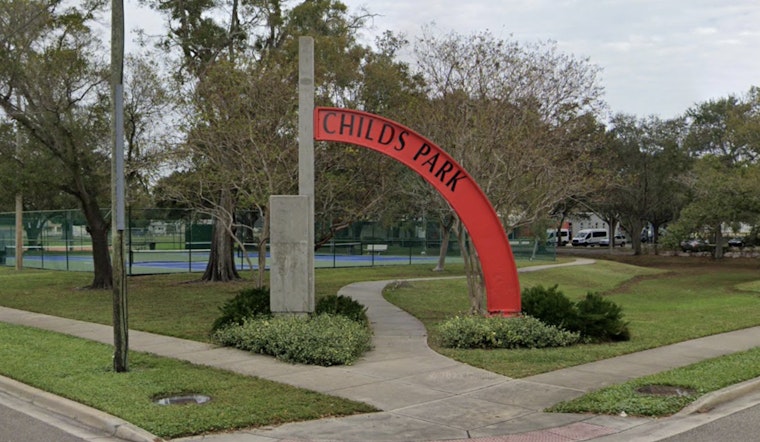
St. Petersburg's City Council voted unanimously this week to investigate whether an oil recycling plant blamed for years of foul, chemical odors in Childs Park is breaking any city rules, after residents said they were done waiting for state regulators to act. The vote came just weeks after a chemical laboratory fire broke out at the facility, sending a hazmat response to the neighborhood and sickening a firefighter who helped put it out.
The plant at the center of the fight is Howco Environmental Services, an oil recycling operation that Childs Park residents have long accused of being the source of pervasive burning fuel, chemical, and petroleum smells drifting through their neighborhood, according to the Tampa Bay Times. The City Council's action followed a request from the Childs Park Neighborhood Association, which asked the city to enforce its existing nuisance laws against the plant. Council members agreed to look into how the city can use those laws to address the ongoing complaints.
A Fire That Raised the Stakes
The push for council action gained new urgency after the August 14 fire, which involved explosive materials inside Howco's laboratory and triggered a hazardous materials response. A firefighter who worked to extinguish the blaze became ill in the process, per the Times. Howco's general manager reported to state environmental officials four days later that the fire had been confined to the laboratory and caused no personnel injuries.
Former City Council member and current Neighborhood Association President John Muhammad raised the issue at an August 27 committee meeting, asking the city to investigate whether Howco complies with municipal wastewater, code enforcement, and fire marshal rules. That request led directly to the September 3 unanimous vote by the full council, the Times reports.
Odors Traced Back Years, Now Backed by Data
The smell complaints are not new. A study launched in September 2022 by researchers at Eckerd College and the University of South Florida collected nearly 6,000 air measurements across Childs Park and detected elevated levels of hydrogen sulfide, the toxic chemical known for its rotten-egg odor, according to Eckerd College. Researchers compared their Childs Park readings against Disston Heights, a nearby residential area without industrial zoning, to establish a baseline.
Pinellas County's Air Quality Program has formally identified Howco as a source of the recurring odors, according to a Childs Park Neighborhood Association statement relayed through local reporting. County air regulators have been monitoring resident complaints alongside state officials as the odor issue persisted.
Fighting the State While the Plant Keeps Running
Beyond city hall, residents have also taken their fight to Florida's Department of Environmental Protection. In July, the Childs Park Neighborhood Association formally intervened in a state administrative proceeding challenging Howco's air permit renewal, securing legal standing in the case, as reported by WUSF. A five-day state administrative hearing in the matter has been scheduled for February 2027.
The association is represented pro bono in that fight by staff attorney Rachel Curran of the Jacobs Public Interest Law Clinic for Democracy and the Environment at Stetson University College of Law. The administrative process will allow residents to present expert testimony and cross-examine company witnesses when the hearing begins next year.
Complicating matters, public records show Howco's state air permit has actually expired — but Florida administrative rules allow the plant to keep operating legally while the state processes its renewal application, per WUSF's reporting. Community advocates have characterized that continued operation under an expired permit as a regulatory loophole. Because state law limits how much direct control cities have over air quality permitting, Childs Park leaders are instead pushing St. Petersburg to use whatever municipal leverage it has — wastewater discharge rules, fire codes, and code enforcement — to address the nuisance locally while the state case unfolds.
Decades of Industry Next Door
The tension between industry and homes in Childs Park is not a new phenomenon. City planning assessments documented land-use conflicts between industrial operations and adjacent residences in the neighborhood as far back as a 1995 neighborhood profile report, with subsequent city assessments in 2007 and 2022 reaffirming the same problem, according to the St Pete Catalyst. A 2022 city-backed report found that 31 industrial businesses operate within Childs Park, a neighborhood of 6,496 residents that is 76.5% Black, where heavy industrial sites sit directly next to single-family homes.
Of those 31 businesses, five held air operation permits and six held industrial wastewater discharge permits, per the same report. Howco itself sits on 43rd Street South, just two blocks from the Childs Park Recreation and Fitness Center and its public splash pad and basketball courts. Residents have frequently reported headaches and taking shelter indoors because of chemical odors near the center, according to the Catalyst's reporting.
For now, the city's investigation into Howco's compliance with local wastewater, code, and fire marshal rules is just beginning, and the state's permit hearing remains months away. Childs Park residents, backed by county findings, university research, and legal representation, are pressing on multiple fronts at once to force change in a neighborhood that has lived alongside industrial odors for decades.





