

























































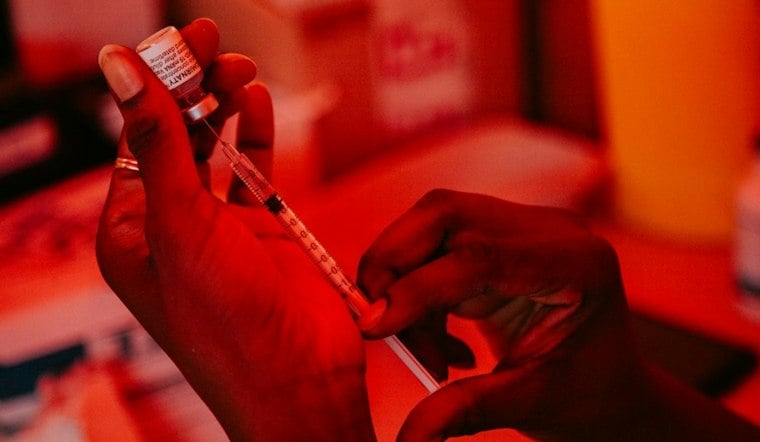
Wisconsin health officials confirmed a measles case in Chippewa County on Tuesday, marking the third new county in the state to report an infection within the past week and pushing the state's 2026 total to nearly 170 cases. The case adds another data point to a national surge that has already topped 3,400 confirmed infections this year.
State health officials have not shared how the Chippewa County resident acquired the virus, and they say they are not aware of any public places where someone could have been unknowingly exposed to that person, according to the Milwaukee Journal Sentinel. The newspaper's report, credited to reporter Madeline Heim with contributions from Sarah Volpenhein, notes that Chippewa County joins Vernon and Marathon counties as the third Wisconsin locale to report a case in the last week alone.
Vernon County's health department confirmed two local cases on September 17 following testing by the Wisconsin State Laboratory of Hygiene, and it has begun contact tracing to notify anyone who may have shared airspace with the infected individuals, per the Vernon County Reporter. Stephanie Schauer, immunization program manager for the Wisconsin Department of Health Services, told the Journal Sentinel that one of the two Vernon County cases is likely linked to other cases circulating in southwestern Wisconsin.
Southwestern Cluster Still Drives Most of the State's Cases
The bulk of Wisconsin's measles activity remains concentrated in Grant, Iowa, and Lafayette counties, where the outbreak has been linked to more than 160 cases. State figures reported to CIDRAP put that southwestern cluster at 158 confirmed and six probable cases as of mid-September, with three new cases confirmed in the cluster during that stretch, according to CIDRAP.
Not every new case ties back to that cluster, however. Public health officials in Marathon County confirmed on September 15 that an isolated central Wisconsin case there was contracted during out-of-state travel and had no connection to the southwestern outbreak, according to WisPolitics. Hoodline previously reported on that travel case, and the southwestern cluster's spread has also raised exposure concerns just across the state line, where Hoodline reported that Minnesota's Fillmore County confirmed a case tied to the same regional risk.
Unvaccinated Residents Bear the Brunt
Measles spreads quickly among people who have not received the measles vaccine or developed antibodies through a prior infection, and Wisconsin's outbreak reflects that pattern starkly: more than 99% of the state's confirmed 2026 cases have occurred among unvaccinated individuals, according to state health officials cited by WTMJ. The CDC notes that two doses of the MMR vaccine are 97% effective at preventing infection, while a single dose provides 93% protection, and health experts say a community vaccination rate of 95% is needed to sustain herd immunity.
Nationally, the scale of this year's surge is striking. The United States has recorded more than 3,400 measles cases in 2026, putting the country on pace for its highest annual total since 1991, per data released by the CDC. That compares with 2,289 total confirmed cases nationwide in all of 2025. Adults have not been spared either — they accounted for 38% of confirmed U.S. cases this year, with a 12% hospitalization rate nearly matching the 13% rate seen among children under age 5, according to CDC data analyzed by CIDRAP.
What Exposed Residents Are Required to Do
Under Wisconsin Department of Health Services guidance, unvaccinated individuals who are exposed to measles must quarantine at home for 21 days, and post-exposure MMR vaccination must be given within 72 hours of exposure to help prevent illness, according to guidance published by the University of Wisconsin-Madison. The virus itself is notoriously persistent, capable of lingering in the air for up to two hours after an infected person has left a space, and unvaccinated people exposed to it face a 90% chance of contracting the infection, per guidance from the City of Bridgeport. Symptoms typically begin one to two weeks after infection and include high fever, cough, runny nose, and red, watery eyes, with a rash appearing a few days later that spreads from the face and hairline to the rest of the body; tiny white spots inside the mouth can also occur.
Anyone who suspects they may have measles is urged to avoid contact with others and call a doctor's office or clinic before showing up in person, so staff can prepare to prevent further exposure. The stakes extend beyond Wisconsin's borders: Pennsylvania has reported four measles-associated deaths in 2026, including two infants, though the CDC has excluded them from its national fatality tracker while federal officials work with the National Center for Health Statistics to standardize how measles deaths are classified, according to Becker's Hospital Review.



