

























































A 1-year-old quarter horse colt in Clare County has died after contracting Eastern equine encephalitis, marking Michigan's first confirmed animal case of the mosquito-borne virus this year. The under-vaccinated colt was transported to a specialty hospital for treatment but was ultimately euthanized, according to a Monday statement from state officials.
Colt's Death Follows Human Case in Neighboring County
The Michigan Department of Agriculture and Rural Development confirmed the diagnosis in the young colt from Clare County, as reported by MLive.com. The animal's death comes just weeks after Michigan health officials confirmed a human case of Eastern equine encephalitis in a Roscommon County resident, a case that marked the state's first locally acquired human infection since 2021, according to the Clare County Cleaver. Roscommon County sits directly northeast of Clare County, putting the two detections within close geographic range of one another during the same late-summer stretch.
Officials have stressed that EEE and other mosquito-borne diseases are not spread through horse-to-horse or horse-to-human contact, meaning the colt's illness poses no direct transmission risk to other animals or people. Both horses and humans are considered dead-end hosts for the virus, so a case in either species instead signals that the virus is actively circulating between wild birds and the mosquitoes that feed on them in the wetlands of central Lower Michigan, per the LSU School of Veterinary Medicine.
A Nearly Unsurvivable Diagnosis for Horses
Eastern equine encephalitis is exceptionally lethal in horses, with an equine mortality rate between 75% and 95% and death often occurring within just 48 to 72 hours of symptom onset, according to the Equine Disease Communication Center. The American Association of Equine Practitioners classifies the EEE vaccine as a mandatory core vaccine for all North American horses, recommending annual spring revaccination following an initial multi-dose series in foals — underscoring why the colt's under-vaccinated status was central to officials' Monday statement.
In people, the disease carries a 30% fatality rate among those who become ill, Chief Medical Executive Natasha Bagdasarian said. Bagdasarian urged Michigan residents to take precautions against mosquito bites, advising the public to use EPA-registered insect repellent, avoid mosquito-heavy areas when possible, and cover their arms and legs. Symptoms in people typically emerge four to 10 days after a bite from an infected mosquito, with severe neuroinvasive cases progressing to brain swelling, seizures, or coma, and roughly half of human survivors suffering permanent neurological damage, according to the Central Mosquito Control disease overview.
How the Virus Moves From Birds to Backyards
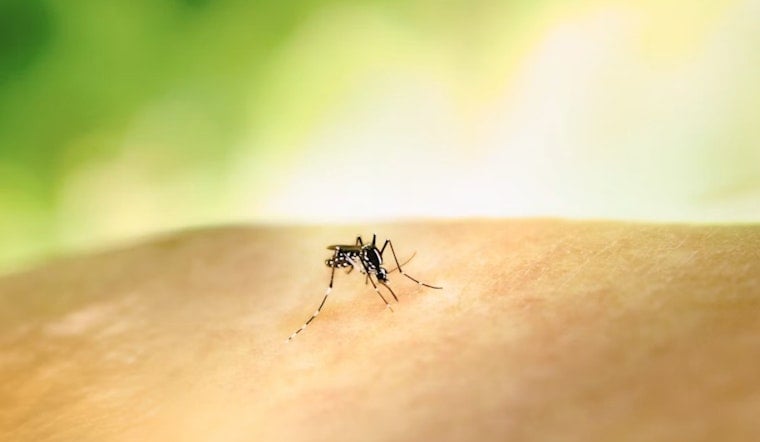
The mosquito species Culiseta melanura maintains the EEE virus among wild bird populations in Michigan's freshwater swamps, while so-called bridge vectors like Coquillettidia perturbans feed on both birds and mammals, carrying the virus to horses and humans, per the Michigan Mosquito Control Association. Those bridge-vector species are what allow the virus to expand beyond the immediate boundaries of swamp habitat and into populated areas. Research published in the Journal of Medical Entomology has found that human and equine EEE cases in Michigan cluster heavily around specific glacial landforms and swamp hydrologic systems, including the Kalamazoo and Jackson Interlobate regions.
Clare County itself is a rural municipality in central Lower Michigan with an estimated 2025 population of 31,543 and a median age of 49, according to Data Commons — the kind of forest- and wetland-heavy landscape that carries elevated mosquito exposure risk. Michigan health officials have confirmed domestic horse cases of EEE in each of the preceding three years, 2023, 2024, and 2025, making this year's Clare County case part of a recurring late-summer pattern rather than an isolated event. Michigan EEE cases typically occur from late summer to early fall each year.
Michigan's 2019 Outbreak Looms Over Current Response
The stakes of unchecked EEE activity were laid bare during Michigan's 2019 outbreak, which resulted in 10 human cases — including six fatalities — alongside 46 confirmed animal cases statewide, part of a broader nationwide spike of 38 human cases that year recorded by the CDC. Whether local health authorities will pursue targeted aerial or ground mosquito spraying in Clare and Roscommon counties, as occurred during that 2019 outbreak, remains an open question that has not yet been addressed publicly. The United States records an average of 11 human EEE cases per year nationwide, concentrated mostly along the Atlantic coast, Gulf Coast, and Great Lakes region, according to the CDC — a rarity that makes Michigan's cluster of cases this year notable.
What Officials Are Telling Horse Owners and Residents
State health officials are advising horse owners to talk to veterinarians about vaccinating their animals against EEE, West Nile virus, and other mosquito-borne diseases, and to contact a veterinarian immediately if an animal shows signs of illness. An arbovirus grant covers testing costs for Michigan animals suspected of having EEE or West Nile virus. Owners are also encouraged to use species-approved insect repellent on their animals and to place livestock in barns under fans, with pets kept indoors from dusk to dawn.
For the general public, officials are recommending residents empty standing water from potential mosquito breeding sites around their homes, including by filling puddles, repairing clogged eaves, and changing water in buckets and pet bowls at least daily. They also advise maintaining intact window and door screens, wearing light-colored long-sleeved shirts and long pants outdoors, and applying DEET-containing or other EPA-approved repellents to exposed skin or clothing. The Michigan Department of Agriculture and Rural Development provides animal disease information by phone at 800-292-3939 for owners with questions about suspected cases.





