

























































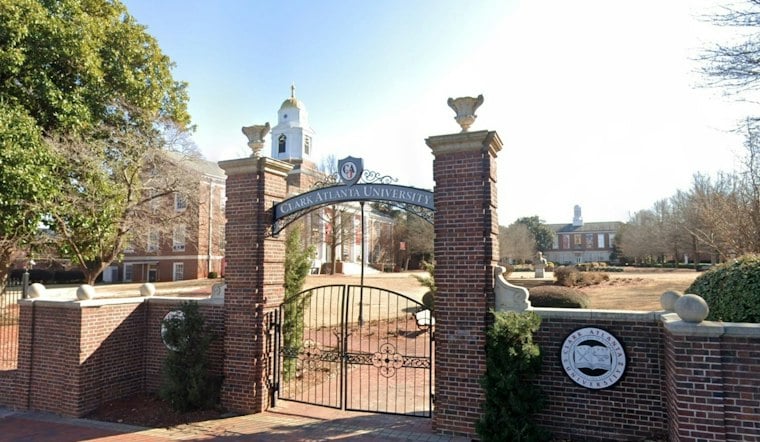
Clark Atlanta University has landed a nearly $10 million grant from the Department of Defense to expand its artificial intelligence research, funding that will also strengthen the school's chemistry, mathematics and physics programs over the next five years. The award adds fresh momentum to an AI push the Atlanta HBCU has been building for the past two years, now backed by one of the largest research investments in its recent history.
The five-year grant will support new and current faculty while giving undergraduate and graduate students more chances to take part in research, according to 95.5 WSB. Some of that student research will include defense-related projects, the station reports, and the university plans to use the funding to develop new artificial intelligence courses and build additional research partnerships. The grant flows through a federal program designed to help historically Black colleges and universities and other minority-serving institutions expand their research capacity, and Clark Atlanta says the ultimate goal is to prepare more students for careers in science and technology.
Building on an Existing AI Hub
The Pentagon money lands on top of infrastructure Clark Atlanta has already put in place. The university officially opened AIHUB@CAU on November 13, 2024, a center developed in collaboration with the NSF AI Research Institute for Advances in Optimization and supported by the National Science Foundation's ExpandAI program, according to AI4OPT. That hub offers workshops, hands-on learning, and fosters collaboration and partnerships, with new programs at both the undergraduate and graduate levels meant to train the next generation of AI professionals.
The hub traces back to a $2.79 million National Science Foundation grant awarded over four years to Clark Atlanta and Georgia Tech's AI4OPT collaboration to create the AI center, according to Clark Atlanta University. That effort is led by principal investigator Charles B. Pierre, an associate professor in the university's Department of Mathematical Sciences, and it laid out plans for new undergraduate and graduate coursework in computer vision, natural language processing and applied optimization. The undergraduate research track was designed to expose students to AI work early, including summer internships at Georgia Tech and other AI4OPT sites, while the graduate offerings include an 18-month non-thesis master's program and a two-year thesis master's program.
Part of a Broader Wave of Defense Funding at HBCUs
Clark Atlanta's award is one of several similar Defense Department investments landing at historically Black colleges and minority-serving institutions in recent months. Fayetteville State University secured a $10 million Defense Department award to launch a defense-focused artificial intelligence doctoral program, a five-year grant that places the school among just five institutions nationwide selected for that funding, according to ABC11. That new program will focus on applied air defense systems, logistics technology and biomanufacturing.
Morgan State University received a comparable five-year, $9 million grant from the Office of Naval Research to fund artificial intelligence, machine learning and cybersecurity research, per Morgan State's own announcement. That funding supports work through the university's Center for Equitable Artificial Intelligence and Machine Learning Systems and its Cybersecurity Assurance & Policy Center, and Morgan State was one of three HBCUs selected out of 14 proposals evaluated by military service research offices. The Morgan State grant, described as part of a broader $27 million Defense Department investment in historically Black colleges and universities, also funds hiring two postdoctoral associates, three graduate students and eight undergraduate students, according to Morgan State University.
Why the Push Matters for STEM Diversity
The stakes behind these awards go beyond any single campus. Historically Black colleges and universities produce nearly half of the nation's Black engineers despite representing only about 3% of U.S. higher education institutions, according to AI4OPT's account of the field. That gap has made HBCUs a recurring target for federal research dollars aimed at diversifying the STEM and defense-technology pipeline, even as the exact scale of that broader federal commitment remains difficult to pin down from public records.
Government documents describing the overall size of the Defense Department's HBCU and minority-serving institution funding have varied. One Defense Department list references $50.1 million allocated under the fiscal year 2024 HBCU/MI Program, while a separate Defense Department announcement cites $27 million in awards for HBCUs conducting research in defense-critical technology areas. Neither figure has been reconciled publicly, and the dossier underlying this report does not resolve which total reflects the current program Clark Atlanta's grant falls under.
For now, Clark Atlanta's nearly $10 million award stands as a concrete local example of that national trend, arriving as the university works to turn its two-year-old AI hub into a launching pad for students heading into science and technology careers.


