

























































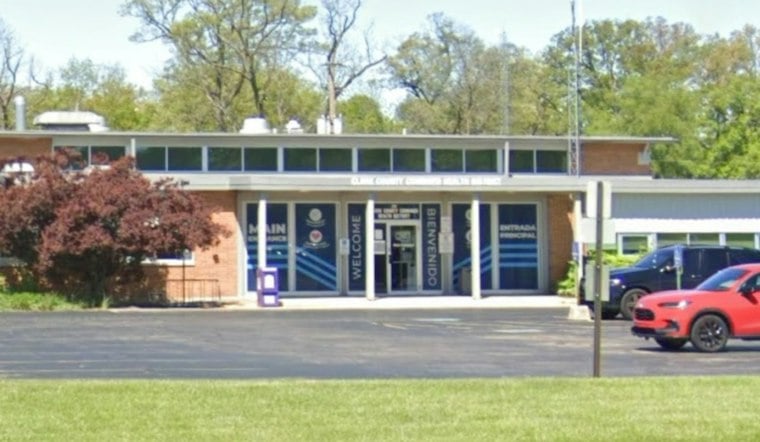
Clark County voters will decide on Nov. 3 whether to renew a 1-mill, five-year property tax levy that funds more than a quarter of the county health department's operating budget, and officials say the measure won't add a single new dollar to anyone's tax bill. Deputy Health Commissioner Gracie Hemphill says the renewal simply keeps the current tax-bill amount unchanged for homeowners while preserving services that are already in place.
What The Levy Actually Pays For
The measure will appear on the ballot under the agency's former name, Clark County Combined Health District, according to Springfield News-Sun. That agency rebranded in July as the Clark County Health Department, though the levy retains the old name for ballot purposes. The renewal is described as funding more than 25% of the department's entire operating budget, and levy dollars are also used as a local match for grants — money that helps the department pull in outside funding it otherwise couldn't access.
The Springfield News-Sun reports the levy money pays for staff and supplies behind essential public health services, and that the November ballot measure is needed to continue services currently provided in Clark County. Estimates on what the renewal would cost homeowners have varied across reporting: the Springfield News-Sun cites the Clark County Auditor's Office in putting the figure at $21 per year for every $100,000 of property value, while Citizen Portal has separately reported a figure closer to $35 per $100,000 of county auditor market value. Citizen Portal reports that the renewed levy would run from 2027 through 2031; the Springfield News-Sun says collections begin in 2027 and the department's first payment is expected in early 2028.
Commissioners Signed Off In August
The Clark County Board of Commissioners voted unanimously on Aug. 3 to adopt a resolution placing the 1.00-mill, five-year renewal on the November ballot, per Citizen Portal's reporting. Once collections begin in 2027, the health department would receive its first payment from the renewed levy at the start of 2028. That timeline matters because the levy funds are woven into how the department plans its budget years in advance, not just its day-to-day bills.
Voters have backed similar measures before. A 2021 property tax levy passed by a 53% to 46% margin, and an earlier 1-mill, five-year levy was approved in 2001 by a wider 58% to 41% margin. Election Day falls on Nov. 3, and the deadline to register to vote is Oct. 5, according to the Springfield News-Sun's report.
Health Goals Tied To The Vote
The department's 2026-2028 Community Health Improvement Plan lists chronic disease, mental health, maternal and infant health, and community stability among its priorities, the outlet notes. Officials say the November measure supports the agency's public health goals over the next three years, with more than 50 individual goals on the table — and program areas that include access to care alongside those core priorities. The Clark County Health Department also reports a workforce of more than 100 people, and its facility sits on Home Road.
Those priorities aren't developed in isolation. According to ccchd.com, Clark County's priority topics are designed to align with health-improvement initiatives at the state and national level, supporting things like funding access, data collection, evidence-based practices, and health-promotion campaigns. The department has also flagged more immediate public health concerns this year, reporting 11 cases of cyclosporiasis in June and July, three of which were travel-related, per the Springfield News-Sun.
What's At Stake If The Levy Fails
Hemphill has said that if the renewal fails, the health department may have to cut expenses, and one of its locations could close. She has said services and hours would be cut, individual program fees would rise, and — in her words — the county would become less healthy overall. The department has already scaled back services and staff once before, after the federal government cut roughly $2.7 million from its funding in March 2025.
Inflation adds another pressure point. Without an increased levy, the department says its purchasing power would effectively shrink by about $80,000 a year over the life of the five-year renewal cycle. If voters reject the measure this fall, the health district plans to place the levy issue back on the ballot — either in a May 2027 special election or again in November, depending on what's needed.
Leadership Change Coming In January
The vote also arrives amid a leadership transition at the agency. Health Commissioner Chris Cook is stepping down, and Hemphill, the current deputy health commissioner, is set to take over in January. Clark County isn't alone in asking voters to renew health-related levies this fall — in Warren and Clinton counties, the Mental Health and Recovery Board is seeking its own 1-mill, five-year renewal on the same Nov. 3 ballot, a measure Dayton Daily News reports would cost an owner $16 per $100,000 in taxable value and is expected to collect nearly $7.7 million annually amid a 31% jump in outpatient mental health visits last year.





