

























































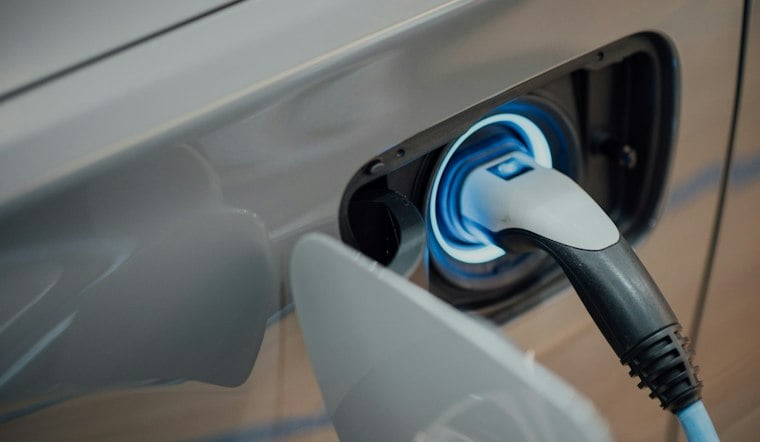
A Clearwater condo owner's fight to keep an electric vehicle charger plugged in has ended in defeat, after Florida's Second District Court of Appeal ruled that the installation crossed the line from a protected upgrade into an unauthorized construction project. The case centers on Station Square Condominium in downtown Clearwater, where co-owners Franco Persechino and Lina Teixeira installed a Tesla charging station in their assigned parking space without the board's sign-off, prompting a legal battle that has now reached a final appellate decision.
The dispute, decided under docket number 2D2025-2610 on August 14, drew added local interest because Teixeira has served on the Clearwater City Council since 2022 and announced in January that she would not seek re-election, according to Florida Politics. Per the Miami Herald, Persechino and Teixeira submitted an EV charger installation application to the association, which denied it. The owners went ahead and installed the charger anyway, despite the denial, the Herald reports.
According to the Herald, the association's president testified that the owners performed the installation before the application dispute was even resolved. The owners later struck through questions on the application that they believed exceeded what state law requires, and after the association created a new form, they resubmitted — only to be denied again, per the outlet's reporting.
What the Installation Actually Involved
The scope of the wiring work became central to the case. Legal analysis of the appellate decision found that the owners ran roughly 145 feet of electrical lines to the association's breaker box, drilled holes in the shared garage wall and ceiling for cable conduit, and made holes in the breaker box itself, according to Law Matters - EVSHIFT. That analysis notes the setup was wired into the condominium's common breaker box without separate metering, restricting other residents' access to the panel. The Herald's reporting adds that the charging station was attached to a common-element parking-garage wall and drew on the association's breaker box and electricity, and that the installation will require future access for maintenance and repairs.
A Pinellas County court found the owners had made unauthorized material alterations to common-element property and granted the association a temporary injunction, allowing it to disconnect the charging station and ordering the owners to stop using it, the Herald reports. That order also directed the owners to submit an amended application with compliant plans and specifications. Persechino and Teixeira appealed, arguing the lower court's ruling violated Florida's EV charger installation protections, per the Herald.
Why the Appeals Court Sided With the Board
The Second District Court of Appeal affirmed the trial court's injunction, finding that an owner-installed EV charger can constitute a material alteration or substantial addition to common elements under certain circumstances, and that the evidence in this case supported treating it that way, according to the Herald's account of the ruling. The court also ruled that condominium associations may impose reasonable requirements beyond the five statutory conditions for owners seeking to install chargers, the outlet reports.
Florida law generally prohibits associations from outright banning EV chargers in designated parking areas, a protection codified under Section 718.113(8) of the Florida Statutes since 2018, which requires that electricity be separately metered and paid for by the owner, according to the Florida Senate. But that right is not absolute. When governing documents don't specify an alteration procedure, state law requires approval from 75% of an association's total voting interests, the Herald notes — and Station Square's governing documents required owners to follow common-element alteration procedures once an installation qualifies as a material alteration.
Attorney Nicole R. Kurtz, a shareholder at the South Florida law firm of Siegfried Rivera who focuses on community association law and is based in the firm's Coral Gables office, wrote about the case for the Miami Herald's real estate news section. Her analysis underscores that Florida condominium associations may require additional information, plans, and approvals from EV charger applicants so long as those requirements are reasonable, and that owners should secure association input and consent before installing personal chargers.
A Statewide Pressure Point as EV Ownership Grows
The case lands as Florida grapples with a surge in electric vehicles competing for space in aging condo infrastructure. As of the end of 2023, Florida had 254,878 light-duty electric vehicles registered, ranking second nationally behind California, according to the Alternative Fuels Data Center. More than 30 U.S. states have now enacted so-called “Right to Charge” statutes limiting how far associations can go in blocking installations, per Smart Parking World, placing Florida within a broader national trend of balancing owner rights against association governance.
Florida law also gives condo boards a separate path that avoids these disputes altogether: under Section 718.113(9) of the Florida Statutes, boards can install shared EV charging stations on common elements for all residents and set usage fees without triggering the 75% vote requirement that applies to individual owner-led alterations, according to legal analysis from Becker & Poliakoff. Separately, owners installing their own chargers can be required to carry hazard and liability insurance naming the association as an additional insured, and to reimburse the association for any resulting premium increase within 14 days, the firm notes.
Owners weighing compliant installations also have financial help available. The federal Alternative Fuel Infrastructure Tax Credit under Section 30C allows qualified condominium owners who install residential EV charging equipment at their primary residence to claim a credit covering up to 30% of installation and equipment costs, according to Plug In America. Disputes over denied or contested chargers can also go before arbitrators with Florida's Division of Condominiums, Timeshares, and Mobile Homes, who have previously ordered unauthorized chargers removed or overturned arbitrary board denials, per the Law Matters - EVSHIFT analysis.



