

























































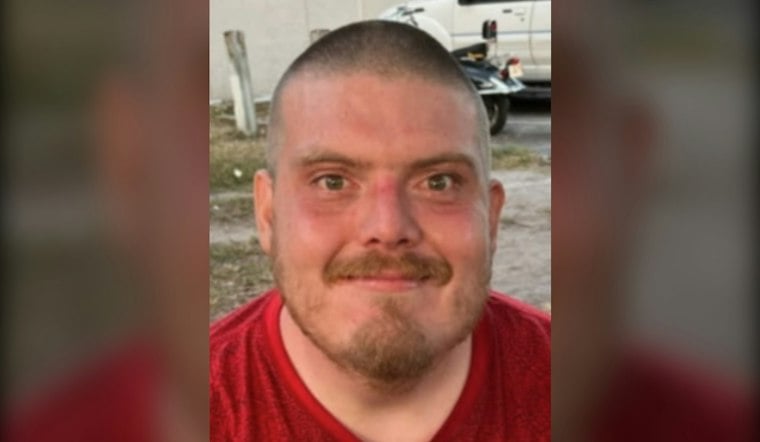
A 36-year-old Tampa man with an intellectual disability and a mobility impairment that causes him to walk with a limp was found safe Tuesday night, hours after deputies asked the public for immediate help finding him. Steven Graham was last seen in the 12000 block of North Oregon Avenue, wearing a white shirt, black shorts and black shoes, before the Hillsborough County Sheriff's Office issued an urgent public plea for information.
The Hillsborough County Sheriff's Office
described Graham as a white male with short brown hair and facial hair who is known to approach strangers to ask for transportation, a detail deputies flagged as they urged anyone who spotted him to call 911 right away. The agency, which polices the Tampa area and lists its mission as protecting the community while preserving the rights and dignity of all, directed residents with information to its non-emergency line at 813-247-8200. Hours later, the sheriff's office posted an update: Graham had been found safe.
Why Tampa Deputies Moved So Fast
The rapid public push reflects a broader shift in how Hillsborough County handles cases involving vulnerable adults. The approach predates Chronister: Hillsborough County's missing-person alert policy began in 2017 under his predecessor, according to the Tampa Bay Times.
That urgency is baked into state law as well. Under Florida Statute 937.021, local law enforcement agencies must accept missing adult reports immediately and transmit records to state and national crime databases without any mandatory waiting period, per the Florida Senate. Florida law specifically bars agencies from delaying a missing-person filing simply because the subject is an adult.
Florida's Purple Alert System Fills a Gap
Cases like Graham's are part of why Florida built a dedicated alert category years ago. The state created its statewide Purple Alert system under Florida Statutes 937.0205, which took effect in July 2022 to broadcast missing-person notices specifically for adults with intellectual or developmental disabilities, brain injuries, or cognitive impairments facing immediate danger, according to the Florida Legislature. Florida was the first state in the country to establish such a system.
Between July 2022 and June 2024 alone, the Purple Alert system helped law enforcement locate more than 250 missing individuals with cognitive or developmental disabilities statewide, 10 Tampa Bay WTSP reported. Lawmakers later refined the framework, and statutory updates effective July 1, 2024 split alerts into a two-tiered structure — Local Purple Alerts and State Purple Alerts — so agencies can issue targeted countywide notices when someone is believed to be on foot without a vehicle, according to the Florida Department of Law Enforcement's activation guidance. The change was meant to avoid blasting non-local notifications to residents across the entire state every time someone goes missing in a single county.
Tracking Tools Available Locally
Hillsborough County also has its own technology layer for residents prone to wandering. The sheriff's office runs a radio-frequency tracking program called SafetyNet, which equips vulnerable county residents with cognitive or intellectual disabilities with wearable bracelets deputies can locate by signal if someone wanders from home, the agency has said. Caregivers can update medical and device information for the program online.
Disability advocates say the stakes in these searches are real. Research published in September 2025 by the Urbatsch Law Firm found that adults with intellectual or developmental disabilities who wander face heightened risks of severe injury due to disorientation, difficulty evaluating danger, nonverbal communication barriers, or misunderstandings during encounters with strangers and police. The firm's research also notes that roughly 2,300 missing-person reports are filed every day across the United States.
Florida Among a Small Group of States
Florida remains something of an outlier nationally. As of February 2026, it is one of only five states — alongside Maryland, Mississippi, Kansas and Connecticut — operating a dedicated statutory Purple Alert system for missing adults with cognitive or intellectual disabilities, according to the Feldman Law Group. Connecticut launched its own version in 2025, modeled directly after Florida's statute.
In Graham's case, the North Oregon Avenue neighborhood where he was last seen sits in unincorporated Hillsborough County near North Florida Avenue and Linebaugh Avenue, about 10 miles north of downtown Tampa, close to commercial corridors where someone might seek out a ride, Central Florida Scanner noted. By Tuesday night, that search had ended with the outcome deputies and the community were hoping for: Graham was found safe.



