

























































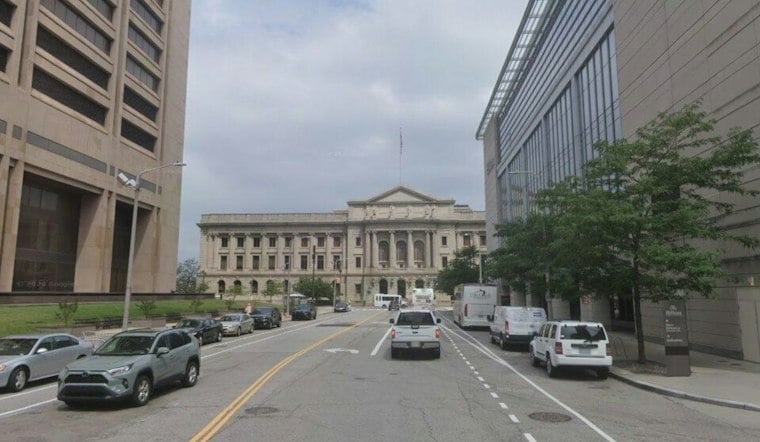
Cleveland City Council members are raising alarms that a proposed ticket-collections contract could authorize a vendor, if selected, to chase down red-light and speed camera fines that date back more than a decade, even though voters banned the cameras themselves back in 2014. Cleveland Municipal Court officials say they cannot yet say whether a vendor selected under the proposal would pursue those old citations, leaving the fate of the aging debt caught in bureaucratic limbo.
An Emergency Contract Raises Old Questions
At the center of the dispute is Ordinance 930-2026, emergency legislation that would let the Cleveland Municipal Court clerk and the city finance director hire one or more professional consultants to process and collect parking infractions and other civil tickets, according to Cleveland.com. The measure, which was submitted to council committees this week, would authorize a contract lasting up to three years with an option for a two-year renewal, according to records filed with Cleveland City Council. Council has already passed a resolution asking the court clerk to waive automated red-light and speed-camera citations issued before November 2014 and to immediately stop collection efforts tied to them, the outlet reports.
Council members Brian Kazy and John Galic offered differing readings of what the new ordinance actually covers. Kazy said the ordinance does not appear to exclude the old camera citations and argued that whichever vendor is selected should not pursue the old traffic camera tickets, some of which are at least 12 years old, per the same account. Galic countered that the ordinance covers only parking and waste tickets, but acknowledged that anything remaining in the court's database would still be collectible if the clerk decides to move forward — and said he could not answer whether the selected vendor would pursue the old camera tickets, adding that the decision ultimately belongs to the clerk.
Why a Resolution, Not an Ordinance, Was Used
Kazy explained that council opted for a resolution rather than binding legislation in its push to waive the pre-2014 citations, and he predicted the new ordinance will not pass without objection from colleagues, the report notes. That distinction matters because of how Ohio law structures authority over camera tickets: the citations are classified as civil infractions rather than criminal traffic offenses, meaning unpaid fines don't trigger driver's license points or reporting to the state Bureau of Motor Vehicles, according to Court News Ohio. State legislation passed in 2019 also eliminated administrative hearing boards for photo-enforced tickets, giving municipal courts — not city councils — exclusive jurisdiction over contested camera violations, the same source explains.
That legal backdrop helps explain why Cleveland council members can pass a resolution urging forgiveness of old camera debt but cannot force the court clerk's hand. Council President Blaine Griffin recommended the ordinance for passage while asking the clerk's office to provide Kazy with an answer on the camera-ticket question as quickly as possible, according to the Cleveland.com report.
What the Vendor Would Actually Handle
Behind the political back-and-forth sits a fairly mundane operational reality. Cleveland Municipal Court clerk's office employees currently answer phones, process payments and hear ticket disputes, while the current ticket-collections vendor manages equipment including roughly 20 to 23 computer terminals, runs the phone system, sends mailings and coordinates with agencies such as the Ohio Bureau of Motor Vehicles, per the outlet's reporting.
A Ban Rooted in 2014, Debt That Never Disappeared
Cleveland's automated camera program was effectively shut down nearly twelve years ago, when voters passed Issue 35 in November 2014, amending the city charter to bar red-light and speed camera enforcement unless a police officer is physically present at the device. That charter change halted a program that, in 2013 alone, generated $4.9 million in revenue from the city's 65 red-light and speed cameras — with roughly 53 percent, or $2.6 million, paid out to vendor Xerox to run the system.
The debt from that era hasn't simply vanished. In December 2022, the Ohio Supreme Court ruled in Lycan v. City of Cleveland that the city was not required to refund $4.1 million to drivers who had paid their camera fines without contesting them administratively, a case brought by leased-vehicle drivers alleging unjust enrichment. Separately, in May 2022, the state's highest court upheld a 2019 law allowing Ohio to reduce local government fund allocations dollar-for-dollar based on how much a city collects from automated traffic camera fines — a financial penalty that has complicated municipal camera enforcement statewide.
Fewer Officer-Issued Tickets, Renewed Interest in Cameras
The council debate also arrives amid a steep decline in traditional traffic enforcement. City records show officer-issued speeding citations dropped from 8,893 in 2015 to just 2,827 in 2025, while red-light citations fell from 2,171 to 1,005 over the same decade. Hoodline previously reported that council members discussed reviving limited automated camera enforcement near school zones in March, since state law exempts school-zone camera revenue from those funding setoffs — a sign that even as council fights to bury old camera debt, some members see a narrow path back to camera enforcement for safety reasons.
Neighboring Cuyahoga County suburbs offer a contrasting model. East Cleveland and Newburgh Heights have challenged Ohio's traffic-camera funding setoffs in court, though neither municipality currently operates a photo-enforcement program. For now, Cleveland's own path forward hinges less on cameras and more on paperwork — specifically, whether the municipal court clerk decides that a vendor selected under the proposed contract should go digging through a decade-plus of old citation records.




