

























































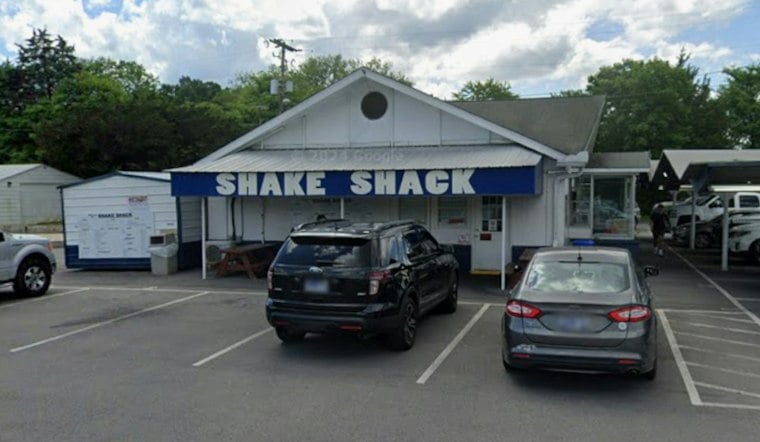
A dispute over strawberry syrup at a Cleveland, Tennessee, drive-in ended with a customer’s Ford Edge running over an employee’s foot. The employee told deputies she was not hurt, and no criminal charges were filed after she declined to pursue the case, according to WTVC.
The incident occurred Saturday at the Shake Shack on Waterlevel Highway. Despite the name, the business is a locally owned drive-in rather than the national fast-casual chain, according to a history compiled by ourVOLVO.com.
What the accounts establish—and what they do not
The customer said he ordered chocolate ice cream but was told strawberry syrup was unavailable. He objected to paying for an order that differed from what he wanted and left the restaurant. An employee followed him into the parking lot, where the two accounts converge on the vehicle moving backward and the employee’s foot being placed behind a tire, WTVC reported.
The employee told investigators that she put her foot behind the tire as the vehicle began backing up. The customer later gave detectives a similar account of the tire placement while saying he was reversing. Those accounts establish the physical contact described by deputies, but they do not, by themselves, resolve the customer’s intent or whether the maneuver was deliberate.
The Bradley County Sheriff’s Office responded to an assault report and documented that the vehicle ran over the employee’s foot. Investigators identified the vehicle and spoke with the man involved. The case was then closed after the employee declined to press criminal charges; WTVC reported that no charges are pending.
Why the outcome matters
The absence of charges describes the disposition of this case, not a finding that the encounter was harmless or that every detail has been independently established. The employee’s statement that she was not injured helps explain the limited outcome, while the competing descriptions leave the question of intent unresolved.
The case also illustrates the narrow boundary between a customer-service dispute and a vehicle-pedestrian encounter. Once the disagreement moved from the ordering area into the parking lot, the relevant facts were no longer limited to the missing syrup or payment dispute; they involved an employee standing near a moving vehicle and a reported foot injury that the employee said did not cause lasting harm.
A comparison, not a trend
A separate Birmingham case shows why the Cleveland outcome should not be generalized. In July 2026, 53-year-old hospitality worker Mona Jean Ables was fatally struck by a vehicle at 2:01 a.m. on a Saturday in the 2300 block of First Avenue North in downtown Birmingham, according to AL.com.
The incidents share only the broad circumstance of a hospitality worker being struck by a vehicle. They occurred in different cities and settings and had sharply different outcomes: the Cleveland employee reported no injury and the case ended without charges, while the Birmingham incident involved a fatality. Two examples cannot establish an increase in vehicle-related violence against restaurant workers or show that the events had the same cause.
The broader safety question
The Tennessee Highway Safety Office says it works with law-enforcement officials, judicial personnel and community advocates on highway-safety initiatives, including pedestrian and bicycle safety and the collection and analysis of crash data. That statewide role provides general safety context, but the agency’s description does not establish that Waterlevel Highway has a recurring problem connected to this incident, according to the Tennessee Highway Safety Office.
For now, the documented facts remain limited: a syrup dispute escalated outside the drive-in, a vehicle ran over an employee’s foot, the employee reported no injury, and she did not seek criminal prosecution. No charges are pending, and the available accounts do not determine whether the driver intended to place her in danger.





