

























































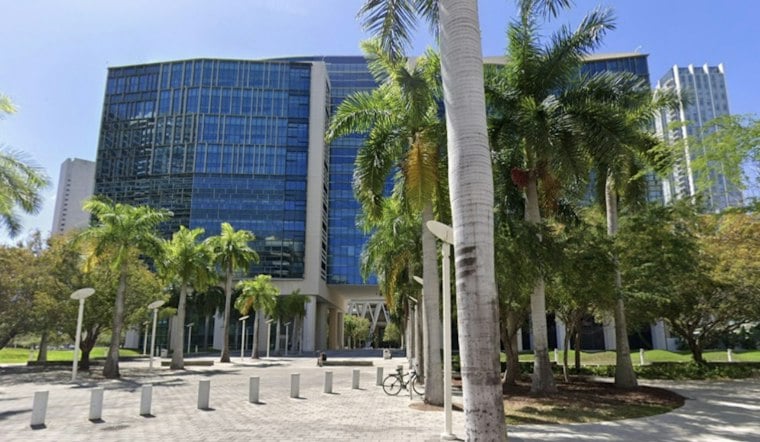
A Colombian man accused of helping run a fake-visa operation from Medellín call centers is scheduled to appear before a federal magistrate judge in Miami on Monday at 2 p.m. Esteban Robledo-Correa, described by the Justice Department as a fugitive before his arrest in Medellín on December 12, 2025, faces charges alleging that an organization used fake websites, counterfeit government documents and people posing as U.S. officials to sell visas that did not exist, according to the Miami Herald.
Robledo-Correa's hearing was previously scheduled and then reset, according to the Miami Herald. Monday's appearance is expected to address the charges, his rights, legal representation and whether he will remain in custody. He is one of six defendants charged in South Florida after an October 2025 indictment, in a case the Justice Department says grew out of a coordinated international crackdown announced December 3, 2025, that led to arrests in the United States, Colombia, Ecuador and El Salvador.
The case is registered in federal court as United States v. Edwin Alberto Correa-David et al., Case No. 1:25-cr-20436-KMW, assigned to U.S. District Judge Kathleen M. Williams in the Southern District of Florida, according to the Department of Justice. The Justice Department's Criminal Division worked with the State Department's Diplomatic Security Service on the December sweep, which yielded 19 arrests across four countries.
Fake Officials, Staged Offices and Counterfeit Seals
Per the Miami Herald's reporting, the fraud organization operated a dozen or more call centers, mostly in Medellín, recruiting workers known as asesores, or advisers, to pose as American officials during video calls. Potential victims were drawn in by Facebook pages and other websites offering legitimate U.S. work visas, and once engaged, organization members displayed counterfeit visa approvals and employment authorizations bearing replicas of federal agency seals. Rooms were staged to resemble U.S. government offices, the outlet reports, and victims were instructed to send money through international wire transfers for purported government fees.
The Justice Department's charging documents provide additional details about the enterprise, according to the Department of Justice.
Robledo-Correa's Alleged Role in the Network
Robledo-Correa is accused of helping recruit intermediaries to receive victims' money, according to the U.S. District Court for the Southern District of Florida. He was based in Massachusetts from roughly July 2022 until July 2024, where prosecutors say he served as a U.S. group leader who recruited and supervised intermediaries, receiving and retransmitting victims' funds. He allegedly sent at least $59,000 from the United States to organization members in Colombia in roughly 97 transactions between December 2021 and March 2025. Victims' payments allegedly moved through intermediaries and other accounts at least twice, and often more, before reaching the organization's leaders in Colombia.
After returning to Colombia in 2024, the Herald reports that Robledo-Correa helped manage call-center operations in Medellín. He is charged alongside five co-defendants with Racketeering Conspiracy under 18 U.S.C. § 1962(d), according to the Department of Justice. The defendants also face federal conspiracy charges under 18 U.S.C. § 371 for counterfeiting official government seals and impersonating federal officers under 18 U.S.C. § 912.
Co-Defendants Scattered Across Continents
The defendants' custody situations vary widely. Co-defendant Viviana Urrego-Rojas was apprehended in Denton, Texas, and transferred to Miami custody, appearing in federal court in Florida in February, while Julian Giraldo-Ospina was released on bond in California following his arrest in Sacramento and made his initial appearance in Miami in January, the Herald notes. Three other alleged leaders — Edwin Alberto Correa-David, Danna Pamela Porras-Marin and Andres Giraldo-Ospina — remained in Colombia awaiting extradition as of a February government filing, according to the Justice Department.
Edwin Alberto Correa-David is described as having overseen about eight call-center offices, while Andres Giraldo-Ospina allegedly created fraudulent websites and helped oversee another group of call centers. Danna Pamela Porras-Marin allegedly managed a call center and provided administrative support, per the Herald's reporting.
Thousands of Victims, Millions in Losses
Investigators have interviewed approximately 700 victims, while authorities say the operation drew in more than 7,000 additional people. Court filings estimate that more than 8,700 people were deceived overall, the Miami Herald reported. Victims came from as many as 15 countries and sent about $2.5 million to the United States, with reported individual losses ranging from $50 to $90,000.
Many victims only learned they had been scammed after traveling long distances to U.S. embassies in their home countries for appointments that did not actually exist, according to Univision KUVN. U.S. embassy personnel interviewed nearly 900 victims in San Salvador alone, and a federal judge has allowed prosecutors to notify additional potential victims through a Justice Department website, since the fraud operation provided no legitimate visas or immigration services of any kind, per a report from the Miami Herald.
A Complex Case With No Trial Date in Sight
Given the scale of evidence — more than five terabytes of cloud-storage records, cellphone data, financial records and roughly 12 hours of Spanish-language interviews, per the Herald — prosecutors obtained a complex-case designation in February 2026. The Justice Department says the parties were instructed to confer on scheduling and discovery.
Colombian authorities seized counterfeit seals and fraudulent documents in Medellín, along with 17 laptops, 68 cellphones and eight computer towers, the Herald reports. U.S. prosecutors have also sought additional evidence from Colombia through a formal mutual legal assistance request as the broader investigation into visa fraud, racketeering, money laundering and related offenses continues.
How to Spot the Real Thing
For immigrants navigating the legitimate visa process, federal officials stress a simple rule: official U.S. government websites strictly use the .gov domain, and legitimate agencies never demand fee payments through international wire transfers or third-party apps, according to USCIS. Scammers routinely spoof government domain names and build fake web portals designed to look official, which is precisely the tactic prosecutors say fueled the Medellín-based scheme now working its way through Miami's federal courthouse.
What broader records show
The Miami case fits within broader categories tracked by federal consumer-protection officials, but the information provided here does not establish its share of national losses or complaints. According to the Federal Trade Commission, its Consumer Sentinel Network collects reports involving immigration services as well as impostor scams and advance-fee scams—categories that reflect recurring ways consumers may be targeted. A separate South Florida case illustrates that immigration-related prosecutions have taken different forms. A Government Accountability Office report said 16 people were arrested in December 2004 in an investigation conducted in Miami, New York and Ecuador involving alleged airline smuggling of Ecuadorian and Chinese nationals using immigration documents. That case was an alien-smuggling matter, not a fake-visa call-center operation like the allegations in the current case, according to the Government Accountability Office.



