

























































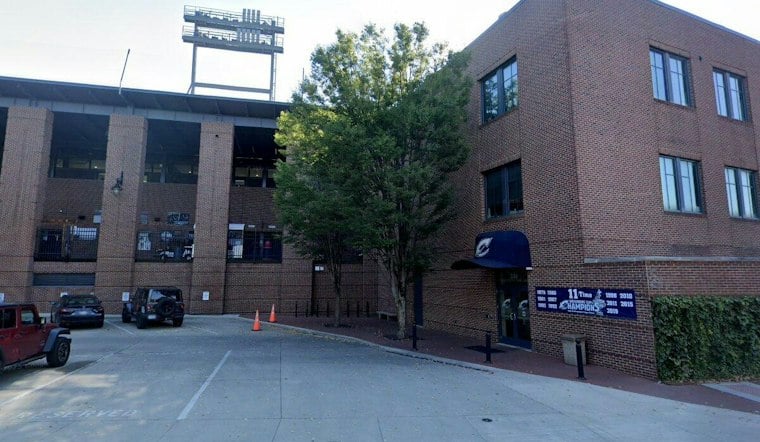
Columbus is now offering free pads and tampons at every one of its major professional sports venues, a milestone Mayor Andrew Ginther says makes the city the first in the nation to reach that standard. The announcement came at Huntington Park, home of the Columbus Clippers, where the ballpark joined Ohio Stadium, Nationwide Arena, Historic Crew Stadium, ScottsMiracle-Gro Field and the Schottenstein Center in offering the free dispensers to fans.
Ginther announced the milestone at Huntington Park in downtown Columbus, framing it as part of his broader push to make the city the nation's capital for women's sports, according to the Columbus Dispatch. The mayor also challenged other cities to match the effort by installing free period products in their own sports venues, per the same report. City officials describe the claim of being the first U.S. city to do this at all its major sports venues as tied specifically to that citywide combination of professional stadiums and arenas.
The push runs through a partnership with Aunt Flow, a Columbus-based period product company, which has installed 165 free-vend dispensers across the city's sports and event venues, according to a release cited by globenewswire.com. That release quotes Aunt Flow chief of staff Jenna Saponaro saying tampons and pads are a basic necessity, and cites a statistic that 86% of women have unexpectedly gotten their periods in public without the supplies they needed.
How the Dispensers Reached Huntington Park
Huntington Park's addition brought the city's total sports-venue network to those six locations, with the ballpark drawing over 500,000 visitors annually, according to Columbus Clippers President Tyler Parsons, cited in the same globenewswire.com release. Columbusnavigator.com reports the dispensers provide pads and tampons at no cost to guests, and that the Greater Columbus Convention Center separately hosts 45 of its own free dispensers. The convention center's dispensers were not folded into the city's sports-venue count but reflect the same broader menstrual-equity push.
Columbus' effort traces back further than this year's headline milestone. The city's menstrual-equity work began with a 2017 pilot program placed in city recreation centers and homeless shelters, per the globenewswire.com release, before expanding into the sports and event-venue space that now anchors the city's national-first claim.
Tied to a Bigger Push for Women's Sports
The period-product rollout is part of IgniteHER Columbus, an initiative led by First Lady Shannon Ginther alongside the Greater Columbus Sports Commission and Experience Columbus. The program has also launched a mentorship effort pairing female student-athletes at central Ohio universities with former collegiate athletes, according to the seed reporting.
Ginther said free period products help remove barriers girls and women face in sports, per the Dispatch account. Maggie Oliphint, a Whetstone High School soccer player, said the Aunt Flow partnership marks a big step toward supporting women physically, socially and economically, and added she takes pride in Columbus' role as a pioneer in gender equity.
Stephanie Hightower, president and CEO of the Columbus Urban League and a former U.S. champion in the 100-meter hurdles, said women are entering a more welcoming arena. The timing lines up with Columbus' upcoming turn hosting the NCAA Division I Women's Final Four and Women's Volleyball Championship at Nationwide Arena in 2027, and a new National Women's Soccer League expansion team expected to begin play at ScottsMiracle-Gro Field in 2028, per globenewswire.com and columbusnavigator.com.
Part of a Wider National Pattern
Columbus isn't alone in pushing period-product access into public spaces, even if its sports-venue claim is framed as a first. The Chicago White Sox installed free dispensers in 11 locations at Guaranteed Rate Field, making the team one of the first in Major League Baseball to do so, according to facilitiesdive.com, which reports that Citron Hygiene monitors and refills those dispensers.
Other cities have taken different routes. Dallas launched a program supplying free pads and tampons in public facilities including recreation centers, community centers and branch libraries in high-poverty neighborhoods, according to smartcitiesdive.com. Ann Arbor, Michigan became the first U.S. city to require free menstrual products in public restrooms, and East Lansing later required the same in all city-owned restrooms, per the same report. In Kentucky and Indiana, the nonprofit For Lady's Sake distributes period products through more than 34 community partners spanning schools, shelters, recovery centers and healthcare facilities, according to wlky.com.
The push reflects a documented national gap. A 2019 national online survey found roughly 20% of U.S. teens ages 13 to 19 had trouble accessing or affording period products when needed, and that share rose to 23% by 2021 and stayed above pre-pandemic levels in 2023, according to brookings.edu. Among a representative sample of U.S. adults who menstruate, 59% reported experiencing period-product insecurity at some point in their lives as of 2021, per the same source. The globenewswire.com release frames Columbus' sports-venue effort as accelerating a broader trend of venues treating period products as an ADA-compliant restroom essential.



