

























































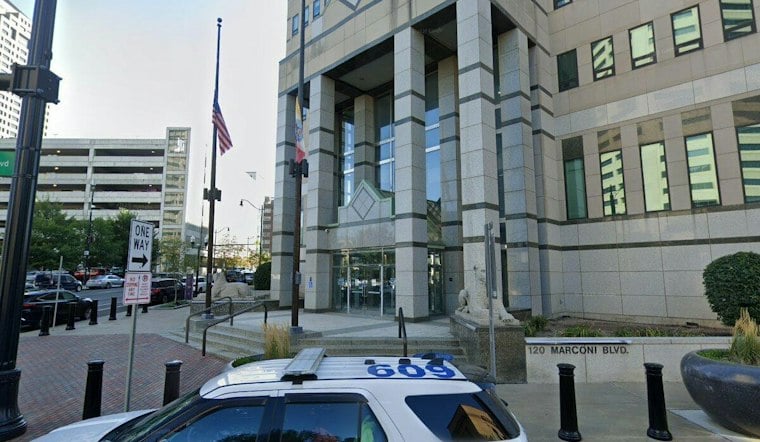
A Columbus police officer searched the city's Flock surveillance camera network multiple times on Feb. 3, 2025, hunting for a silver pickup truck that was fleeing from Immigration and Customs Enforcement. The searches turned up nothing, and the officer never passed information to ICE or over police radio, according to newly released investigative records.
The records, released in response to a request from The Columbus Dispatch, detail how the officer heard an ICE call for service describing a man fleeing into Columbus police jurisdiction. The dispatch call stated that the man, identified as Jose Benjume, had taken off from ICE and that agents had a warrant for him, according to the same records. The call also said the man was last seen eastbound on Broad Street and that two other Hispanic men were riding in the truck with him.
The officer ran multiple unsuccessful Flock searches for the silver pickup and listed ICE as his reason for the searches, the Dispatch report notes. He told investigators he was addressing a wanted person violating traffic laws and said he had no intent of assisting in the detention of anyone based solely on immigration status. He also said he was not well-versed in every type of warrant ICE can issue.
Why Investigators Cleared the Officer
Columbus has banned using city resources for civil immigration enforcement since 2017, and Columbus city code prohibits using city resources to investigate a person's immigration status unless a warrant exists, a criminal violation was reported, or an arrest was made. Columbus police flagged the officer's searches for review by July 7 of this year and assigned a formal administrative investigation on July 20, per the released records.
Investigators ultimately found the officer was within policy because he believed ICE had a warrant — an exception written into Columbus policy. Multiple levels in the chain of command, including Police Chief Elaine Bryant, signed off on that finding, concluding the officer's actions did not violate city code. The officer found no relevant results from his searches and relayed no information on the radio or to ICE, the department's investigation determined.
The man at the center of the dispatch call, Jose Adin Benjume-Gutierrez, a Mexican national, was later arrested by federal authorities and charged with several crimes, including assaulting a federal officer. That assault charge was later dropped, but Benjume-Gutierrez pleaded guilty to illegally reentering the United States and distributing cocaine. A federal judge sentenced him last month to just under four years in prison, and he will be deported after serving that sentence.
A Much Larger Pattern Under Scrutiny
The single officer's searches surfaced amid a much broader audit of Columbus's Flock camera network. That summer 2026 audit found more than 15,000 potentially immigration-related searches across the system. A separate review reported by WOSU found Columbus police's Flock network had been searched more than 15,000 times for possible immigration-related reasons, though notably, none of those searches came directly from ICE itself. Columbus police had already disabled the nationwide network-sharing feature for its Flock cameras on June 3.
Mayor Andrew Ginther announced on Sept. 3 that the city would pause Flock searches entirely and place bags over the cameras, after separate concerns surfaced about repeated searches involving the same license plate. Bryant said those particular searches were not related to law enforcement purposes, and Ginther called the evidence of misuse deeply troubling.
Part of a National Reckoning Over License-Plate Data
Columbus is far from alone in confronting questions about how local police access to Flock's license-plate reader network intersects with federal immigration enforcement. Flock Safety operates roughly 90,000 cameras across 7,000 networks nationally, according to The Guardian, and the company says it has more than 80,000 AI-powered cameras spread across 49 states, per a report from the University of Washington's Center for Human Rights.
Records reviewed by the Atlanta Press Collective found Atlanta police users ran 15 Flock network searches for immigrants over a single week in March 2025, with one investigator alone logging 12 searches labeled some variation of “locate alien.” A separate audit found that outside agencies made 3,254 searches of Atlanta's Flock network attributed to U.S. Border Patrol and 3,383 searches using immigration-related keywords over the course of that year.
The Guardian also reported that over one month spanning December 2025 into early January, more than 3,100 police agencies conducted over 733,000 searches on Flock cameras run by a Texas school district, with 30 agencies citing immigration-related reasons in 620 of those searches. In Minnesota, roughly 30 state, county and federal agencies searched license-plate camera data across at least eight Twin Cities suburbs for immigration enforcement between November and March, according to the Star Tribune, prompting Brooklyn Park and Columbia Heights to end their Flock contracts altogether.
The backlash has reached major cities as well. The Los Angeles Police Department halted its use of Flock cameras over concerns about who controls the data and how it might be shared with immigration authorities, the Los Angeles Times reported. Nationally, more than 50 cities and counties reportedly cut ties with Flock during 2026 alone, according to tracking by the Immigration Policy Tracking Project. Whether Columbus's paused Flock program returns — and under what rules — remains an open question as city officials continue reviewing the surveillance network's use.



