

























































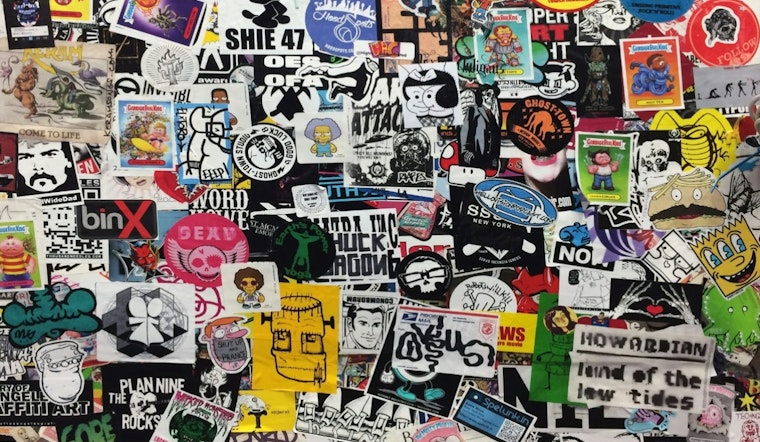
Two roommates in southern Connecticut have covered nearly every surface of their shared apartment in more than 7,000 stickers, and they did it without putting a single dollar of their security deposit at risk. Jacob Bergstrom, 23, and Bradon Soucy, 22, started the project with leftover stickers from high school and turned it into a monthslong obsession that documented every layer, peel, and placement along the way.
The pair had racked up more than 7,000 removable wall sticker decals by February, according to the Kansas City Star, which reported on the project. Bergstrom told the outlet he wanted to use the leftover stickers for something fun, and that impulse eventually swallowed every wall in the apartment he shares with Soucy, his longtime friend. The two have documented the process as @apt_bombers on TikTok and Instagram, racking up more than 2,500 followers across both platforms and more than 667,000 views on a single Instagram reel as of Tuesday.
A Construction-Paper Trick That Keeps Landlords Happy
The key to the whole operation was never letting adhesive touch the actual painted wall. Instead, Bergstrom and Soucy lined every wall in the apartment with construction paper, attached using removable adhesive strips, and then stuck all 7,000-plus stickers onto that paper rather than directly onto the drywall. The construction paper acts as a sacrificial layer that comes off with the stickers without pulling up the landlord's paint, according to the Star's reporting.
Bergstrom described the process as challenging and time-consuming, but said it was worth the payoff: the construction-paper method prevented damage to the apartment walls, he said. The finished product turned the apartment into what the Star describes as a personal and chaotic rental-decor style, built from a child's sticker collage, travel decals, and sports logos alike. Followers of the account even started donating their own stickers to the cause as the project grew.
Why the Sacrificial Layer Actually Matters
Why the Sacrificial Layer Actually Matters The roommates' extra paper step kept the stickers and their adhesive off the painted walls. It created a removable barrier between the project and the apartment's surfaces.
Sticker Savages, the subscription-box company that curates artist-designed stickers and sponsored the roommates' project, launched in Detroit in late 2018 before opening a distribution warehouse in Pflugerville, Texas, according to Sticker Savages. The company donates 10% of its profits to environmental causes and built its brand around curating exclusive artwork from Instagram artists, which fits neatly with a project that leaned on donated, crowd-sourced stickers from followers.
What Connecticut Law Actually Requires of Renters
The roommates' insistence on a removable method isn't just aesthetic caution. Connecticut General Statutes § 47a-11 obligates tenants to keep rented premises clean and safe while prohibiting them from intentionally or negligently defacing, damaging, or removing any part of the structure, according to Justia Law. Security deposit collection in the state is also capped at two months' rent for tenants under 62, and landlords may only deduct funds for unpaid rent or damage that exceeds normal wear and tear.`` According to the NYC.gov Tenants' Rights Guide, a landlord may use a security deposit to cover unpaid rent or the reasonable cost of repairs beyond normal wear and tear.
Landlords in Connecticut are required to hold tenant deposits in an interest-bearing escrow account and return them, with interest, within 21 days after a tenant moves out. Landlords who wrongfully withhold a deposit past that statutory deadline can face double-damage penalties in state court, per the same legal breakdown. Connecticut law also requires landlords to give tenants reasonable notice, typically 24 hours, before entering a unit to inspect for unauthorized modifications, which gives renters like Bergstrom and Soucy a legal framework for exactly the kind of large-scale project they attempted. According to the Connecticut Department of Banking, landlords must return security deposits with interest or give tenants written notice of damages being claimed within twenty-one days of when the tenancy ends.
Part of a Much Bigger Renter Trend
Bergstrom and Soucy are hardly alone in trying to personalize a rental without risking a lease violation. A joint study by Thumbtack and Zillow found that Gen Z renters are driving a major shift toward non-permanent home customization, favoring removable materials like peel-and-stick finishes specifically to avoid lease violations and lost deposits. Peel-and-stick wallpaper is also part of the broader market for removable home finishes. The National Apartment Association reported on March 26, 2024, that renters are keen on customization and discussed offering options such as different wood plank flooring and carpeting when they first lease a unit.
Not every adhesive product is as forgiving as the roommates' paper-backed system. Peel-and-stick wall products can harm painted surfaces, particularly matte and flat finishes, and drywall repair may sometimes be necessary after removal, interior designer Sarah Barnard has warned. Renters attempting similar projects should review their lease and get written landlord approval before applying any adhesive wall decor, a caution echoed across the reporting on the trend.
For Bergstrom and Soucy, the payoff came after roughly 100 video updates chronicling the slow transformation, which wrapped up in June. Bergstrom has said the pair are able to pursue offbeat projects like this outside of work because, in his words, they are not taking life too seriously — a mindset that, so far, has left their walls, and their security deposit, fully intact.




