

























































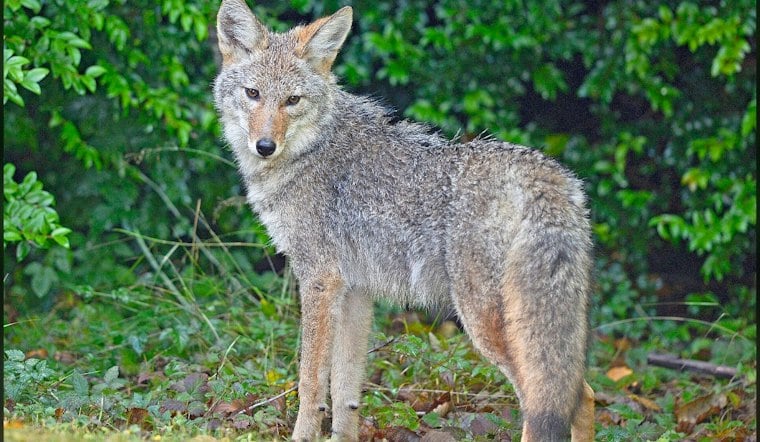
A coyote bit a woman Wednesday evening as she walked along the Old Croton Aqueduct trail near Warburton Avenue in Hastings-on-Hudson, and the animal, feared to be rabid, still hasn't been caught. The attack happened near the intersection of Elm Place and the aqueduct path, and it has triggered a multi-agency search and a wave of public safety warnings across Westchester County.
Hastings-on-Hudson Police Chief David Dosin issued a community alert Thursday detailing the location and timing of the bite, according to a notice from the Village of Hastings-on-Hudson Police Department. The New York Post reports the attack occurred on the Old Croton Aqueduct path, which runs through Old Croton Aqueduct State Historic Park, and that the victim is now undergoing emergency preventative rabies treatment, per a Westchester County Health Department statement cited in that report.
The New York Post reported that the bite occurred on the Old Croton Aqueduct path. The Westchester County Department of Health warned that anyone who spots the coyote should not approach it and should contact police immediately, advising people to make loud noises and slowly back away if they encounter the animal, according to the Post's reporting. Officials say the coyote's aggressive behavior raises the possibility that it is rabid, and they're urging residents to watch for it and stay alert.
Four Agencies Combing the Aqueduct Corridor
In the days since the bite, the Hastings-on-Hudson Police Department has increased patrols around the aqueduct and launched a joint search with the Dobbs Ferry Police Department, Greenburgh Animal Control, and New York State DEC Police, the village police department's newsflash states. The search involves local and state agencies.
Residents have been told to supervise children and pets closely when outside, and to report any stray or wild animals behaving strangely to a healthcare provider, per the Post's coverage. Animal bites or suspected rabies contacts must be reported to the Westchester County Department of Health, which can be reached at (914) 813-5000, twenty-four hours a day.
What Rabid Behavior Can Look Like
Rabid animals may show erratic and dangerous behavior, a sudden lack of fear of humans, unprovoked aggression, extreme lethargy, staggering, or foaming at the mouth, according to the Post's report. Because wild animals involved in human bites cannot be held for the same ten-day quarantine observation given to domestic pets, state protocol requires that the coyote be euthanized and tested for rabies in a lab, as outlined by the New York State Department of Health. Searchers are working to locate and safely capture the animal.
New York State law separately requires rabies vaccinations and regular booster shots for dogs, cats, and ferrets, the Post notes, a reminder that pet owners are being pointed toward as the search continues.
A Familiar September Pattern in Westchester
This isn't the first aggressive coyote encounter Westchester has dealt with recently. In March, a suspected rabid coyote attacked three people and two dogs near Siwanoy Country Club and Twin Lakes Park in Eastchester and Bronxville before police shot and killed the animal, according to Halston Media. That animal tested positive for rabies.
The county has seen worse before. In March and April 2018, coyote incidents were reported in Yonkers and Mount Pleasant, CBS News reported at the time. At James M. Carroll Park in Mount Pleasant, an off-duty officer wrestled a coyote away from a 5-year-old child, while Yonkers police killed another coyote.
There's also an ecological reason encounters like this tend to cluster in September. A 2025 study by the Wolf Conservation Center identified a sharp seasonal spike in local coyote activity tied to autumn dispersal, when young coyotes leave their family packs to strike out and establish new territories, according to the Wolf Conservation Center. The pilot study's trail cameras recorded 46 coyote observations in September, compared with fewer than 10 per month from July to December, in northeastern Westchester County.
New York State's Sanitary Code addresses reporting possible rabies exposures to local health authorities, according to the New York State Department of Health. County health officials have also warned residents about the coyote while the search continues.




